


 Shkruar nga Matteo Pugliese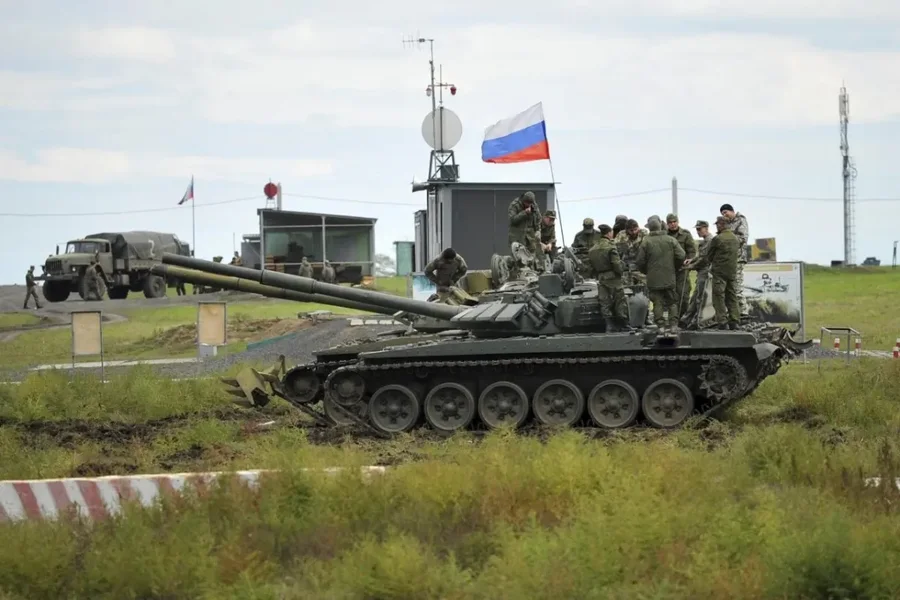
The legislative assembly of Transnistria, a separatist region of Moldova, intends to meet on February 28 to formally request annexation from Russia, as already known by puppet authorities in the occupied regions of eastern Ukraine.
The news was reported by the Moldovan agency Infotag, which added a not insignificant detail: the resolution of the Transnistrian authorities will be adopted a day before Vladimir Putin's speech to the Russian federal assembly, thus giving him the opportunity to consider this act.
Transnistria is a thin strip of land, separated from the rest of Moldova by the Dniester River, which decided to declare independence in 1990 with the support of Moscow. In its de facto capital, Tiraspol, time seems frozen in the Soviet era, with statues of Lenin and socialist iconography.
Since that time, several Russian military units have been stationed in this region. Among them a motorized battalion, a contingent of the FSB secret service, in total not exceeding 1500 men. They have not been replaced since 2022. In fact, Russian troops are completely isolated and cannot receive reinforcements, because Transnistria is located between Moldova and Ukraine and is landlocked.
Although officially sent as a peacekeeping force, the main mission of the Russian troops is to guard the huge Soviet ammunition depot at Cobasna - about 20 thousand tons - which for the time being would be useful to both sides in the war. Always assuming they are still in working order.
The small airport of Tiraspol is no longer used, except for sporadic flights, and the small aerodromes at Camenca, Vărăncău and Tighina/Bender are no longer operational. Therefore, any Russian offensive action or even to supply is impossible.
Since the beginning of the occupation in Ukraine, the situation has further escalated, with constant provocations by the Russians to escalate the situation with Moldova. In fact, between April and June 2022, 5 incidents were recorded, thankfully without casualties, with the use of drones and explosives against infrastructure or government buildings.
These are false operations to accuse Chisinau and Kiev, and to justify the operations in Moldova, which for Moscow would be the natural continuation of that imperialist ambitions. In the original Russian plans, an amphibious landing in Odessa was supposed to reunite Transnistria with the occupied territories.
But the Kremlin's expansionist intentions would not be enough with the small separatist region alone. The Russians wanted to occupy all of Moldova ruled by the pro-European president Maia Sandu.
Vendi ka pësuar dy tentativa destabilizimi ruse të cilat Sandu i ka denoncuar publikisht. E para më 9 maj 2022, kur FSB orkestroi një protestë të opozitës pro-ruse kundër shtypjes së simboleve sovjetike, me synimin provokimin e trazirave për të rrëzuar qeverinë dhe për të rivendosur në krye ish-presidentin Igor Dodon, aktualisht në gjyq për korrupsion.
Përpjekja e dytë ndodhi vitin e kaluar dhe përfshinte oligarkun moldavo-izraelit Ilan Shor, i dënuar në mungesë për mashtrim dhe pastrim parash, i cili ndodhet i mërguar në Izrael që
nga viti 2019. Partia e tij u përpoq sërish të provokonte dhunë me kontributin e agjentëve klandestinë nga njësia famëkeqe GRU 29155, shërbimi ushtarak rus, i cili ka angazhuar edhe elementë serbë, siç u pa në Malin e Zi gjatë tentativës së dështuar për grusht shteti në vitin 2016.
Kjo është një dinamikë, të cilën e kemi parë tashmë në Ukrainë dhe Gjeorgji, ku oligarkët e korruptuar financohen për të mbajtur kontrollin e qeverive lokale. Pasi dështuan këto përpjekje, regjimi i Moskës vazhdoi punën e tij të destabilizimit të vendeve fqinjë me teknikat e zakonshme. Kështu ka të dhëna për infiltrimin e anëtarëve të grupit paraushtarak mercenar Wagner apo operativëve të tjerë rusë, të cilët mbërritën si qytetarë të zakonshëm në aeroportin e Kishinevit dhe më pas kontaktuan me pro-rusët vendas për zbatimin e planeve subversive.
Komuniteti euroatlantik e ka kuptuar këtë rrezik, ndaj e ka forcuar mbështetjen e tij politike për qeverinë moldave, madje edhe në aspektin e inteligjencës për të penguar komplotet e reja. Edhe Italia po bën pjesën e saj, kjo falë një bashkëpunimi në terren mes karabinierëve italianë dhe moldavë për shkëmbimin e përvojave.
Por në çdo rast, ushtria modeste moldave përbëhet nga rreth 4 mijë trupa plus 2 mijë karabinierë, me funksion ruajtjen e rendit publik dhe luftën ndaj terrorizmit. Në çdo rast, sabotimi dhe sulmet priten shumë më tepër se sa një pushtim në shkallë të plotë. Strategjia ruse e luftës hibride lëviz në fronte të shumta.
Nga njëra anë Rusia synon të aneksojë Transnistrian për të justifikuar më pas një “mbrojtje të bashkatdhetarëve rusë” apo diçka të ngjashme, siç ka ndodhur tashmë në Krime dhe Donbas. Nga ana tjetër, Moska përpiqet ta përçajë shoqërinë moldave me fushata dezinformuese, duke shfrytëzuar përdorimin e gjuhës ruse shumë të përhapur, veçanërisht në rajonin jugor Gagauzi. Në fakt, kanalet televizive ruse po përforcojnë deklaratat e nacionalistëve moldavë, të cilët bëjnë thirrje për forcimin e identitetit rumun dhe alfabetit latin, për të thelluar tensionet politike me rusisht-folësit. Gagauzia, e cila gëzon një autonomi administrative, zgjodhi vitin e kaluar guvernatoren pro-ruse, Evghenia Guțul, një anëtare e partisë së Shor, që u shpall anti-kushtetuese po vjet.
Local politicians have said they want to bring the tiny region closer to Russia, and according to a 2023 survey, only 3 percent of its residents aspire to join the European Union. This orientation is the result of years of propaganda aimed at demonizing the West and using the Russian-speaking identity (although Gagauzians also speak a variant of the Turkish language).
So there is a harmony with Transnistria, nostalgic for the Soviet empire, despite the misery that reigns in the separatist region. However, this does not mean that things will remain this way. In the neighboring Ukrainian region of Bessarabia, also known as Budžak, west of Odessa, the population has traditionally been pro-Russian.
The situation began to change in 2015, when thanks to technical assistance from France, satellite waves of Russian propaganda television were blocked. Since 2020, the Ukrainian government has built new roads in the area and established a regular ferry line with Romania. Now the population of this coastal strip, like that of Odessa, is hostile to the invaders, although it continues to speak Russian./ Pamphlet adapted from "Linkiesta"



Lini një Përgjigje