


 Shkruar nga Pamfleti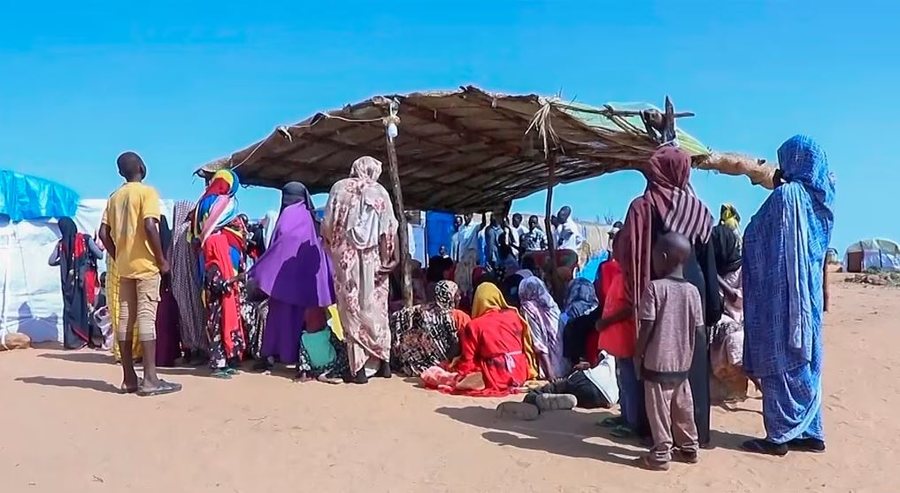
New wars, growing hunger and poverty on a warming planet are among the toughest challenges facing the UN. The UN cannot do much to resolve these issues in a future world in which the organization's influence is diminishing.
The war in Ukraine has now entered its second year, with no signs of peace in the near future. Military coups destabilized parts of Africa in 2023, and new and deadly wars broke out in Sudan and the Middle East.
The UN has had little success in stopping the bloodshed in the world.
"It is particularly challenging because the kinds of conflicts the UN has faced during 2023 have been precisely those that the UN is least equipped to manage. They are conflicts between the major permanent members of the Security Council. And when those countries are involved, the UN has less room for action," says expert Anjali Dayal from Fordham University.
This is because Britain, China, France, Russia and the United States can use the veto to block sanctions and other tools the Security Council can use to maintain peace and security.
Last year, geopolitical divisions intensified over Russia's war in Ukraine and, since October, over Washington's support for Israel's war against Hamas.
"The situation in the Security Council right now is very tense," says Richard Gowan of the International Crisis Group.
Secretary-General Antonio Guterres was unable to break the deadlock by invoking the rarely used Article 99 of the UN Charter in December to urge the Security Council to adopt a resolution on a humanitarian ceasefire in the Israel-Hamas war.
The United States vetoed his request and Israel called for his resignation.
The news wasn't much better for UN peacekeeping efforts on the ground either.
The "Blue Helmets", the UN peacekeeping force, in 2023 marked the 75th anniversary of its establishment.
But its anniversary coincided with calls from Mali and the Democratic Republic of Congo for UN peacekeeping forces to leave their territories. Haiti, meanwhile, is calling for an international force to help stabilize the country, but not a UN-led force.
In Africa, leaders are increasingly turning to the forces of regional organizations to deal with crises in the sub-Saharan region.
This, along with the peacekeepers' large annual budget of more than $6 billion, has raised questions about the effectiveness, value and need for the current and future missions of this UN force.
"In the future we must work with member states to ensure that forces participating in UN peacekeeping operations are properly prepared for their operations. UN peacekeepers should not deal with other matters such as the implementation of an agreement or the law, but only with keeping the peace. For other issues, other relevant missions should be created", says Jean-Pierre Lacroix, UN Peace Operations Officer.
A hopeful moment came at the climate change conference in Dubai. Delegates agreed for the first time on the need to distance themselves from fossil fuels, one of the main causes of global warming.
As climate change intensifies, causing more natural disasters, conflicts and other global consequences, the UN is increasingly called upon to mobilize to provide humanitarian aid.
"Even when there is reduced political space to broker political solutions to conflicts or humanitarian crises, there is still real potential to do important work in terms of humanitarian aid. But these efforts need to be funded and supported in order to have a greater impact," says expert Anjali Dayal from Fordham University.
Over the past few decades, many experts have called for reforms at the UN, including expanding representation on the Security Council to reflect current realities.
"The UN was paralyzed for long periods of the Cold War. So the fact that it is once again going through a period of crisis does not mean that it is dead. I think there is a real need to think about how changes can be made to UN structures," says Richard Gowan of the International Crisis Group.
The problem, analysts say, is that there is no consensus on how to improve the United Nations. /VOA


Lini një Përgjigje