


 Shkruar nga Pamfleti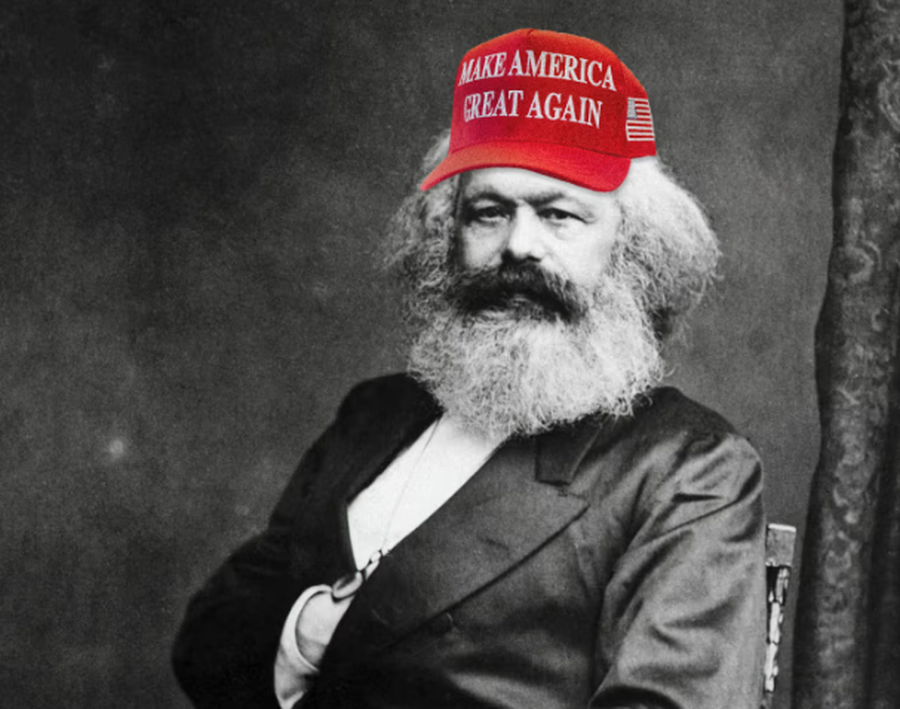
Political radicalization does not always stem from actual poverty, but often from the gap between expectations and reality. An educated young person, burdened with debt and high expectations, may experience deeper disappointment when faced with uncertainty and a lack of perspective.
The third assassination attempt on Donald Trump, following the murder of right-wing influencer Charlie Kirk and a senior insurance company executive by so-called "social judge" Luigi Mangione, brings a fundamental question back to the forefront: is America sliding into a new phase of political violence, similar to the "years of lead"? And is violence regaining legitimacy as a political tool in today's polarized climate?
The United States has a long history of precedents. From the assassinations carried out by immigrant anarchists in the late 19th century, to the lynchings of the Ku Klux Klan in the service of a racist project, to the armed organizations of the extreme left in the 1960s, political violence has taken many forms. The assassinations of the Kennedy brothers and Martin Luther King, as well as a series of assassinations against representatives of institutions, also belong to that period. In the following decades, figures like the Unabomber or attacks like the one in Oklahoma City showed that the phenomenon remained present, with different ideological motives.
However, according to the analysis of Noam Scheiber (New York Times), the most significant reference for understanding the present remains that of the 1960s. It was then that the idea of the “proletarianization” of the intellectual classes was formulated, a concept that also became part of the debate during the European 1968. Today, this theory returns in a new context, influenced by globalization, technology and artificial intelligence.
Scheiber argues that a growing number of American graduates no longer see themselves as an elite in the making, but as a precarious workforce. They no longer perceive themselves as a “rising middle class” but as a kind of modern proletariat. This idea is directly related to Karl Marx, who predicted that capitalism would blur the distinction between skilled and unskilled labor, turning even the educated into dependent workers.
For decades, this prediction seemed inaccurate, as the modern economy rewarded education and created new professional hierarchies. But today, for some young people, the reality is different: degrees are less valuable, jobs are limited, and expectations remain unfulfilled. High education costs, student debt, and the rising cost of living in major cities deepen this sense of insecurity. Artificial intelligence adds a new element, threatening professions linked to the knowledge economy.
This situation creates a gap between expectations and reality. An educated young person, who has grown up with the idea of success through studies, can experience deep disappointment when faced with uncertainty and intense competition. This disappointment does not necessarily translate into violence, but it can create a climate where violence is tolerated or justified.
The figure of Luigi Mangione illustrates this danger. He does not represent the classic profile of the marginalized, but an educated and privileged individual who constructs an ideological narrative to justify the violent act. In this logic, the perpetrator of the crime becomes the “avenger”, the victim the “symbol of the system” and the murder the “political message”.
However, the data show that the phenomenon is not widespread. Most U.S. college graduates continue to have higher employment and income levels than other groups. But the cultural impact of this perception is significant, especially in sectors that produce public discourse – such as the media, universities and the cultural industries.
In this context, political radicalization stems not only from real poverty, but from a sense of a broken promise. As in the 1960s, today some educated classes can develop forms of radical opposition, especially when economic pressures and ideological narratives combine.
In conclusion, the analysis suggests that America is facing a new transformation of social conflict. It is no longer just about the classic division between workers and economic elites, but about a more complex tension, where even a part of the educated feel excluded. In certain circumstances, this can create ground for new forms of radicalization and, in extreme cases, for the legitimization of political violence. / Adapted from "Corriere Della Sera"







Lini një Përgjigje