


 Shkruar nga Pamfleti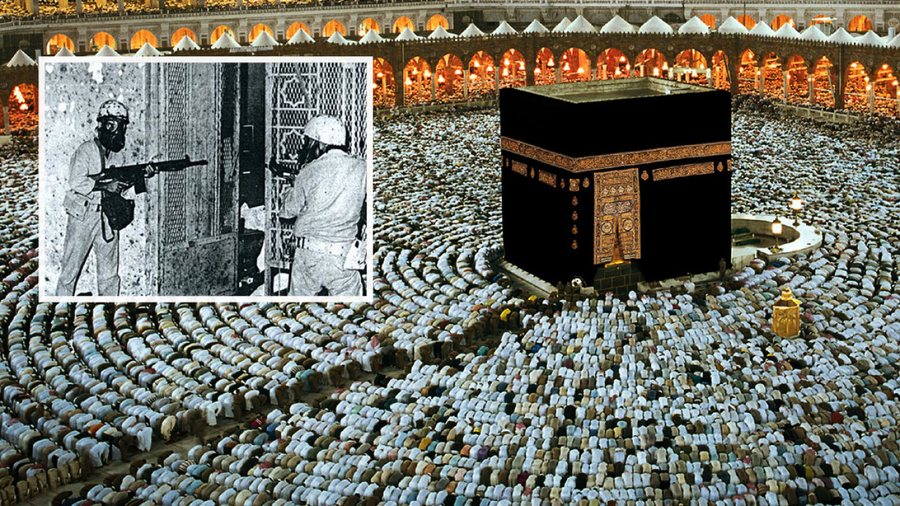
Around the early hours of Monday morning, November 20, 1979, with the sun just rising, Juhayman Al Otaibi, accompanied by about 500 men, forced his way into the Grand Mosque of Mecca.
Inside and around the mosque were between 50,000 and 100,000 believers, who were celebrating the Muslim new year 1400 and had come to pray.
The mosque guards were immediately neutralized by Al Otaibi's men. They placed several closed coffins in the center of the courtyard, a traditional practice to seek blessings for the recently deceased, then pushed the imam and took his microphone.
The siege of Mecca had just begun. It would last 15 days and end in a massacre and an as yet unclear number of casualties.
At first, the faithful did not understand what was happening. Meanwhile, Otaibi's men opened the coffins, which were filled with automatic weapons, pistols and rifles, which were quickly distributed. The fighters positioned themselves in every corner of the courtyard and in the minarets of the mosque, while Al Otaibi ordered them to shoot any person who tried to open the gates.
When he began to speak, thousands of Muslims heard him proclaim that his brother-in-law, Mohammed Abdullah Al Qahtani, was God's messenger, the "Mahdi," as described in the Quran, who had come to earth before the Day of Judgment to eradicate evil. And according to him, evil was the royal house of Saud, which he accused of corruption and the Westernization of Saudi Arabia.
The news reached Riyadh quickly, finding the royal family completely unprepared for the attack on the holiest site of Islam. Initially, the kingdom was engulfed in confusion, as the information was unclear. Only after a few hours did the secret services manage to provide a more accurate picture. The blow was severe for the Saudis, who even initially accused Iran, without any evidence, of orchestrating the attack.
In fact, the attackers came from Saudi Arabia, Egypt, Canada, and the US, and seemed determined to go all the way, as Saudi authorities prepared to forcibly retake the mosque.
But there was one major obstacle: according to Islamic tradition, no one could carry weapons inside the Holy Mosque. For this reason, a special fatwa was requested and approved by the country's highest religious authority, allowing armed intervention.
The Saudi forces encountered strong resistance. The attackers managed to repel three attacks on the three main gates of the mosque, while snipers positioned in the minarets easily shot anyone who raised their heads. What was expected to be over in a few hours turned into a fierce daily battle, with Otaibi and his group always prepared.
The resistance was broken only on December 4, thanks to the help of French commandos and special forces from Pakistan. The attackers' toll was 117 killed and an unknown number wounded. Saudi forces suffered 127 killed and 451 wounded. However, an even greater catastrophe was averted, as the rebels decided to release thousands of worshippers who were inside the mosque.
Of the 63 arrested, including Al Otaibi himself, all were tried in expedited proceedings, found guilty, and executed by hanging on January 9, 1980, in nine different cities in Saudi Arabia.
Western sources have reported that the true number of casualties was much higher, but was kept secret, a common practice in a kingdom known for its high level of secrecy around internal affairs./Protothema







Lini një Përgjigje