


 Shkruar nga Valerio Chiappaino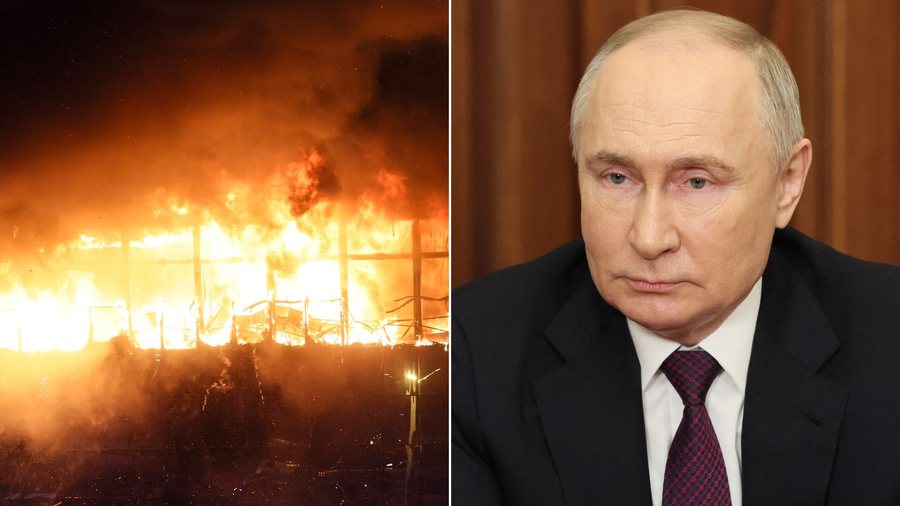
Chances are Putin will respond with an iron fist to the massacre claimed by ISIS. Moscow will not be persuaded by the Islamic approach and in any case may use the situation to react forcefully against Kiev.
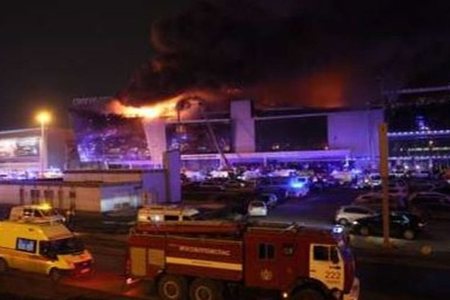
The number of victims of the terrible attack that hit Moscow last night is not yet final. The Kremlin is already thinking about how to respond. And above all against whom.
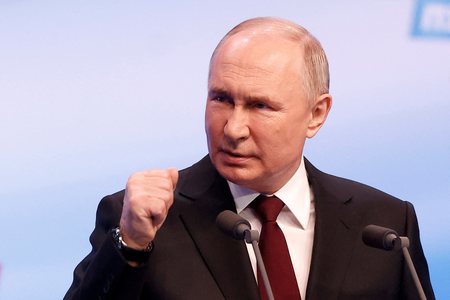
Based on the first reactions expressed by the Russian regime, the claim of responsibility for the massacre by ISIS terrorists does not seem to have convinced Vladimir Putin.
Or, analysts say, the 'tsar' may have an interest in blaming the Ukrainians. And in this case there are those who then think of an inside job entrusted by the Tsar to his 007s with the aim of increasing the tension and justifying a strike at home and in the conflict against Kiev. A chilling option unites these scenarios: none of them bode well.
The power of the Kremlin
In his more than 20 years in power, whenever Putin has warned that outside forces, from terrorists to foreign entities, posed a threat to his ability to control the country, he has reasserted his authority by force. . Even at the cost of losing lives among his fellow citizens.
The attack on the Crocus Hall concert hall immediately brought to mind another brutal act committed in 2002 by Chechen terrorists at the Dubrovka theater in Moscow. The attackers, including several women, took spectators hostage, demanding an end to the war in Chechnya. The Kremlin gave the green light to a strike which, because of the sleeping gases used, caused more deaths than the terrorists had already caused. The number of victims reached 172.
A heavier toll, over 300 deaths, marked the 2004 terrorist takeover of the Beslan school in North Ossetia and the attempt by Federation agents to rescue the hostages.
Russia's response, once again, could not be clearer - "we are not dealing with terrorists" and would be repeated in dozens of other attacks that have also hit Russian subways and airports over the past twenty years. On the other hand, already in 1999, a little-known Putin at that time as prime minister had reassured the population afraid of attacks on the buildings of the capital by promising that he would follow the terrorists to the "toilets". A commitment he never gave up on.
Internal reaction
But it is not only brute force with which the Russian tsar exercises his power. Immediately after Beslan, the Russian president canceled the regional elections, recalling the need to establish central control of the state. A decision, born in the wake of the emergency, which still provides for the governors of the regions to be appointed by Moscow.
After mass protests in 2011 that shook the Russian regime, which Putin attributed to "disturbing" US initiatives, he passed restrictive laws against demonstrations, non-governmental associations and even LGBTQ+ activists. All in the name of protecting national security, which may be loudly invoked in the coming hours to justify measures that limit public order.
Consequences
As for the war of aggression launched by the Russians against Ukraine, it is reasonable to imagine that the Kremlin has every interest in placing responsibility for the Crocus Hall massacre on Kiev. The objective is to strengthen the consensus of the population. The Ukrainians have already made it known, before ISIS claimed responsibility, that they had nothing to do with what happened, but few in Moscow seem or want to believe that. Just as the alarm communicated by the United States a few weeks ago about imminent attacks in Russia was met with great disbelief and suspicion.
Therefore, many commentators now fear an intensification of the Federation's efforts against Ukraine. A hypothesis that is summed up with disturbing clarity by Serghei Markov, Putin's former adviser and big supporter. In an interview given to La Stampa, Markov, rejecting the jihadist direction, explains that in addition to "breaking Russia's relations with Muslim countries", the main objective of the attacks is to ensure that Moscow "responds in a very harsh way ( .. .), with direct attacks against the civilian population of large Ukrainian cities such as Kiev and Kharkiv, ensure that a wave of indignation arises in Western countries, thereby guaranteeing the funding and possibly the deployment of NATO troops to Ukraine ".
Words which, being spoken by a man very close to Machiavelli in the Kremlin, could accurately predict the Tsar's ruthless future moves./ Adapted "Pamphlet", taken from "Ilgiornale"


Lini një Përgjigje