


 Shkruar nga Pamfleti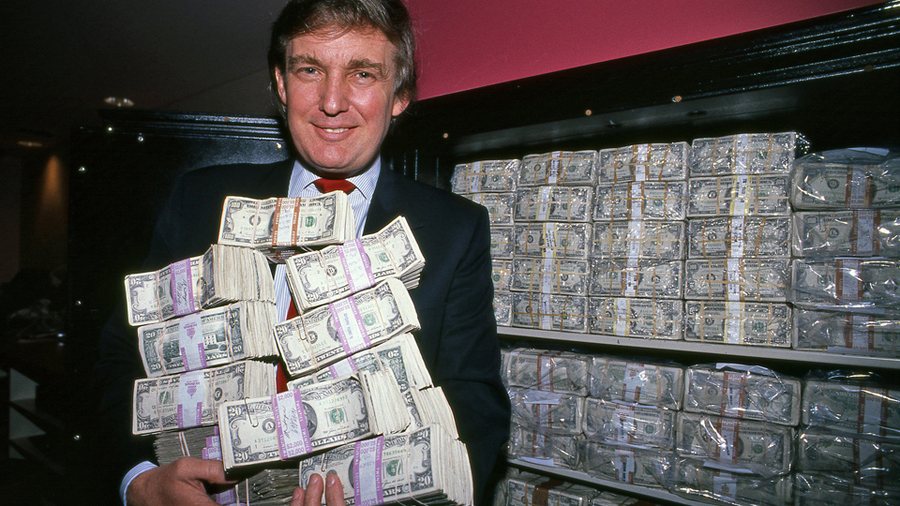
On a personal level, the Financial Times estimates a $1 billion increase in profits, largely due to cryptocurrencies...
Some serve as presidents out of a sense of service, others out of personal wealth. Since returning to the White House, Donald Trump has made a billion dollars, if not more, from bitcoin, memecoin, tokens, and foreign investments alone. The acronym MAGA, which the president used repeatedly during the election campaign, probably stood for "Make Assets Great Again."
According to the person in question, those were tough times that led to his second presidential ascension. Struggling with a liquidity crisis, a $500 million civil penalty, and his remaining real estate assets at risk of being sold, November 5 of last year marked his financial renaissance. And that's not all. Trump is the only president to have increased his wealth since taking office, through financial and business transactions while defying conflicts of interest.
His predecessors avoided potentially compromising situations by relying, for example, on blind trusts, legal agreements that separate a person from managing his assets for a limited period of time, such as the duration of a public office, by entrusting everything to an independent administrator. Lyndon Johnson, Ronald Reagan, Jimmy Carter, Bill Clinton and George W. Bush did the same. The current president, however, has preferred to leave the assets under the management of his children and associates, despite the unclear mix of public and private interests.
However, as White House spokesman Kush Desai himself explained to the Financial Times: "The reality is that President Trump had already built a business empire before he entered politics, when he became the richest person to win the presidency in history. [...] His sole motivation for leaving his luxurious life behind to run for office was to save our country and our people."
This vaunted philanthropic spirit is at odds with the multi-billion dollar deals that have been struck, thanks in part to the introduction of favorable legislation. The Financial Times itself devoted a lengthy analysis to the topic, highlighting how, nearly a year after the election, Trump has failed to deliver on his promise to become the “first cryptocurrency president.” Rules such as the creation of a national bitcoin reserve, leadership changes at key US regulatory agencies with pro-opening figures, and the closure of investigations into major cryptocurrency companies are just some of the pieces that the president and his aides have cleverly positioned.
“The rules will be written by people who love your industry, not people who hate it ,” Trump said in Nashville in July 2024. Put simply, he’s introducing policies that pave the way for retirement investments in cryptocurrencies and the involvement of traditional banks. The results were swift: the price of bitcoin hit all-time highs, and many executives of foreign cryptocurrency companies returned to the United States.
On a personal level, the Financial Times estimates a $1 billion increase in profits, largely due to cryptocurrencies. When asked by the paper, Eric Trump suggested an understatement, claiming the real figure is likely higher. However, on paper, his net worth has increased by several billion dollars.
In 2024, Trump had expressed his disapproval of cryptocurrencies, calling them a "scam" or "based on nothing," or even "un-American" because they compete with the dollar.
Then came a change of pace. Angry with Wall Street banks, accused of opposing his business activities for political reasons, Trump, towards the end of the election campaign, began a new and intense partnership with cryptocurrencies.
"We're being targeted in such a way that we have to find alternatives to traditional finance ," Eric Trump told the Financial Times, explaining his father's reconsideration. It led to millions of dollars in donations from US cryptocurrency companies including Coinbase, Ripple Labs and Circle.
Incidentally, during his tenure, the Securities and Exchange Commission has closed or dismissed pending cases against financing companies, and companies affiliated with Trump have purchased bitcoin and other tokens.
Trump's moves are a clear example of exploiting his position for personal economic gain. This includes launching memecoins with his wife Melania, cryptocurrencies based on memes and social media trends, which are highly volatile and speculative.
These are estimated to have generated approximately $427 million in sales and trading commissions, although the exact profit split is still unclear. This trading advantage extends even to companies that have historically not focused on cryptocurrencies, such as Trump Media & Technology Group, which has begun raising tokens and launching bitcoin funds. A $3 billion turnaround.
Yesterday, Trump also pardoned the founder of cryptocurrency platform Binance. Changpeng Zhao, also known by the acronym CZ, is forty-six years old, of Chinese origin but Canadian nationality, and is the sixty-ninth richest person in the world (with a net worth of twenty-three billion dollars). In 2023, he pleaded guilty in a US court to money laundering.
Platforms, companies, and investment activities are also filling the portfolios of the president, his entire circle of aides, family members, and government officials with various ties to digital investments, the most well-known being Vice President JD Vance.
Trump’s closest aides hold significant cryptocurrency holdings: a long list that includes U.S. Middle East envoy Steve Witkoff, Federal Housing Authority Director Bill Pulte, Commerce Secretary Howard Lutnick, and many others. Investors, of course, include many foreign entrepreneurs, such as MGX, an Abu Dhabi-owned investment firm, which has already bought a Trump-backed stablecoin for $2 billion.
All of this has been met with public silence, despite the claims of activists and opposition Democrats. Public First US conducted a survey of Trump voters, commissioned by the Financial Times. The responses reveal a distorted perception of reality, with more than half estimating the president's income at $100 million and a third denying that he receives any financial benefit from his office./ Adapted from "Pamphlet" by "Linkiesta"





Lini një Përgjigje