


 Shkruar nga Pamfleti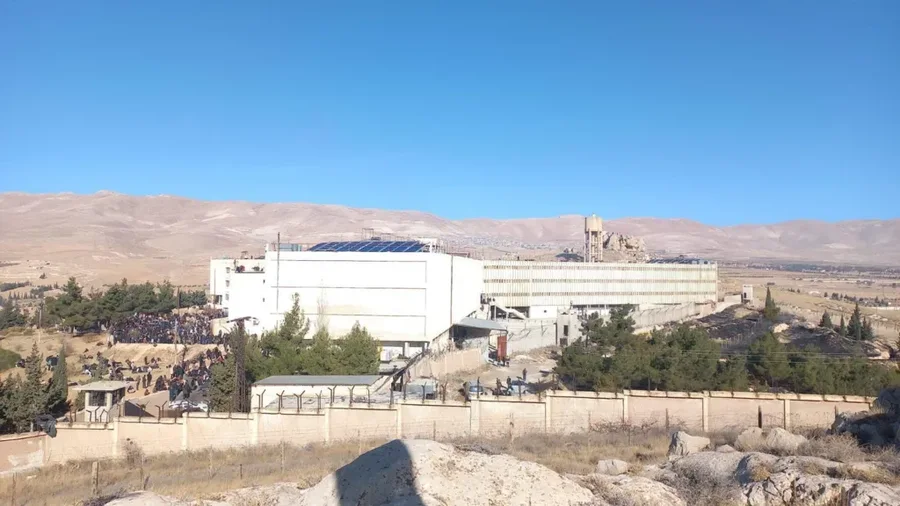
Dubbed a "human slaughterhouse" by human rights groups, thousands of people have reportedly been detained, tortured and executed in prisons since the start of Syria's civil war...
Since the fall of the Assad regime on Sunday, Syrian civilians hoping for news of their relatives have flocked to the country's most secretive and notorious prison, Saydnaya.
Founded in the early 1980s in a small town about 30 km north of the capital Damascus, Saydnaya is where the Assad family has held opponents of their regime for decades.
Dubbed a "human slaughterhouse" by human rights groups, thousands of people have reportedly been detained, tortured and executed in prison since Syria's civil war began in 2011.
Saydnaya has been a closely guarded secret and images from inside the prison have never been seen before.
Details of the prison structure can only be determined based on interviews with former guards and detainees.
But reports from rights groups and the US State Department have provided insight into the building, which has become a powerful symbol of the Assads' brutal and repressive rule.
A vast 'slaughterhouse'
Saydnaya was administered for decades by the Syrian military police and military intelligence, with construction beginning in the early 1980s. The first detainees arrived at the 1.4 square km facility in 1987 - 16 years into the rule of President Hafeez al-Assad, the father of Bashar.
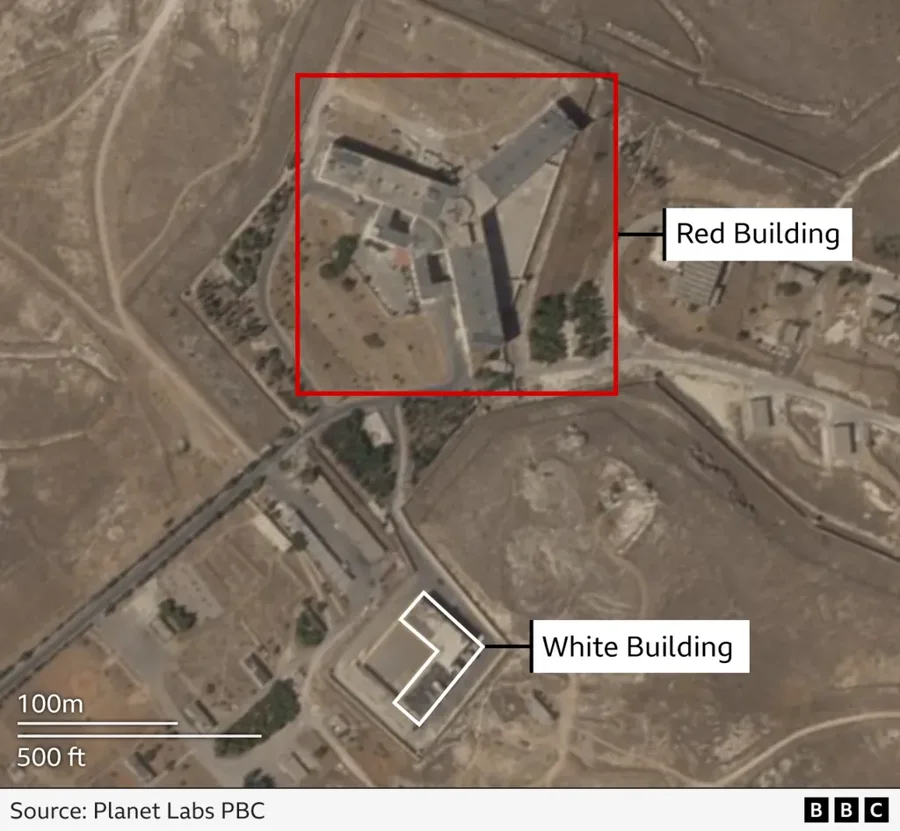
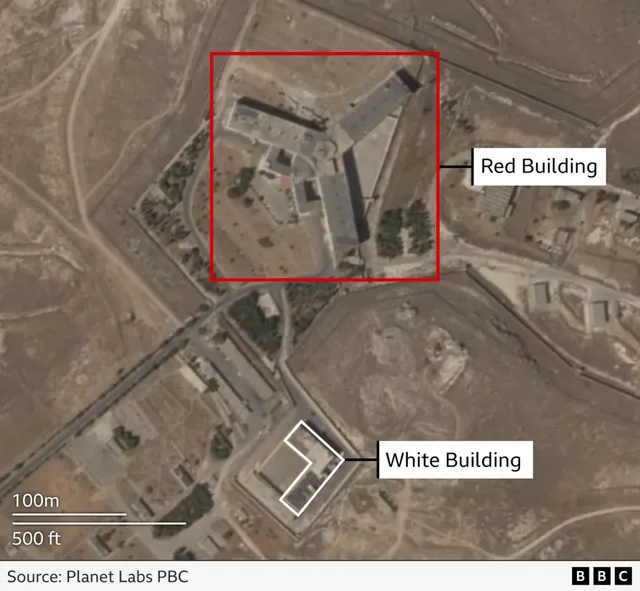
Once fully operational, the prison contained two main detention facilities. The White Building, according to human rights groups, was built primarily to house military officers and troops suspected of being disloyal to the regime. It was an L-shaped compound to the southeast of the vast compound.
The Red Building - the main prison - was for opponents of the regime, initially consisting of those suspected of membership in Islamic groups. This wing was notable for its distinctive Y-shape, with three straight corridors radiating from a central hub.
As many as 10,000-20,000 people could be housed between the two buildings, according to rights groups who have spoken to the released prisoners. Videos circulating online since Sunday - which have been authenticated by BBC Verify - showed a large surveillance room at the prison filled with CCTV screens showing what appeared to be dozens of prison cells.
Një raport i vitit 2017 nga Amnesty International, duke cituar ish-rojet e burgut, zbuloi se pas fillimit të luftës civile në Siri në vitin 2011, ndërtesa e Bardhë u zbraz nga të burgosurit ekzistues dhe u përgatit për të strehuar ata të arrestuar për pjesëmarrje në protestat kundër presidentit Bashar al-Assad.
Një ish oficer i tha Amnesty se "pas vitit 2011, [Saydnaya] u bë burgu kryesor politik në Siri".
Organizata citoi gjithashtu dëshmi nga ish të burgosurit që pretendonin se ata që mbaheshin në Ndërtesën e Kuqe ishin ekspozuar shpesh ndaj metodave të ndryshme të torturës, duke përfshirë rrahje të rënda, përdhunim dhe mohim të aksesit në ushqim dhe ilaçe.
E vendosur poshtë ndërtesës së Bardhë është ajo që ata që folën për Amnesty e quajtën një "dhomë ekzekutimi", ku të burgosurit në ndërtesën e Kuqe do të transportoheshin për t'u varur.
Një ish-roje tha se një listë e atyre që do të ekzekutoheshin nga Ndërtesa e Kuqe do të mbërrinte në drekë. Trupat pastaj do t'i çonin ata që ishin të shënuar për vdekje në një qeli nën bodrum - e cila ndonjëherë mund të përmbante deri në 100 njerëz - ku u nënshtroheshin rrahjeve.
Të burgosurit që folën me Amnesty thanë se të burgosurit në Ndërtesën e Kuqe zakonisht "transferoheshin" nga ndërtesa në fund të natës - zakonisht midis mesnatës dhe orës 03:00.
Të arrestuarit me sy të lidhur çoheshin më pas në "dhomën e ekzekutimit" në seksionin juglindor të ndërtesës së Bardhë, përpara se të çoheshin në një platformë të lartë një metër me 10 lake ku dhe vareshin.
Sipas Amnesty, në vitin 2012 dhoma u zgjerua, me një platformë të dytë me 20 lake të tjera. Në pamjet e shpërndara nga mediat e lidhura me rebelët pas rënies së regjimit, luftëtarët shfaqën dhjetëra litarë që gjetën në dhomat përreth Saydnaya.
Vlerësohet nga grupet e të drejtave se më shumë se 30,000 të burgosur ose ishin ekzekutuar ose kishin vdekur si rezultat i torturës, mungesës së kujdesit mjekësor ose urisë midis viteve 2011 dhe 2018. Duke cituar rrëfimet nga disa të burgosur të liruar, të paktën 500 të burgosur të tjerë ishin ekzekutuar ndërmjet 2018 dhe 2021, Shoqata e të Pagjeturve dhe të Paraburgosurve në Burgu Saydnaya (AMDSP) tha në 2022.
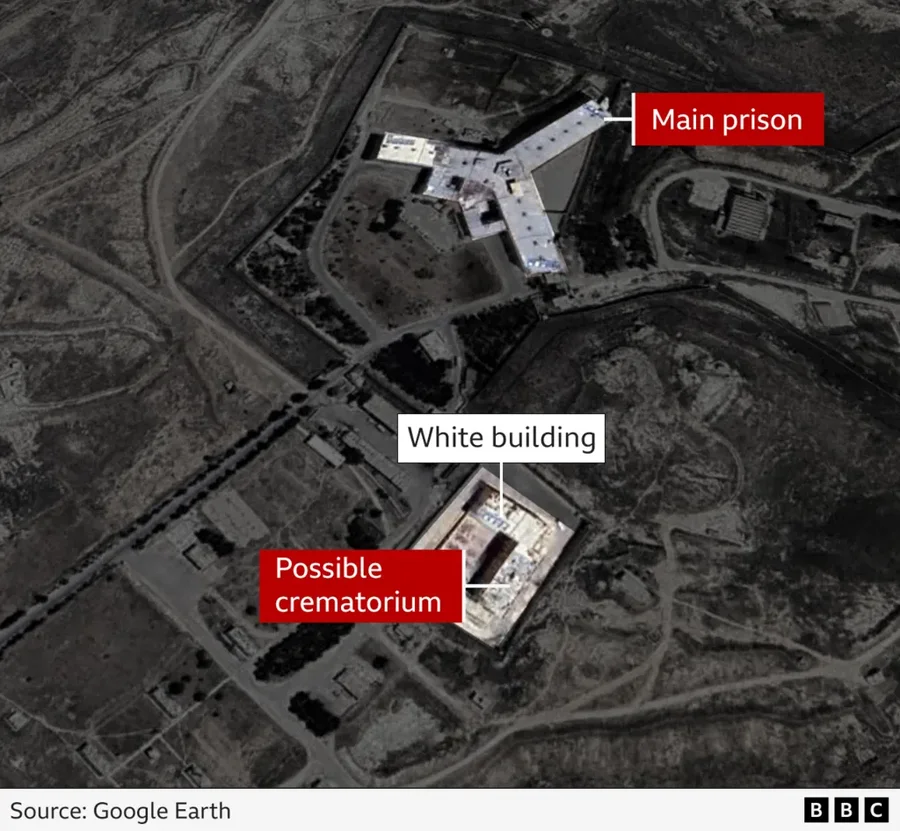
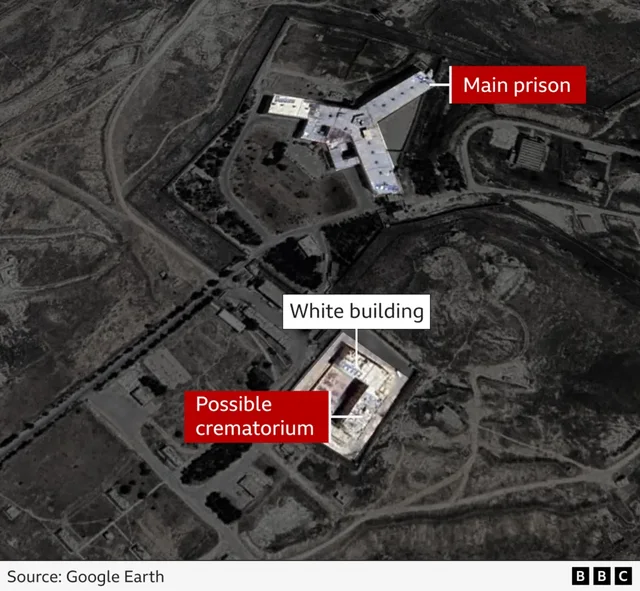
Në vitin 2017, Departamenti Amerikan i Shtetit pretendoi se autoritetet kishin ndërtuar një krematorium të mundshëm në vend për të asgjësuar eshtrat e të burgosurve të vrarë. Në imazhet më poshtë, një krah i vogël mund të shihet ngjitur me ndërtesën e Bardhë.
Një zëdhënës i Departamentit të Shtetit tha se zyrtarët e kishin ndërtuar objektin si pjesë e "një përpjekjeje për të mbuluar shkallën e vrasjeve masive që po ndodhin në burgun Saydnaya".
Satellite images released by US investigators showed a structure they said was a small building turned crematorium. Officials said melting snow on the building's roof helped support their claims - adding that at least 50 prisoners a day were hanging in the facility at the time.
Intensive security
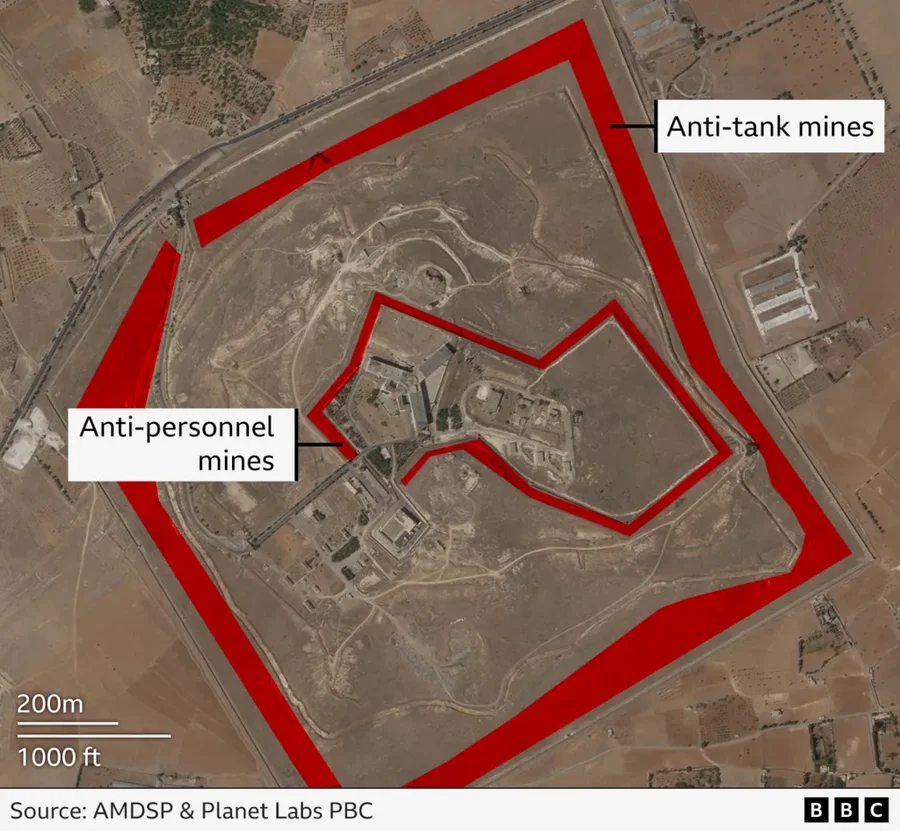
Throughout its history, the facility was heavily guarded, with fortifications surrounding the grounds.
The exterior of the prison was patrolled by a detachment of 200 troops from the army, with an additional 250 soldiers from military intelligence and military police responsible for internal security, according to the 2022 report by AMDSP.
Troops from the 21st Brigade of the army's Third Division were chosen to protect the prison because of their strong loyalty to the regime. The soldiers were commanded by officers from President Bashar al-Assad's Alawite minority.
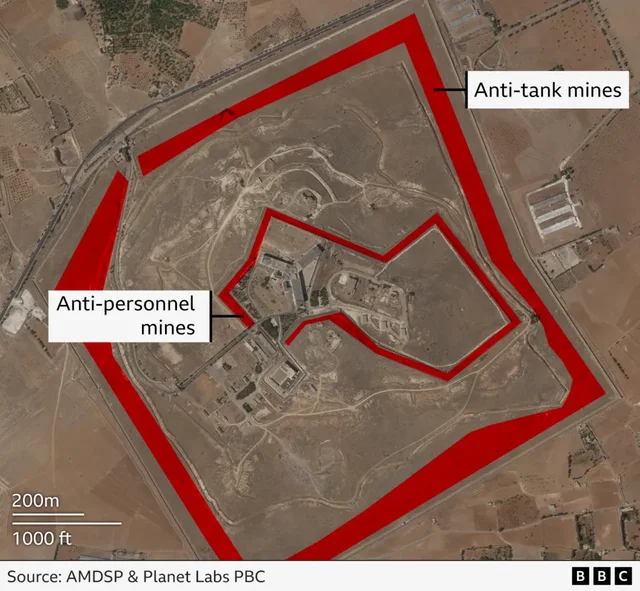
Since the fall of the Assad regime, civilians have been asked to avoid moving around the prison perimeter. Rights groups say the exterior of the compound is known to be heavily mined. A ring of anti-tank ammunition runs around the outside of the prison, with a secondary ring of anti-personnel mines running through the center of the facility.
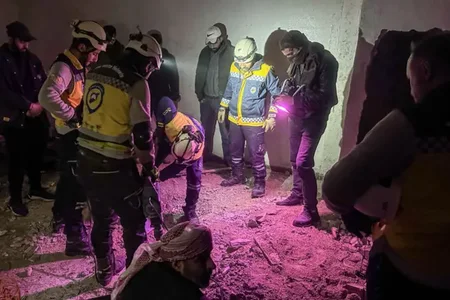
Images released by the White Helmets - a Syrian civil defense group - showed high walls covered in barbed wire also surrounding the compound. Watchtowers can also be seen dotted around the facility.
Assad's regime has always denied the accusations leveled against him by international organizations, calling them "baseless" and "untrue".
Amnesty says that for families who suspect their relatives are being held in Saydnaya, the fall of the regime "raises the possibility that they may finally discover the fate of their missing loved ones, in some cases decades later". /Adapted from "BBC"




Lini një Përgjigje