


 Shkruar nga Pamfleti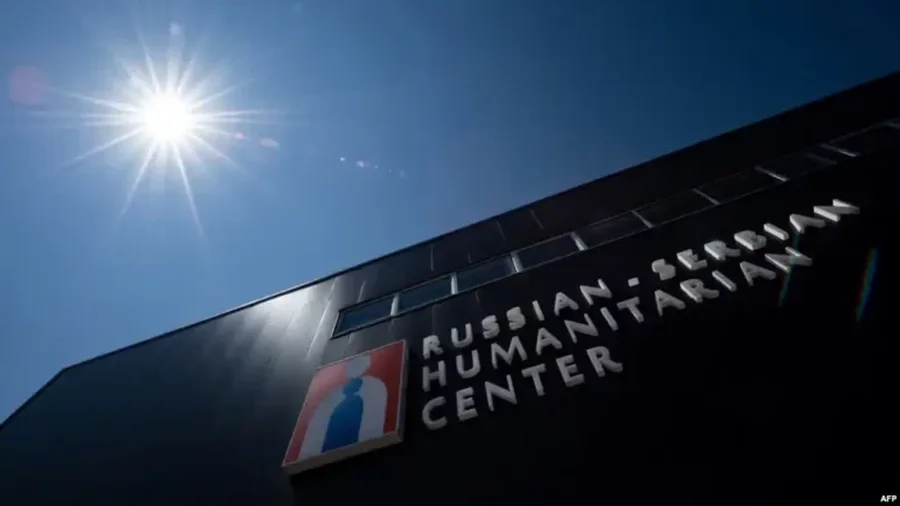
Moscow describes it as the "most important center in the Balkans" for responding to emergency situations and natural disasters, but Western countries suspect it is an attempt to create a military base.
The European Union once again asked Serbia what the Serbo-Russian Humanitarian Center in Nis does. It has been ten years since it opened in the south of Serbia and has become a matter of dispute between Russia and the West. Moscow describes it as the "most important center in the Balkans" for responding to emergency situations and natural disasters, but Western countries suspect it is an attempt to create a military base.
The European Commission demanded an explanation from Belgrade through the new annual report - the most important document that assesses the progress of candidate countries for EU membership - that was published last week. "Serbia must inform the EU about the activities of the Center in Nis and about its integration into the emergency management system," says the report published on November 8. "The Serbian balance between Russia and the West is broken not in NIS [Serbia's largely Russian-owned Oil Industry], but in Nis," says Vuk Vuksanovic of the non-governmental Belgrade Center for Security Policy.
Since the beginning of the Russian invasion of Ukraine in February 2022, the West has asked the authorities in Belgrade to impose sanctions on Russia, but Serbia has refused. It has been a year and a half that a part of the opposition and the public in Serbia has been demanding the closure of the Serbo-Russian Humanitarian Center. "Everything related to Russia in Serbia is under additional surveillance because of the war in Ukraine," Vuksanovic told Radio Free Europe.
"Cooperation between Serbia and Russia, only as much as the West allows"
Russia's request that Serbia grant diplomatic status to the Center's staff has drawn particular attention over the years. This status has several privileges, such as freedom of movement not only in Serbia but also in the region, and immunity in case of any criminal offense committed on the territory of Serbia. So far, the authorities have not approved such a status for the staff of the Serbo-Russian Center.
"I don't believe they would have received diplomatic status before the war in Ukraine, and even less now," Vuksanovic says. "Serbia is surrounded by NATO and European Union member countries, and cooperation between Belgrade and Moscow can only happen to the extent that the West allows," he adds.
The Government of Serbia and the Serbo-Russian Humanitarian Center did not respond to Radio Free Europe's questions about the work of this center and the request that the staff receive diplomatic status.
"Not to double the role of the EU in civil protection"
In the latest report, the EU says that Serbia must ensure that the Serbo-Russian Humanitarian Center in Nis "does not duplicate the role of the European Commission's Emergency Coordination Centre". A center like the one in Nis, based on interstate agreements with Russia, does not exist in the member states of the European Union. Serbia, as a candidate for EU membership, is part of the European Civil Protection Mechanism and has used its assistance in several cases – for example, during the coronavirus pandemic or the devastating floods in May 2014.
Since 2014, more than 250 million euros in aid have arrived from Brussels for the civil defense sector in Serbia, according to the website of the EU delegation in Serbia. In its latest report, the European Commission recalls that, last year, Serbia helped other countries through the international mechanism – for example, it sent rescuers to Turkey after the devastating earthquake there, as well as humanitarian aid packages to Ukraine.
"If Serbia benefits from the EU's emergency mechanism, not only by reacting to its own crises, but also by providing assistance to other countries, then I really don't know how the Russian Center works," says Vuksanovic.
How does the Center work after Western sanctions?
Vuksanovic sees Western sanctions against Russia as the main obstacle to the Center's work in Nis. "The issue is how the Center can function now, when the airspace and territory of the European Union, in the vicinity of Serbia, are closed to Russian aircraft and similar equipment," he says. However, he estimates that the Center itself has "more of a political role" than that it represents a "special threat to security".
"The center is more part of Serbia's politics in its efforts to scare the West with Russia. And, it is useful for the Russians to show that they have a symbolic presence in the Balkans and irritate the West", says Vuksanovic. After the Russian invasion and Western sanctions, according to Vuksanovic, Serbia is important for the Kremlin to create a political image that "it is not totally expelled from the Balkans" and that "there are still governments in Europe that have not cut off communication and are ready to cooperate with him". Besides noting that it has not agreed to any restrictive measures against Russia, Brussels also points out that Serbia has maintained high-level relations with Moscow - which "calls into question its strategic path".
What did the Center do last year?
Në prill të vitit 2022, Qendra Humanitare Serbo-Ruse ka festuar dekadën e parë të ekzistencës së saj. Duke paraqitur rezultatet, ajo ka njoftuar se gjatë dhjetë vjetëve, ka trajnuar “rreth 3.000 anëtarë të shërbimeve të reagimit emergjent nga vendet e rajonit të Ballkanit”. “Anëtarët e Qendrës kanë marrë pjesë në trajtimin e një numri të madh të emergjencave natyrore dhe të krijuara nga faktori njeri, kanë dhënë ndihmë për ngritjen e kampeve gjatë krizës së migrantëve, si dhe kanë ndihmuar në luftën kundër përhapjes së koronavirusit”, ka numëruar, mes tjerash, Qendra. Përveç trajnimeve, aktivitetet e tjera të Qendrës janë mezi të dukshme në ueb-faqen e saj zyrtare.
REL-i ka analizuar njoftimet e vitit 2022 dhe 2023, në të cilat thuhet se Qendra ka organizuar trajnime për zjarrfikës, shpëtimtarë, nxënës të shkollave të mesme dhe punonjës të Industrisë serbe të Naftës. Kështu, për shembull, ligjërues nga Shën Petersburgu kanë mbajtur “trajnim në distancë” për shpëtimtarët e Ministrisë së Punëve të Brendshme të Serbisë, për kërkim-shpëtim në lumenj malorë. “Në distancë” është organizuar edhe trajnimi për shuarjen e zjarrit në tunele hekurudhore dhe objekte nëntokësore. Është botuar edhe një fjalor anglisht-serbisht-rusisht me temën e situatave emergjente. Qendra ka raportuar, gjithashtu, për vizita të diplomatëve nga Rusia dhe Bjellorusia. Se sa është i angazhuar stafi i Qendrës në situata emergjente në Serbi, nuk dihet.
Kosova e akuzon Qendrën për përfshirje në sulmin në Banjskë
Akuza në drejtim të Qendrës Humanitare Serbo-Ruse në Nish ka bërë ministri i Brendshëm i Kosovës, Xhelal Sveçla, pas sulmit të armatosur ndaj policisë së Kosovës në Banjskë. Në një intervistë për Radion Evropa e Lirë më 1 tetor, ai ka thënë se ka informacione për përfshirjen e elementeve “të lidhura drejtpërdrejt me Rusinë” në sulm. Lidhur me Qendrën Humanitare Serbo-Ruse, Sveçla ka deklaruar se është “qendër inteligjente, përmes së cilës, spiunohet i gjithë rajoni”.
“Ne besojmë se edhe kjo qendër është e përfshirë në sulm”, ka thënë ai. Qendra Humanitare Serbo-Ruse dhe autoritetet në Serbi nuk kanë reaguar ndaj këtyre akuzave. Serbia e ka mohuar përfshirjen në incidentin në Banjskë, ku një grup i armatosur serbësh ka sulmuar më 24 shtator policinë e Kosovës, duke vrarë një polic dhe duke plagosur disa të tjerë. Në shkëmbimin e zjarrit që ka pasuar, janë vrarë edhe tre sulmues serbë. Përgjegjësinë për sulmin e ka marrë Millan Radoiçiq, deri vonë nënkryetar i Listës Serbe – partisë udhëheqëse të serbëve të Kosovës, e cila gëzon mbështetjen e autoriteteve në Beograd. Ndaj Radoiçiqit po zhvillohen hetime të ndara në Kosovë dhe në Serbi.
Dhjetë vjet polemika
The main objections of the West during the ten years of the Center's existence have been related to the fact that it could be a site for the Kremlin's espionage activities and for Russia's response to EU enlargement and NATO expansion in the Western Balkans. . In June 2017, the then senior official of the US State Department, Hoyt Brian Yee, said that the US was concerned about the construction of a Russian center in Serbia and the possible special status it could be given. the staff. "We do not believe that Russia has good intentions to help the Balkans move towards the EU," Yi said at the time.
He added that the Center in Nis, near the border with Kosovo, where the US has about 600 American soldiers and NATO about 4,000 peacekeepers in total, is not a positive development. "It is important - and we share this belief with the Government of Serbia - that Serbia has full control over its territory and everything in it. If it allows Russia to create a center for espionage, it will lose control over a part of its territory," Yi emphasized. This was answered by the Serbian Prime Minister, Ana Bërnabiq, who declared at the end of June 2017 that the issue is "very politicized". The Serbian-Russian Humanitarian Center was formed on the basis of an agreement between the governments of Serbia and Russia in 2009 and is under the joint jurisdiction of the Ministry of Emergency Situations of Russia and the Ministry of Internal Affairs of Serbia. /REL


Lini një Përgjigje