


 Shkruar nga Lili Bayer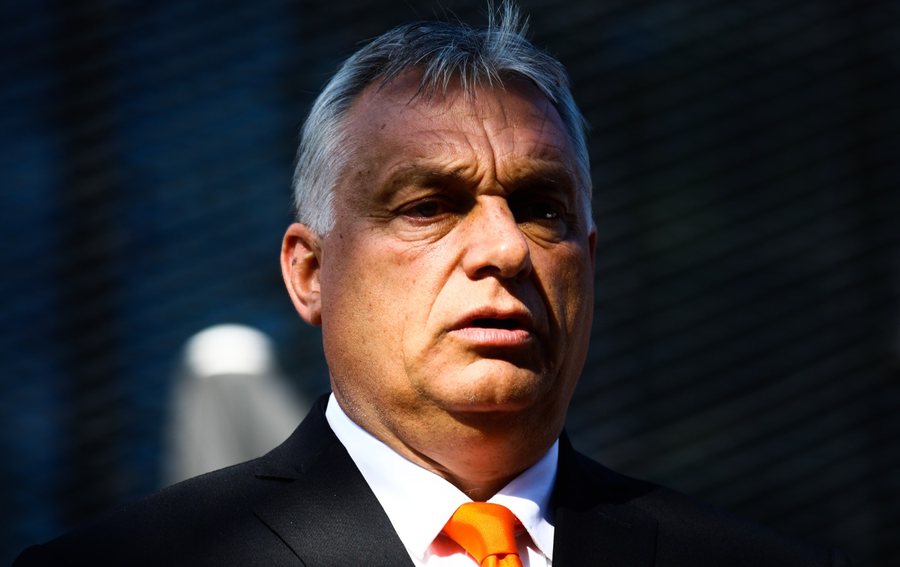
News stories that quoted figures such as European Commission President Ursula von der Leyen, Czech President Petr Pavel and US Ambassador to Hungary David Pressman were categorized as Western disinformation narratives.
With leaders across Europe outraged by Viktor Orbán's illegal foreign policy adventures, Hungary's far-right leader has stepped up his campaign against independent voices in the country, increasing pressure on media outlets and civil society groups that they don't follow the government line.
The prime minister's meetings in recent weeks with Russian President Vladimir Putin, Chinese leader Xi Jinping and US presidential candidate Donald Trump have sparked controversy in diplomatic circles, further isolating Budapest at a time when Hungary is officially holding the Council of the next Presidency of the European Union.
However, receiving much less attention abroad has been a flurry of activity inside Hungary targeting independent journalism and watchdog groups. At the center of the crackdown is the controversial new office for protecting the country's sovereignty.
Led by a figure with close ties to the ruling Fidesz party, he was given the power to withdraw intelligence services without judicial oversight, the office created by Orbán's government, officially to monitor foreign influence.
But in practice, critics say, it is not serving as an independent state body, but as a tool to put pressure on critics of the government.
"This whole thing is so absurd that I would put it somewhere between Orwell and Kafka ," said József Péter Martin, executive director of Transparency International Hungary, one of the organizations under investigation by the sovereign protection office.
" In a European Union country, this absolutely should not happen ," said Martin in an interview in Budapest. The activities of the office for the protection of sovereignty violated freedom of expression and were unconstitutional, he added.
While the office's motives remain unclear, many say there are signs that the Hungarian government, which has centralized power since Orbán returned to office 14 years ago, is trying to further limit the space for independent groups.
"The regime is getting stronger, so Orbán is not going in the direction of consolidation, but is clearly Putinizing, and year by year in a way that is more visible ," said Ágnes Urbán, an academic and expert on the Hungarian media scene.
So far, the sovereign protection office has said it is looking into two entities: Transparency International Hungary and Átlátszó, an investigative medium known for its work to uncover suspected government corruption. In public reports, the office has also targeted a host of high-profile media outlets, saying their journalism is harming Hungary's national interest.
In the report, stories citing figures such as European Commission President Ursula von der Leyen, Czech President Petr Pavel and US Ambassador to Hungary David Pressman were categorized as Western disinformation narratives.
Among the targets of the report are some of Hungary's most respected foreign policy experts, who have spoken out about the government's cozy relationship with the Kremlin.
Péter Buda, a former Hungarian intelligence official cited in the report, said: "In such a fragile and complex international situation, it risks a fatal escalation to give space to propagandists unable to suppress critical analysis, especially when they act in the interest of the party that is carrying out the aggression of the war".
In February, the European Commission announced it was taking the first step in legal action against Hungary over the law that created the sovereignty office. The US State Department has also criticized the office.
But the Hungarian government claims that this is a necessity. In an emailed statement, Balázs Orbán, the prime minister's political director, said Hungary had faced "growing threats" in recent years and that the office was a key part in the response.
" The Office for the Protection of Sovereignty was established to examine foreign interference in Hungarian internal affairs and to protect the sovereignty of Hungary and the interests of Hungarian citizens. Although not a national security service or investigative authority, the office increases transparency by collecting and publishing detailed reports on its findings. Such offices are essential in any democracy and some countries already have similar institutions ," he said.
The Hungarian government has promoted a narrative that media and civil society groups are receiving significant funding from abroad in a manner that lacks transparency – and that this money is distorting their work and negatively impacting Hungarian society.
NGOs and independent media have rejected these accusations as baseless, saying that their funding is completely transparent.
Many of the grants the government and its allies have pointed to are funded through open processes from the EU budget or the US state department, they say.
Some observers have warned that one of the main effects of the sovereignty office could be to spread confusion.
"One of the main elements here is the introduction of uncertainty and, as a result, fear in civil society and media actors. This can lead to self-censorship ," said Zsuzsanna Végh, a program officer at the German Marshall Fund.
Hungary's Minister for EU Affairs, János Bóka, said that the Hungarian office for the protection of sovereignty "enjoys complete independence and fairly wide discretionary powers when it comes to exercising its activities within the legal framework".
He added that the office is independent and that it was not coordinated or connected with the Hungarian government in any way or shape./ Adapted "Pamphlet" from "The Guardian"





Lini një Përgjigje