


 Shkruar nga Pamfleti
The two-week ceasefire between the US and Iran has sent global stock markets soaring and sent oil prices plummeting, paving the way for crucial negotiations to end the fighting. But some analysts say "we are still in the fog of war" and there is a high risk of collapse, with the US-Iran ceasefire "fragile" and proposals from both sides providing only an initial framework for further talks.
They also assess that the massive resumption of oil transport is not certain despite the US-Iran ceasefire, emphasizing that restoring the largest disruption in the history of the oil market will not be quick or easy and that this will mean continued high prices and a lack of supplies in major importing countries.
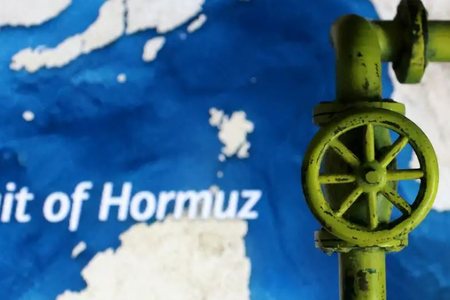
The coming days will show how much the flow of tankers through the Strait of Hormuz will "flow", as the conditions that Iran may impose on the passage of ships remain unclear.
As analysts note, energy markets may have been buoyed by the ceasefire announcement, but skepticism could return as restarting closed facilities and production that had been disrupted by the war could take weeks or even months.
Nearly 15 million barrels per day from the Gulf region are off the market due to production disruptions, rising infrastructure risks and transportation restrictions.
According to Citi, the disruption of energy flows is estimated to lead to a loss of up to 11 to 16 million barrels per day, a magnitude that exceeds historical energy shocks.
Before the ceasefire was reached, some analysts expressed concern that the rise in international oil prices would create a scene in the markets reminiscent of the period before the 2008 global financial crisis. Subsequently, the price of oil doubled to $140 per barrel by August 2008 from $70 in July 2007.
Oil prices have risen sharply since the start of the war. However, they remain below the highs seen after the Russian invasion of Ukraine in 2022. The Russian invasion pushed the price to $139.13, the highest level since 2008, when it had reached a high of $147.50. The Iran war that broke out on February 28 has already pushed oil prices to $120.
Markets have not discounted a similar outcome to 2022, when Brent oil was above $100 per barrel for about 5 months, while it is well below the 2008 record.
Also, unlike the oil shocks of both 2022 and the 1970s, inflation is generally around target, at least so far.
At least for now, we haven’t reached the historical limits that accompanied the significant risk-off movements in previous oil crises. We haven’t yet seen an aggressive turn from central banks. And given how early it is, we haven’t yet seen any clear signs of worsening economic data.
Oil crises
1973: After the Arab-Israeli war, OPEC turns off the taps to the West. The price quadruples in a few months. Before the 1973 oil crisis, the price of oil hovered around $3 per barrel.
However, due to the embargo in October 1973, the price rose sharply, exceeding $11-12 per barrel by early 1974. The era of cheap oil was over.
1979: The fall of the Shah and the rise of Khomeini limit oil production in Iran. Prices rise sharply from $14 to $39, leading to a global recession. The oil supply shock led to higher inflation and a demand shock, with the inflationary impulse driven in part by inflation multipliers (high energy intensity, wage-price indexation);
1990: Images of black skies over the Gulf become a symbol of the 1990 crisis. Saddam Hussein invades Kuwait and sets 600 oil wells on fire. The price almost doubles, reaching $40.
2008: All-time high for "black" gold. Shortly before the global financial crisis, explosive demand from China and speculation drove Brent to an all-time high of $147.50 ($210 in current inflation-adjusted prices). There was a sharp increase in oil prices against the backdrop of prior weakness in the U.S. labor and credit markets. First, this led to a sharp increase in inflation concerns, which were quickly eclipsed by falling demand.
2022: Russian invasion of Ukraine drives the price to $139.13, the highest level since 2008. Another war-related supply shock, but no drop in demand due to growth supported by post-pandemic economic reopening, large consumer savings, and a significant expansion of the US budget deficit.





Lini një Përgjigje