


 Shkruar nga Pamfleti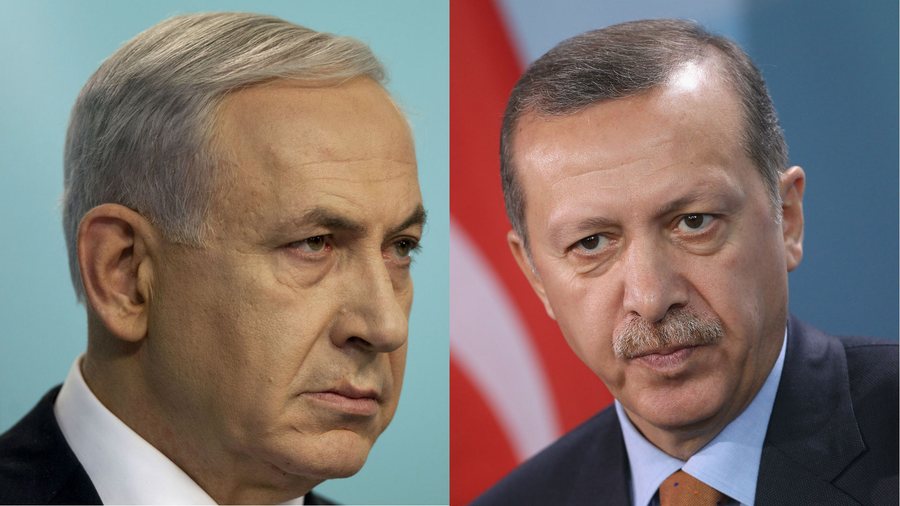
The New Cold War in the Southeast: Tensions between Turkey and the Tel Aviv–Abu Dhabi axis divide the geopolitical map from the Levant to Africa
A delicate web is unfolding over the geopolitical map that encompasses the Middle East, the Arabian Peninsula, the Red Sea, and East Africa.
At the center of this new strategic game is a clear rivalry between Turkey and the newly consolidated Israel-United Arab Emirates axis.
Ankara's geostrategic ambitions clash more and more openly with Tel Aviv's regional projection and Abu Dhabi's political and military empowerment. In this context, the effort to limit Turkish influence has become a common objective, which simultaneously aims to keep under control the networks of influence of Qatar and, in the longer term, of Saudi Arabia itself.
2025, the year when rivalry became systemic
The year 2025 marked the emergence of this geopolitical clash, which is no longer episodic, but structural and systemic. On the horizon of 2026, a consolidation of this trend is expected, with centers of conflict involving territories of critical importance for trade ties, energy infrastructure, national security and access to intercontinental geostrategic corridors.
Turkey seeks to expand its influence by strengthening control in post-Assad Syria, now under the influence of the government of Ahmad al-Sharaa. The clash with Israel is direct on the Syrian front and indirect in the maritime area, where Cyprus remains a point of tension: the northern part, under Ankara's control, challenges the internationally recognized southern part, which is strengthening alliances with Greece and Israel to protect itself from Turkish assertiveness.
Broad Framework: Africa and the Gulf
Israel, for its part, has opened a new front in Somaliland, in the heart of the Horn of Africa, a region where Turkey has long faced the influence of the Emirates in Somalia. The Emirates, although they have condemned Israeli recognition of Somaliland's independence, have for years developed close relations with the Hargeisa government, while strongly supporting the STC separatist movement in Yemen, in open conflict with Saudi and Turkish interests in maintaining a balance against Iran.
In Sudan, the clash is even more direct. Turkey supports the military regime of Abdel Fattah al-Burhan, while the Emirates finances and arms the RSF rebels, a proxy war that has generated serious humanitarian and ethnic consequences in Darfur.
Disagreement, but not a breakup
Despite the clash on many fronts, we do not yet have a total clash. Turkey and the Emirates have tried to separate geopolitical competition from bilateral relations, while maintaining economic and diplomatic communication. Meanwhile, the Tel Aviv–Abu Dhabi axis, consolidated after the Abraham Accords (2020), has clashed over the Palestinian issue. The heated Turkish-Israeli rivalry, however, is partially balanced by the common alliance with the US and the indirect influence of Azerbaijan, an actor that sometimes serves as a bridge of communication, sometimes as a powder keg.
Symbolic messages on the eve of a big game
It is no coincidence that the leaders of Sudan and Somalia visited President Erdogan this year, sending a symbolic message to the Emirates and Israel in support of the territorial integrity of Ankara's allies, an integrity that Turkey itself does not recognize for Cyprus. Meanwhile, the Cypriot president and the Greek prime minister recently visited Jerusalem to strengthen energy (EastMed) and military cooperation with Israel, while on December 14 the Emirati leader also visited Nicosia.
These are moves and counter-moves in a grand game of chess, where the clashes are regional but the goals are global. At the heart of the battle is the question: will the trans-Mediterranean connectivity networks sponsored by Turkey, or the Indo-Mediterranean project (IMEC) pushed by Israel and the Emirates, triumph?
It is thus decided who will have control of the entrance to the Red Sea, the strategic crossroads for global trade, and access to Africa, as the new geopolitical and economic frontier of the world. / Adapted from "Pamphlet" by "Inside Over"


Lini një Përgjigje