


 Shkruar nga Pamfleti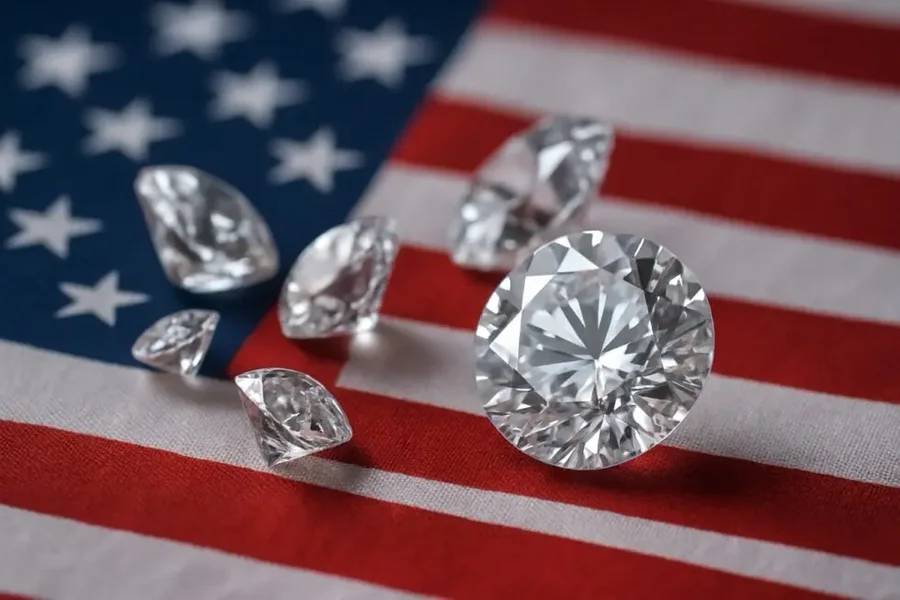
The hypocrisy of sanctions: the US bans Russia's energy, but not its precious stones...
The United States has temporarily authorized the import of certain categories of diamonds of Russian origin, despite sanctions imposed on Moscow since the start of the war in Ukraine. A license published by the Office of Foreign Assets Control (OFAC) stipulates that until September 1, 2026, diamonds over 1 carat can enter the country, provided that they left Russia before March 1, 2024, as well as diamonds over half a carat that left before September 1, 2024. After these dates, the embargo will return to its full form. This is a temporary space that does not cancel the embargo imposed in February 2023, but that in practice softens its implementation.
The diamond sector is an important source of income for Russia, which through giants such as Alrosa controls a large part of the world market. The West had presented the blockade of diamonds as a symbolic and at the same time concrete measure to cut off Moscow from an important source of foreign exchange. But the diamond market is global and difficult to control. Stones circulate, are cut, polished and re-marketed through centers such as India and Dubai. The American license recognizes this complexity and, in fact, also recognizes the difficulty of completely eliminating this economic flow.
The decision has not only a commercial dimension, but also a political one. It shows the contradictions of the Western sanctions strategy. Washington seeks to appear steadfast towards Moscow, but at the same time faces pressures from the luxury market, domestic industry interests and economic lobbies. The result is a selective implementation of the embargo, which risks undermining the credibility of the hardline.
The diamond case also highlights the dimension of the “geopolitics of luxury.” While sanctions affect energy and technology sectors, luxury goods retain a symbolic and political weight. Allowing the import of Russian diamonds, although limited in time and category, shows that foreign policy cannot ignore either domestic consumers or industry interests. This is a mixed signal to European allies, who have been forced to implement much stricter measures, while giving Russia some economic breathing space.
The new license is part of a broader pattern of partially applied sanctions. A sector is hit hard, but exceptions are left to protect domestic interests. The goal of isolating a country is officially declared, but trade channels are never completely closed. The economic war on Russia is being waged through compromises, where tough rhetoric is combined with market pragmatism.
Russian diamonds, heralded as a source of income that needed to be cut to weaken Moscow, are returning to the American market thanks to an exemption that exposes the weakness of the sanctions system. Behind the facade of severity lies the impossibility of implementing absolute measures in a global and interdependent economy. This is the paradox of economic warfare: strictness is declared, but flexibility is implemented. In the long run, this not only weakens the power of sanctions, but also the credibility of those who impose them. / Adapted from “Pamphlet” by “Inside Over”


Lini një Përgjigje