


 Shkruar nga Pamfleti
A day after President Trump announced an abrupt halt to strikes against Iran last month, the White House warned staff against improperly exploiting their positions to place bets.

White House staff were warned last month not to use inside information to place bets on prediction markets.
The email was sent to staff on March 24, a day after US President Donald Trump announced a five-day pause in his threat to attack Iranian power plants and energy infrastructure.
He referred to press reports that raised concerns about government officials using non-public information to place bets on platforms like Kalshi or Polymarket.

The Wall Street Journal first reported the email on Thursday.
All federal employees are subject to government ethics guidelines that prohibit the use of inside information for financial gain.
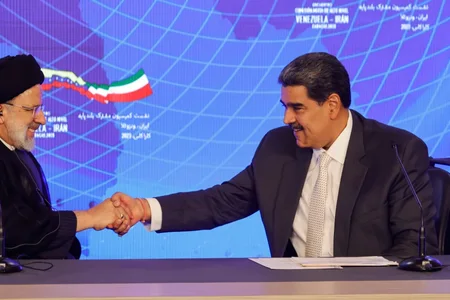
Polymarket came under scrutiny in January after a player won nearly half a million dollars from the capture of Venezuelan President Nicolás Maduro shortly before it was officially announced.
More than $760 million in oil contracts changed hands in less than two minutes, according to Dow Jones Market Data.
Recently, three accounts on Polymarket made more than $600,000 by correctly predicting the timing of this week’s ceasefire with Iran. The president’s critics, including many Democrats, quickly concluded that someone was taking advantage of advance knowledge to change policy.
The White House confirmed the veracity of the warning, while Trump spokesman Davis Ingle told The Wall Street Journal that "the only special interest that will ever guide President Trump is the best interest of the American people."
There is no evidence of leaks or that anyone within the administration is using inside information for well-coordinated betting. However, federal employees and politically connected individuals now face a new temptation in the form of cryptocurrency-based prediction markets. Prediction markets allow users to place bets on everything from sports to world events and withdraw winnings anonymously.
Ethics rules already prohibit executive branch employees from gambling on federal property, and there are rules prohibiting the use of government information for private gain. A senior administration official who received the email described the warning as a timely “reminder,” given that large, questionable bets on futures markets are “hot news.”
“President Trump has been very clear,” Ingle said, “that while he wants a strong and profitable stock market for all, members of Congress and other government officials should be prohibited from using nonpublic information for financial gain.” He said insider trading prohibitions are not uncommon and dismissed as “baseless and irresponsible reporting” any suggestion that anyone within the administration was using their position to benefit at the public’s expense.
Unusual winning bets are already attracting public attention and prompting reactions, even among the president's supporters.
“It’s disgusting,” Tom Ellsworth said during a March 25 recording of the “PBD Podcast.” The longtime investor and co-host of the Trump-friendly program speculated that “a circle of people” in the government must have known “what the president was going to say” and acted early on based on inside information. “The timing of this,” he concluded, “certainly stinks.”
Democrats in Congress argue that current federal mechanisms are inadequate for an emerging reality where wealth can be created anonymously. Senator Richard Blumenthal argued in a press release last month that prediction markets are “turning war into a casino game and creating a market for national security leaks.”
The Connecticut Democrat introduced a bill last month, along with New Jersey Democratic Sen. Andy Kim, that would completely ban prediction markets related to war or military action. “Corruption and exploitation,” Kim said, “are currently thriving in the legal loopholes and spaces of prediction markets.”
In January, an unknown trader doubled his bets that Nicolás Maduro would soon step down as leader of Venezuela, less than five hours before his capture. The bets on Polymarket netted the trader more than $400,000 in profit. In February, Israel arrested several people, including army reservists, for allegedly using classified information to place bets on Israeli military operations on Polymarket./ Pamphlet







Sa poshte ka rene njerezimi nga çmenduria e vet.