


 Shkruar nga Pamfleti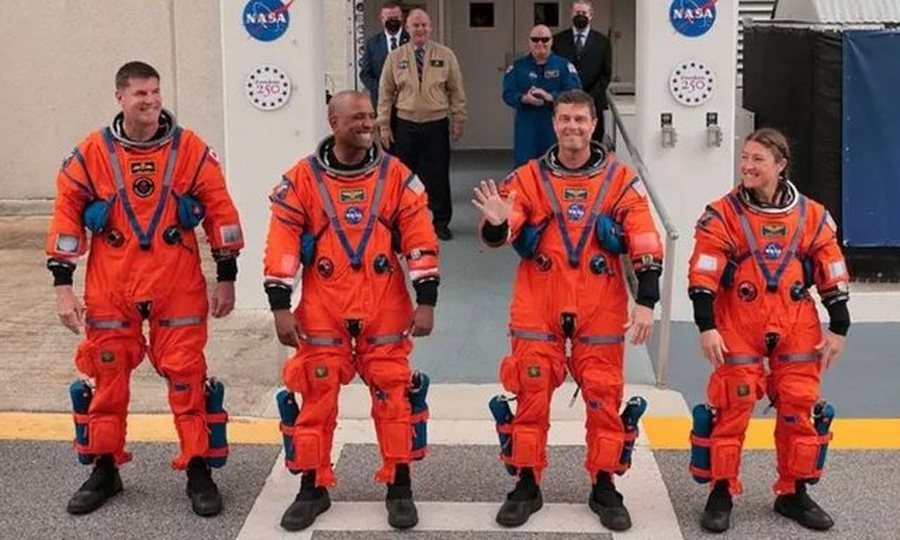
Four astronauts, Reid Wiseman, Victor Glover, Christina Koch and Jeremy Hansen, launched from Earth on April 1 as part of the Artemis II mission, marking a significant milestone in space exploration.
The crew has successfully completed the flight near the dark side of the Moon and is expected to return to Earth on April 10, in what is considered the first crewed mission to approach the Moon since Apollo 17.
So far, the mission has proceeded according to plan, except for one tense episode when the Orion spacecraft lost contact with NASA for about 40 minutes while passing the far side of the Moon. Beyond that isolated moment, the operation has continued as normal, while public interest has grown significantly, not only in the mission, but also in the lives and benefits of the astronauts.
Despite the danger and prestige of the profession, NASA astronauts are paid under the federal “General Schedule” system. They are usually classified at the GS-13 to GS-14 levels, with salaries ranging from about $90,000 to $150,000 per year. According to 2025 data, the average salary is about $152,258 per year, while there is no clear information about additional bonuses for long missions or extreme conditions.
The path to becoming an astronaut requires years of intensive preparation. Training takes place at centers like the Johnson Space Center, where candidates are trained in survival techniques, diving, robotics, and the use of space systems. In addition to technical skills, a very good physical condition, high discipline, and the ability to cope with stress and isolation are also required.
The Artemis II mission is also marking a new development in space photography. For the first time, modern equipment such as DSLR cameras, mirrorless cameras, GoPros, and even smartphones like the iPhone 17 Pro Max are being used in deep space.
In total, the Orion spacecraft is equipped with 32 photographic devices, of which 15 are integrated into its structure, while the rest are used by the astronauts themselves. NASA has already released the first images, including detailed views of the Moon, offering a new perspective and bringing the public closer to the mysteries of space.







Lini një Përgjigje