


 Shkruar nga Pamfleti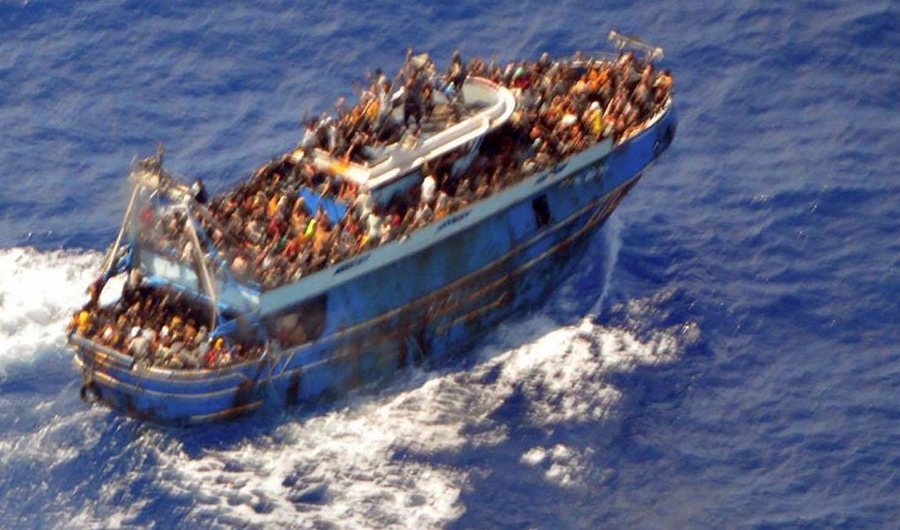
Reports of survivors of the tragedy off the coast of Kalamata, Greece, cast doubt on the version presented by the Greek Coast Guard. Human rights organizations are demanding an independent investigation.
The port administration building in Kalamata is almost empty. After the serious tragedy off the coast of the city in southern Greece about a week ago, hundreds of people came from many countries in Europe to search for family members and friends. But while the search for the bodies continues, hope for survival has been extinguished for days.
In a cafe next to the port building, a 40-year-old Syrian is standing, with a bag of documents by his side. I have been living in Germany for years, he says with a Bavarian accent, but he does not want his name published. He is holding a copy of his 16-year-old grandson's identity card. "We had the last contact three weeks ago. I found out on Facebook that he was on the ship", he confesses, adding that he has been to the port authorities every day to ask. But he is neither in the hospital, nor among the 104 survivors receiving medical attention, nor among those who have been sent to a camp near Athens.
"The world only watches"
On Tuesday night, (20.06.2023) the Greek coast guard had found three more corpses in the water. 81 drowned have been found and need to be identified. Meanwhile, the Greek authorities have begun to receive DNA evidence from relatives. The Syrian does not know if his nephew is among the found drowned. He cannot give any accurate news to his sister in Syria even today. Soon he has to return to Germany to work, he says, and he would gladly have helped his grandson for a new life in Germany.
Although Syria no longer plays any role in Western news, the situation in the country remains difficult. "People have come to the left of their noses with war and political chaos. Young people want to run away, start something with their lives." Regarding the question of who is responsible for the tragedy, he says that "we are all responsible". For so many years, there has been no solution for Syrians and for many others seeking protection in Europe. "So many dead and the world just watches."
Greek police arrest 9 Egyptian smugglers who are accused of being responsible for smuggling the ship that sank in Kalamata. Greek police arrest 9 Egyptian smugglers accused of being responsible for smuggling the ship that sank in Kalamata
Behind the barbed wire fence
Half an hour north of Athens is the Malasaka 2 camp, a center for the registration and identification of asylum seekers with EU funding. Many survivors of the flood disaster are sheltered behind the barbed wire fence. Journalists stand behind their seatbelts and hope to speak with survivors. The registration process is progressing, the Ministry of Migration announced. Until Wednesday (21.06.2023), 41 people who could leave the camp were registered. No one will talk to journalists. "We have advised them not to talk to journalists", says Manos Logothetis from the Ministry of Migration, this is done for their protection, but in the end they make the decision themselves. A different impression is created on the ground. From short conversations with refugees, it appears that they are afraid of contact with journalists,
The likely survivors of the ship have also been placed under pressure, according to a video circulating on social media, where two Pakistanis look through the fence into the camera and make serious accusations against the Greek coast guard. She had tried to take control of the unmanoeuvrable ship. Only after that the ship sank. The video caused great debate in public opinion. A survivor from the camp, with the help of an interpreter, was contacted by phone by the DE. He confirms the variant of the two Pakistanis. "We were pulled by another ship and then capsized," said this person in Kurdish. He doesn't know what kind of ship it was.
Roja bregdetare greke i hedh poshtë akuzat. Ka pasur përpjekje për të ndihmuar dhe për ta lidhur anijen për shpëtim me litar, gjë që u hodh në ujë nga njerëzit, ky është varianti zyrtar i rojes greke. Ministria e Marinës e ka refuzuar intervistën dhe i referohet njoftimeve për shtyp.
Akuzat kundër rojes bregdetare greke
Të dielën e kaluar (18.06.23) BBC publikoi një investigim që ngre shumë pyetje. Sipas të dhënave të një portali, që ndjek lëvizjet e anijeve, autorët janë të mendimit, se anija me refugjatë në shtatë orët para katastrofës gati nuk ka lëvizur. Roja bregdetare e Greqisë kishte dhënë si njoftim që anija ishte në kurs të vazhdueshëm drejt Italisë. Pyetja që shtrohet është pse nuk ka një video-dokumentim të rastit, megjithëse roja bregdetare greke është e pajisur me kamera.
Roja bregdetare greke rregullisht përballet me akuzat se i bën qëllimisht të pamanovrueshme anijet me refugjatë. Me këtë pengohen njerëzit që të kërkojnë azil në BE. Shumë raste të tilla janë dokumentuar, por Athina këmbëngul se ka respektuar ligjet edhe në rastin e tragjedisë javën e kaluar. Për Chloe Poëers nga organizata "Border Violence Monitoring Netëork" nuk mjafton që prokuroria greke ka nisur hetimet. Prej vitesh organizatat joqeveritare mbledhin e dokumentojnë të dhëna për shkeljet e të drejtave të njeriut në kufijtë e jashtëm të BE, në Greqi. Por hetimet e deritanishme, që Athina i ka kryer vetë, kanë konkluduar gjithmonë në favor të autoriteteve greke.
Even in the case of the tragedy in Kalamata, Powers sees little interest on the part of the government in clarifying the event. Powers calls the accusation of the Greek authorities about the 9 Egyptians who were on the ship and are now in custody in Kalamata wrong. This criminalizes all migration, she emphasizes. In fact, the ship's disaster is a consequence of the EU's intimidation policy to keep asylum seekers away, says Powers. "In order to have transparency, to protect human rights and to oppose systemic violence at the border, independent investigative mechanisms are needed, including civil society actors." This is the only way to prove how many state institutions within the EU are involved in the violation of human rights./DW






Lini një Përgjigje