


 Shkruar nga Pamfleti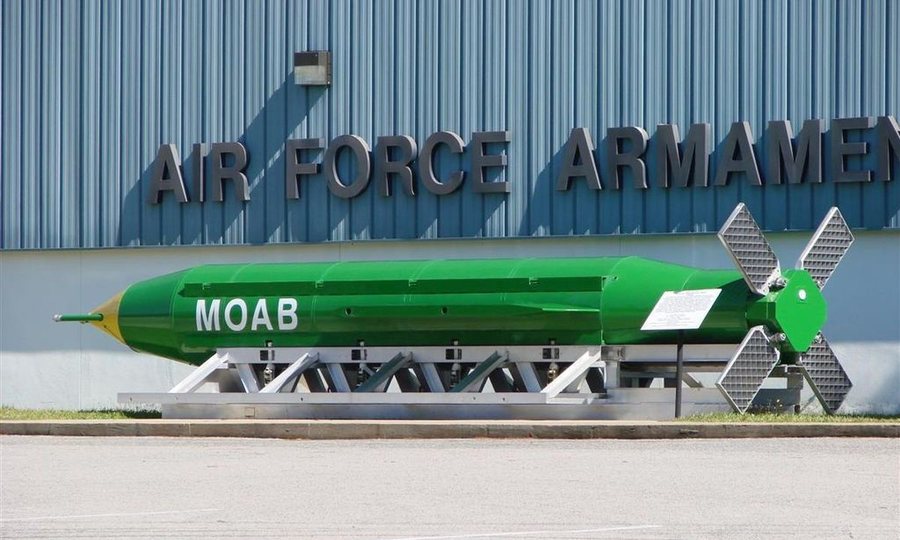
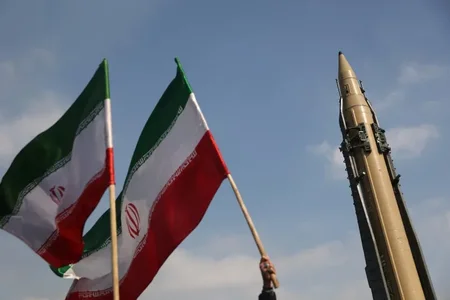
As the standoff between Israel and Iran enters a new and more dangerous phase, Washington is reportedly considering using the "Mother of All Bombs" (MOAB) in response to Tehran's growing nuclear threat.
At the center of the discussions is the underground Fordow nuclear complex, one of the most fortified and inaccessible parts of Iran's uranium enrichment program. The MOAB (the mother of all bombs), with its terrifying power and psychological impact, appears to be one of the few non-nuclear weapons that could effectively strike such a fortified structure.
Although there is no official confirmation, leaks from military sources in both the US and Israel are intensifying scenarios of "surgical strikes" on Iran's nuclear infrastructure if there is no progress in diplomacy.
In this climate of growing uncertainty and military adventurism, the name MOAB is returning to the forefront, not as a throwback to the historical past, but as a potential tool in a crisis that could fundamentally change the balance in the Middle East.
MOAB bombs
At the top of the list of the most destructive conventional weapons in the world stands the GBU-43/B, better known as the “mother of all bombs (MOAB)”. It is a giant air-to-surface weapon, the most powerful non-nuclear missile in the arsenal of the US Armed Forces. Its designation as the “mother of all bombs” is no exaggeration. The MOAB is the embodiment of power and technological superiority, designed to cause massive destruction, to terrorize and paralyze the enemy, even before battle.
The MOAB bomb is about 9 meters long, 1 meter in diameter and weighs about 9800 kilograms, of which 8500 kilograms are H6 explosives - a mixture of RDX, TNT and aluminum powder, with a power much greater than pure TNT. It is not launched from conventional fighter jets, but is launched from the interior of C-130 Hercules transport aircraft, providing stability and the necessary space for its release. The MOAB is guided by GPS, which gives it exceptional accuracy in attacking targets. It does not penetrate the ground, but explodes above the target, causing a huge shock wave that flattens surface installations, caves, trenches and underground infrastructure.
First and only use in Afghanistan
The MOAB was first used operationally on April 13, 2017, during a US military operation in Nangarhar Province, Afghanistan, near the border with Pakistan. The target was a complex of underground tunnels and fortified positions used by the Islamic State affiliate (ISIS-K). The explosion was so powerful that it was felt several kilometers away.
According to the Pentagon, the MOAB killed approximately 94 ISIS fighters and completely destroyed their facilities, without causing any civilian casualties. Despite the success of the operation, the use of the weapon caused global concern and reignited debates about the ethics of using such force in conventional warfare.
Psychological warfare weapon
Beyond its purely destructive power, the MOAB also functions as a tool of psychological warfare. Its impressive name, large size and the reputation that accompanies it create a climate of terror among enemies and impressive at home. It is characteristic that this weapon was developed in the middle of the war in Iraq (2003), but was never used, while it functioned more as a threat and a show of force than as an operational weapon.
Limitations and concerns
Despite its terrifying power, the MOAB is not a panacea for all problems. It cannot be used in populated areas due to its large radius of destruction. It also cannot penetrate deep underground bunkers, which requires the use of other types of bombs, such as the GBU-57A/B Massive Ordnance Penetrator (MOP). Moreover, any use of it provokes strong political reactions, both domestically and internationally.
One bomb, many questions
The “mother of all bombs” remains one of the most impressive and controversial weapons in the modern arsenal. It embodies technological superiority, but also the moral challenge of the 21st century: Where does military necessity end and humanitarian excess begin? The MOAB may never be used again, or it may emerge where fear outweighs reason.






Lini një Përgjigje