


 Shkruar nga Pamfleti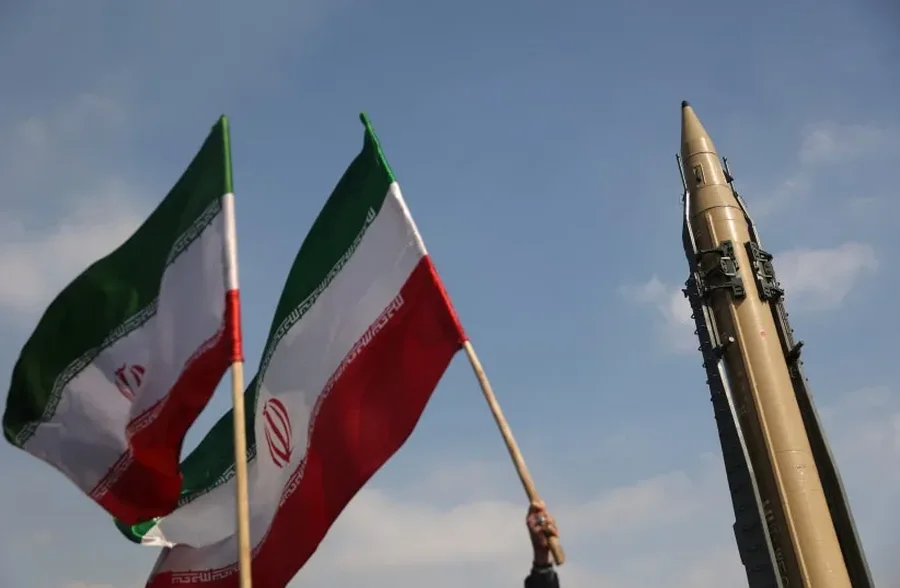
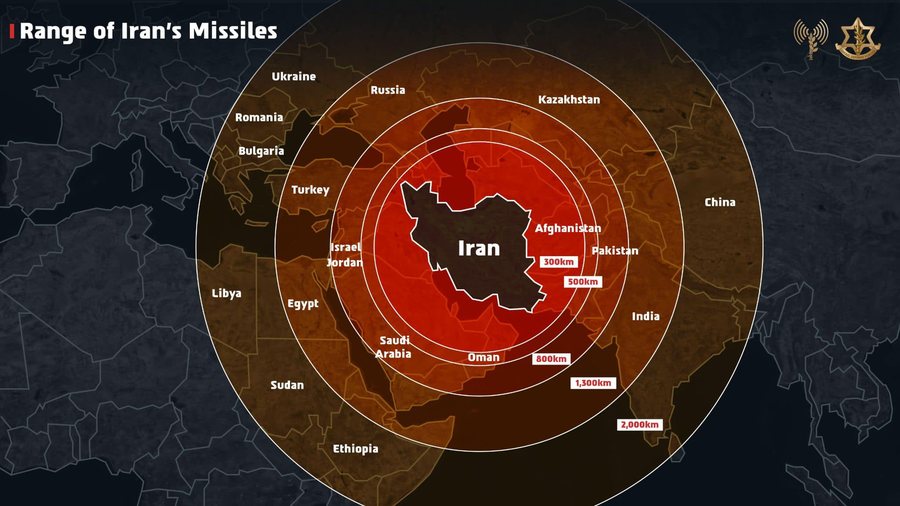
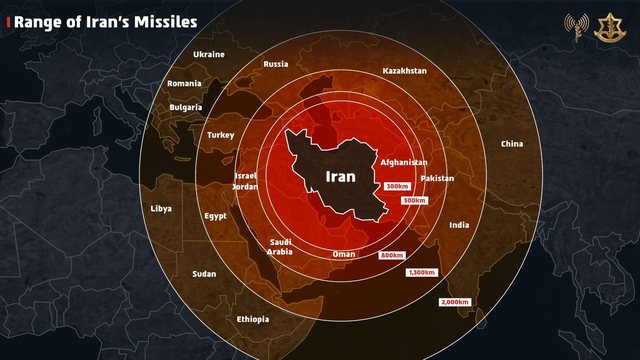
The Israel Defense Forces (IDF) has published a map showing the range of missiles currently available to Iran.
In the center of the map is Iran, while around it are several circles showing the distances that Iranian missiles can travel: from 300 km to 2,000 km.
According to this map, long-range missiles with a range of up to 2,000 kilometers include a large part of the Middle East, Central Asia, as well as territories in Africa and Southeast Europe. Even Albania and the southeastern corner of Italy are within the range at risk from missiles with a range of up to 2,000 kilometers.
"Iran is a global threat. Israel is not the end goal, it is just the beginning. We had no choice but to act," the IDF wrote alongside the post.
Meanwhile, the IDF aims to give at least a 10-minute warning before an Iranian counterattack, but advises people to stay near safe areas due to uncertain information.
When Iran carries out the expected counterattack against Israel's attack on its nuclear and military assets, the IDF's Home Front Command will give the country a minimum warning of 10 minutes.
IDF officials hope they may be able to provide earlier advance warning if they can determine from various intelligence signs that Tehran is moving toward an attack, even before the attack begins.
The military was able to achieve this when the Islamic Republic attacked Israel in October 2024.
The military explained that this morning's nationwide preemptive warning was, in part, an overcorrection of its earlier decision to limit public preparation in order to maintain the element of surprise in the attack on Tehran.
While many citizens complained that they were too scared to be needed, the IDF believed that there was a real risk of an immediate and large-scale Iranian missile attack.
The Israeli military announced on Friday that it has completed a series of airstrikes against the Iranian regime's surface-to-surface missile system in recent hours.
Among the sites hit was a location in western Iran where a unique missile-launching system had been built inside shipping containers.
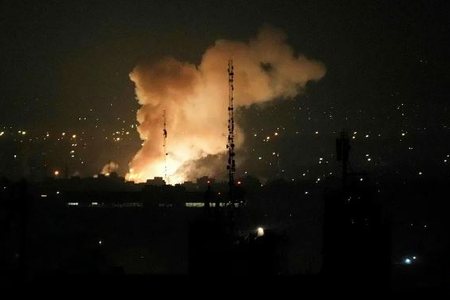
According to the IDF, Israeli Air Force fighter jets targeted and destroyed dozens of rocket launchers, storage sites for surface-to-surface missiles, and other military facilities.
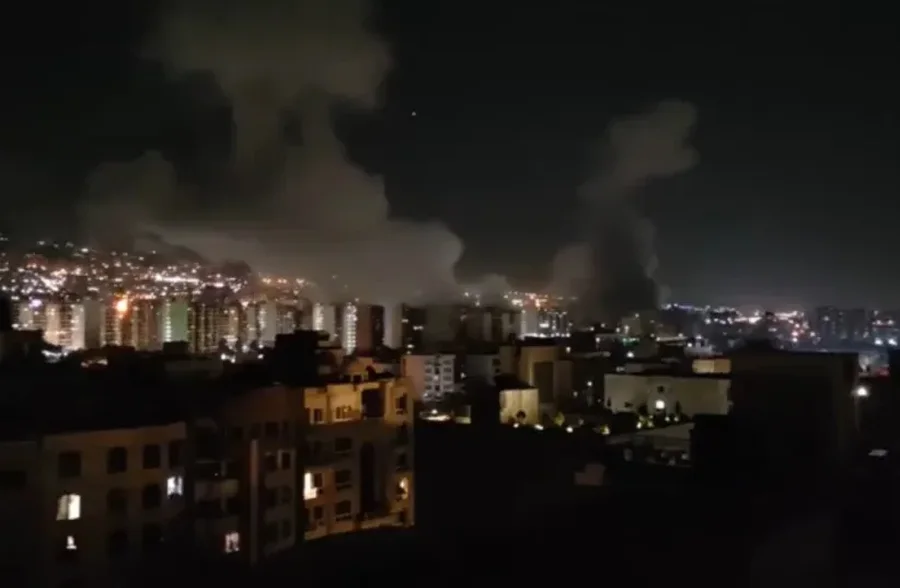
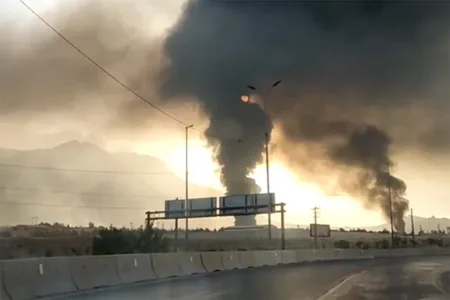
Iran's Hamdan air base was attacked twice within the last hour. Video footage from the port of Bushehr shows thick, black smoke after Israel struck the port.
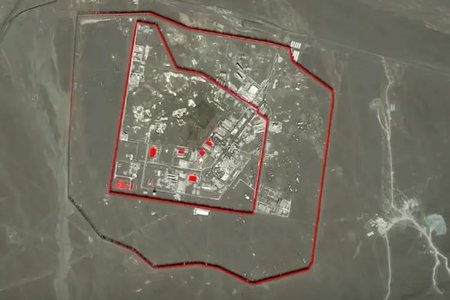
Dozens of Israeli jets participated in an initial wave of attacks on dozens of Iranian military targets and nuclear sites early Friday morning.
Warning sirens have been activated to prepare the public for possible Iranian ballistic missile counterattacks on Israel.
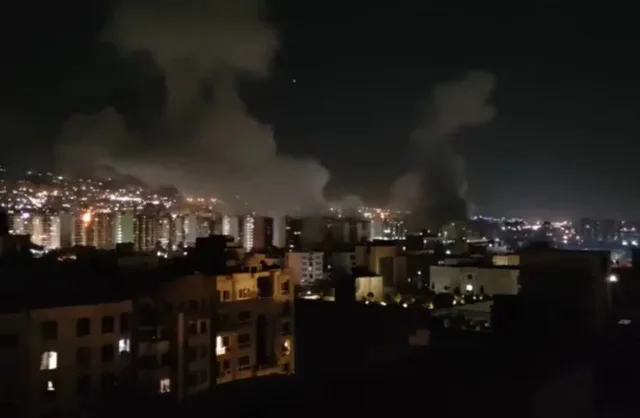
The Israel Defense Forces (IDF) had not stopped the attacks since the initial wave. On the contrary, as of 4:30 AM, the Israel Defense Forces (IAF) continued to carry out extensive attacks and there were no specific signs that they would stop.




Lini një Përgjigje