


 Shkruar nga Pamfleti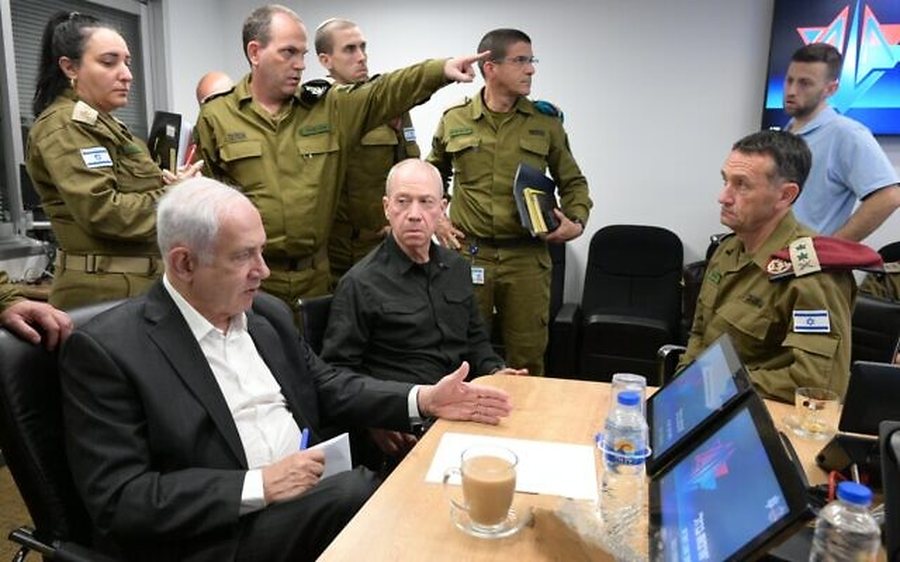
Israeli politicians, intelligence chiefs and army generals are happy that the moment has come to strike back at Iran.
At least twice in the past, in 2010 and 2011, Israeli generals have been ordered by Prime Minister Binyamin Netanyahu to prepare for imminent attacks on Iran. In both cases, security chiefs questioned the legality of the order, given without the necessary cabinet authorization. In no case did Israel go to war with the Islamic Republic.
Today, Israel is again on the verge of striking Iran. This time Netanyahu will have no problem getting approval from a cabinet that is, if anything, even bolder than he is. Even the leaders of Israel's armed forces are not against such an action as before. And this time Israel believes the odds are in its favor.
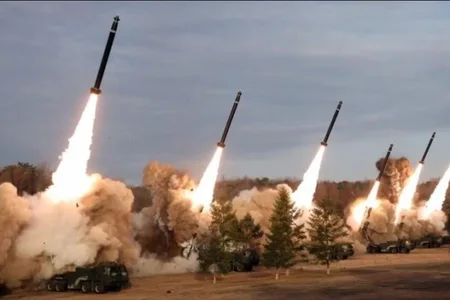
Israeli leaders feel that the 181 ballistic missiles fired by Iran at Israel on October 1 leave them little choice but to strike back. What form the retaliation takes could have far-reaching implications for the Middle East and beyond.
Four types of objectives are being considered. Netanyahu has long favored bombing the sites where Iran enriches uranium and conducts research for its nuclear program. But these are scattered all over the country and in highly fortified places deep underground.
A more tangible strategic target would be Iran's main ports, especially the oil terminals that provide the bulk of Iran's foreign exchange earnings. Israeli strategists believe their destruction would deal a severe blow to Iran's already shaky economy. This, they hope, could provoke further unrest inside Iran. Some dream that this could even lead to the fall of the regime.
A third choice would be to directly target the country's leaders, just as Israel has attacked the leaders of Iran's proxies and allies, Hezbollah in Lebanon and Hamas in Gaza. That would be tricky, as Iran's top figures would almost certainly retreat to protected secret locations if an Israeli attack seemed imminent. And the impact of such attacks is always uncertain. The question of who will replace Iran's aging Supreme Leader Ali Khamenei is already a topic of much discussion there.
Israel's most obvious military response would be a heavy strike on Iran's missile bases. This option would probably be less likely to provoke another missile attack from Iran. But Mr Netanyahu believes Israel has a historic chance to reshape the region. And this time some of his generals, though not all, agree. They feel that the fact that Israel has withstood two major Iranian missile attacks (the first in April) with few casualties or serious damage proves that Israel can withstand anything Iran throws at it.
Those in favor of striking Iran's nuclear program and economic infrastructure also believe Israel has a rare moment behind it, having within weeks beheaded key leaders of Hezbollah, Iran's most powerful militia in the region, and has destroyed a large part. of its missile arsenal, too. These missiles were given to Hezbollah by Iran to act as a deterrent against Israel attacking the Islamic Republic. Much of this deterrent has gone up in smoke.
So why, more than a week after Iran's missile attack, has Israel yet to strike?
Not everyone in Israel's security circles is in a rush to change the Middle East. Some of the country's generals are advising caution. For starters, they believe that Israel cannot afford to launch a campaign of such magnitude without coordinating with its main ally, the United States. But President Joe Biden has spoken out publicly against an Israeli attack on Iran's oil infrastructure, as it risks sending global energy prices soaring ahead of the US election. Until now, the president has also opposed an Israeli attack on Iran's nuclear facilities.
Despite the roughly $18 billion worth of support America has given Israel in the past year, and although US warships and planes played a major role in intercepting Iran's missiles, Israel has yet to share its plans with its ally. tighter. Netanyahu even vetoed a proposed trip by Yoav Gallant, the defense minister, to Washington to discuss options. Meanwhile, in televised statements, Netanyahu has promised Iranians they will be freed from their regime "much sooner than people think" and urged the Lebanese to "liberate your country from Hezbollah".
On October 9, Netanyahu spoke by phone with Mr. Biden for nearly an hour. They spent most of the call discussing possible strikes, but didn't seem to reach any kind of agreement.
There are Israeli defense officials who worry that provoking an all-out war with Iran, while Israel is still fighting Hamas in Gaza and has launched a ground offensive against Hezbollah in southern Lebanon, would strain resources dangerously. Some generals warn against squandering the gains already made.
But since the disaster of October 7, 2023, the credibility of Israel's military and intelligence chiefs to oppose the prime minister has diminished. Like Mr. Netanyahu, they seem willing to risk a devastating conflagration in order to transform their legacy from overseeing Israel's biggest debacle to the victors of a regional war. Like him, they may yet fall victim to their own arrogance./ Spit out by The Economist



Lini një Përgjigje