


 Shkruar nga Paolo Garimberti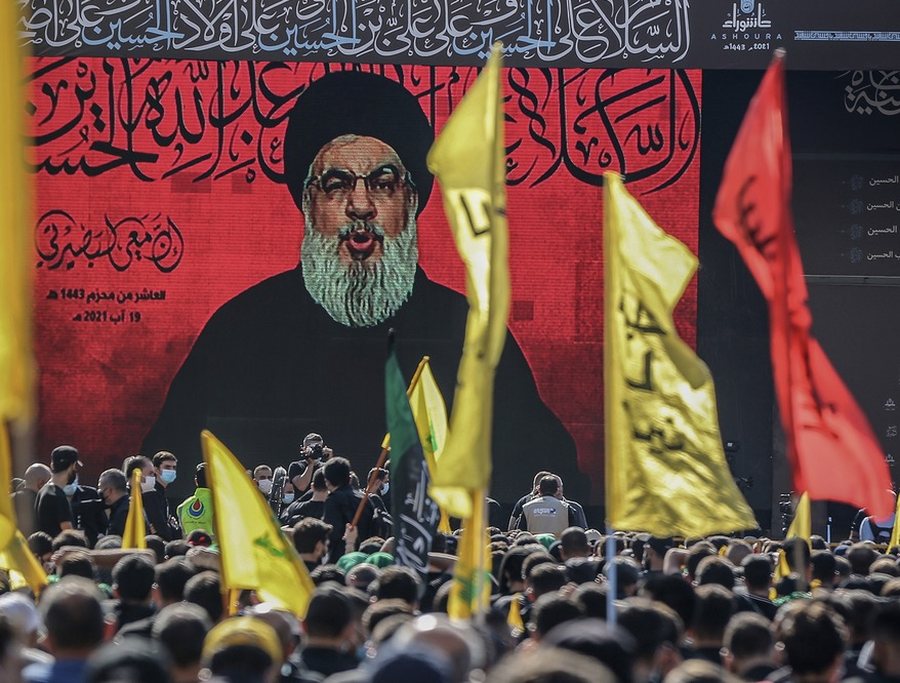
In his much-anticipated speech from Beirut, broadcast live on television (but not in Israel), Hezbollah leader Hassan Nasrallah flexed his muscles but didn't grab the gun. At least for now. He threatened Israel, challenging the United States. But he was discreet and evasive.
He said that "we have been at war since October 8", a day after the terrible massacre of Hamas terrorists in Israel. But it did not clarify how much Hezbollah intends to participate in the war. And he tried to excuse Iran, his employer, saying that this was a "100 percent Palestinian" action. In a way, he answered directly to US Secretary of State Antony Blinken, who speaking almost simultaneously in Tel Aviv said that the United States "will do everything to avoid opening a second front".
Although Benjamin Netanyahu had responded negatively to his proposal for a "humanitarian pause" and invitation "to do more to protect Palestinian civilians." Blinken's trip to Israel, his second since the crisis began, had two objectives. Precisely to avoid an expansion of the conflict. And to reinforce the American line, announced by Joe Biden in his lightning visit to Tel Aviv: Israel has every right to "build its campaign to defeat Hamas, but how it does so matters." America, Biden said, has learned from the mistakes made after September 11: in Iraq, in Afghanistan.
A true democracy fights and pursues terrorists. But in doing so, it must protect civilians. Because they too are victims of the indiscriminate brutality of terrorism. This is the great lesson of democracy that Blinken reminded Netanyahu yesterday, and that he summed up in the press conference with the warning that "it matters how you do it" (the war against terrorism). Otherwise, there is a risk of a reaction, and the wave of anti-Semitism, which is growing not only in Arab countries, is a disturbing confirmation of this.
For Blinken's other objective, i.e. avoiding the opening of a second front, it seems that for now there is a silent consensus, as was also seen from Nasrallah's speech, which also spoke about the so-called "festival of martyrs fallen in the road to Jerusalem", i.e. the Hezbollah militias who died in the incursions into Israel, which started from Lebanon after October 7.
For now, Hezbollah is dedicated to destroying Israeli surveillance systems (radar, cameras), launching rockets and carrying out commando attacks. He keeps the weapon pointed at Israel, but knows that if he opens a second ground front, he would risk annihilation by the IDF. Netanyahu threatened to "destroy" Lebanon if Israel was attacked from its territory.
Iranian President Raisi wrote on X (ex-Twitter) that Israel in Gaza "has crossed the red line and this may force everyone to take action". But Iran's interest at the moment seems to be consuming Israel, keeping high pressure from its proxies. Not just Hezbollah. But also the pro-Iranian militias in Syria and Iraq, and above all the Houthis in Yemen, who last week launched missiles towards Israel and who in the past had hit several oil facilities in Saudi Arabia with high-precision missiles.
Therefore, Iran, with the tacit consent of Russia and China, seems to be aiming for a slow strangulation of Israel, squeezing it into a threatening grip, rather than opening a second front, which would lead to an escalation inevitable with unimaginable consequences for the entire Middle East.
But even keeping the fuse lit for too long, as Tehran seems to want to do, carries great risks of detonation. This is why Saudi Arabia, which sees its ambitious modernization agenda, called "Vision 2030" in jeopardy, which also included a normalization of relations with Israel, is moving in every direction to prevent an escalation of the Israeli war. -Palestinians throughout the Middle East.
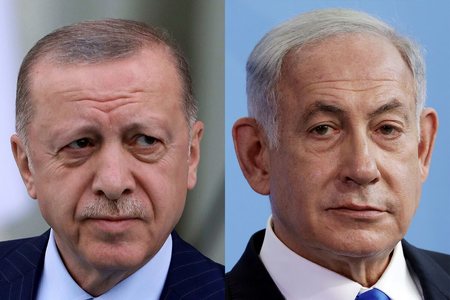
Even Erdogan has proposed his "regional security mechanism" to prevent the spread of the conflict. But given the unpredictability and ambiguity of the character, who is proposed as a mediator in every crisis, it is difficult to understand whether he moves in the interest of peace or more with the ambition to return Turkey to the glories of the old Ottoman Empire. / La Repubblica (bota.al)



Lini një Përgjigje