


 Shkruar nga Pamfleti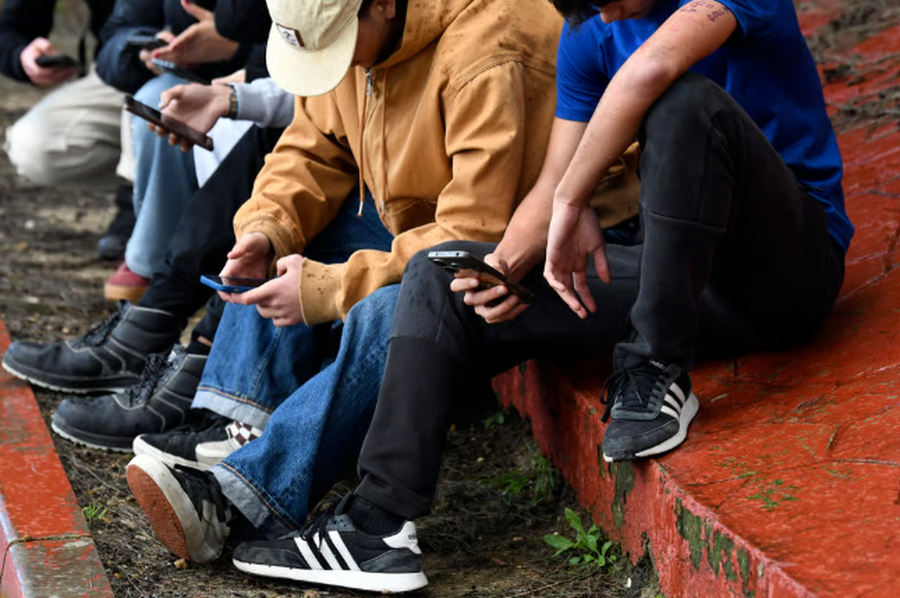
If young Europeans soon find themselves excluded from social media, they will have Ursula von der Leyen to thank. Monday marks a key step in the European Commission president's well-orchestrated effort to pass an EU-wide social media ban for young people: the publication of an expert report on the dangers of social media for minors.
Von der Leyen brought together child psychiatrist Jörg Fegert and social epidemiologist Maria Melchior to show the EU how to better protect children from online harm, with months of input from dozens of other experts.
However, the publication of their report on Monday is not intended to convince von der Leyen that action is needed, nor that age restrictions are a good idea. As a doctor and parent of seven adult children, she has already expressed her concern that social media is bad for young people and said some kind of restrictions are needed across the EU.
Von der Leyen could unveil plans for EU-wide age restrictions on social media as early as September, four officials said, after POLITICO reported in March that the Commission’s technology department had already drafted a version of the law. One EU official said Monday’s report is a way to convince any skeptical national governments to accept it and to provide “an evidence base” for any proposed ban.
This is von der Leyen’s latest move to take a personal role in ensuring that Europe follows the global movement toward social media bans. When she first announced the panel of experts in last year’s State of the Union address, officials working on the issue were caught completely by surprise, two EU officials told POLITICO. Opponents of a blanket ban are unimpressed by the process.
“It’s usually better to explain the problem and, hopefully, find the best solution to the problem. If you’ve already said we’re going for a ban and are looking for a way to do that, then that’s a bit biased,” Estonia’s Minister of Justice and Digital Affairs, Liisa-Ly Pakosta, told POLITICO.
Global wave
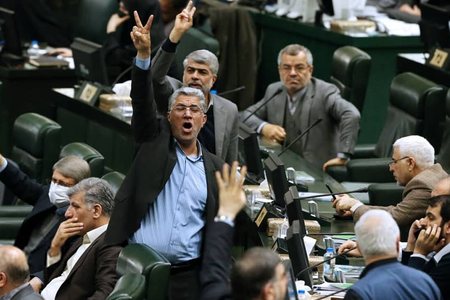
Australia became the first country to impose age restrictions on social platforms in December. Indonesia began implementing a ban in March, while Malaysia followed suit in June. Turkey's parliament has approved a bill. France is ahead among EU countries, while the United Kingdom is also moving forward.
An EU-wide ban requires a much more difficult balancing act among the 27 countries. Von der Leyen raised the issue in last year’s State of the Union address, an annual tradition where she sets out the EU executive’s policy goals for the year. The four officials said they expect an announcement on next steps in this year’s speech in September, as von der Leyen continues to build support across the bloc.
“We have seen that 14 member states are already in agreement. I believe that we now have a strong majority in favor of these solutions. We have heard from some countries that are not really happy with these proposals, however, I do not see any possible blocking minority right now,” Poland’s Minister of Digital Affairs, Dariusz Standerski, told POLITICO.
Standerski said that more than 70 percent of the public in Poland supports banning social media for children and age verification in light of some of the content to which young people are exposed.
"Children around six, seven years old, those children see harmful content, child pornography, harassment and other crimes online ," he said.
Much of the public opposition comes from a handful of more digitally advanced nations, which insist there are smarter ways to protect children than a blanket ban.
Von der Leyen will make a brief statement on Monday and publicly acknowledge the experts’ findings. An official who has seen the report told POLITICO that it will contain concrete recommendations on how to limit the harm caused by social media, but will not go so far as to tell politicians what exactly should be banned.
Another official briefed on the content said the report would not provide a yes or no answer on whether age restrictions are a good idea. However, they said it would leave the door open for such a measure, as well as for what ages restrictions should be imposed.
Many of the experts consulted by the panel disagree with a blanket ban on social media, favoring a more nuanced approach that takes into account children's rights. Some, including Leanda Barrington-Leach of the 5Rights Foundation and Sonia Livingstone of the London School of Economics, wrote a letter to von der Leyen a month ago to warn against blanket measures.
There are early signs that the new restrictions may not be working as expected. Australia’s Electronic Safety Commissioner said in March that the country’s ban has been largely ineffective in keeping children off social media, citing a lack of enforcement by big tech companies. The government is trying to increase the powers of the online safety regulator so that it can bring platforms into compliance.
Sørine Vesth Rasmussen, senior advisor for technology policy and children's rights at the Danish civil society group Børns Vilkår, who also contributed to the panel, told POLITICO that she expects the recommendations to "address the protection and empowerment of minors by taking a holistic perspective."
Capitals with a bone to choose from
Von der Leyen's strong support for a social media ban comes at a time when many European countries are moving full speed ahead with their own measures. France plans to introduce age restrictions by September, while Denmark and Greece are aiming for measures by the end of the year. The Commission has given them the green light to proceed.
Some key aspects of what an EU proposal might look like remain unclear, such as whether Brussels will set an EU-wide retirement age or allow countries to set their own.
Pressure on the Commission to do more to protect children online has been mounting since last summer, when French President Emmanuel Macron made the issue a key part of his agenda. Von der Leyen has also faced pressure from capitals such as Athens, Copenhagen and Madrid to do more to keep minors off social media.
“The highest level in Paris” has called for more action, an official from an EU capital working closely on the issue told POLITICO.
Earlier this summer, the Commission hastily announced a technical solution to check the age of online users, just in time for a summit of EU leaders on the subject hosted by Macron. The tool was later found to have security flaws, which the Commission claims to have fixed.
The EU executive told Paris earlier this week that it could go ahead with setting a minimum age for social media, as long as it does not include requirements that interfere with the Commission's supervisory responsibility for technology companies. The EU's technology chief, Henna Virkkunen, has hinted that she does not see social media bans as a solution to all problems.
"The first priority is to make it safe for everyone, and especially for minors, because the online environment is a very important part of our daily lives ," she told reporters earlier this year.
But, given the actions of many governments, if the EU fails to take action, Virkkunen and her team have also come to understand that the only way to avoid fragmentation is to move forward with EU measures.
“We need to minimize the fragmentation of national systems that could create legal uncertainty or weaken enforcement ,” Commission spokesman Thomas Regnier told POLITICO.





Lini një Përgjigje