


 Shkruar nga Pamfleti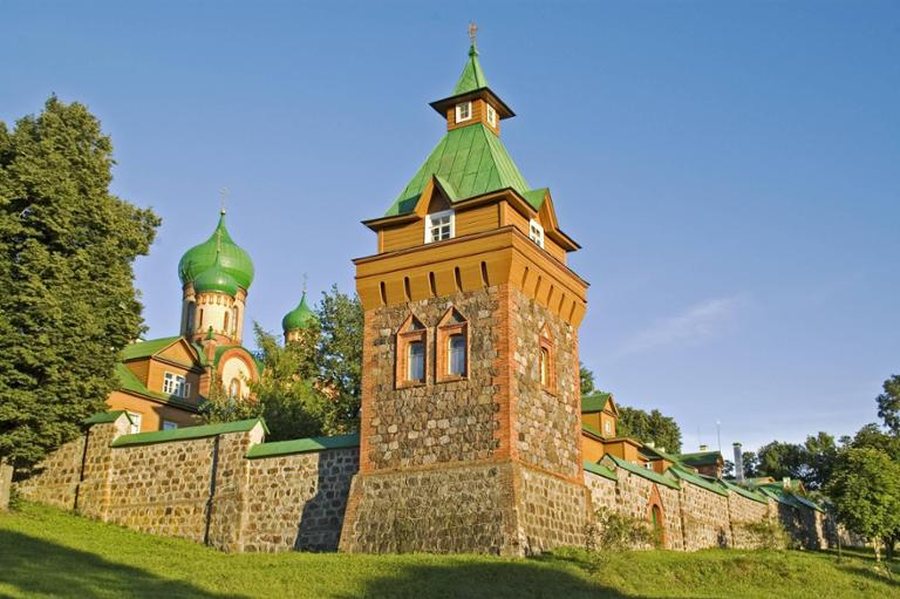
The Estonian government suspects that nuns are secretly acting as Russian spies. A new law aims to prevent this in the future.
Religion is a political power factor in Putin's Russia. Patriarch Kirill, the head of the Russian Orthodox Church and a former KGB agent, is considered a close supporter of the Kremlin boss. Now, nuns in Estonia are suspected of working for Moscow and spreading pro-Russian propaganda as part of Moscow's hybrid warfare. The Estonian government wants to limit the church's influence with a new law.
The Estonian government accuses the Pühtitsa Monastery in the Estonian town of Kuremäe of using its close ties to the Russian Orthodox Church to spread pro-Russian propaganda.
The government sees this as an attempt to expand Russian influence in Estonia. A new law aims to prevent this in the future. Under the law, religious communities will not be allowed to maintain contact with organizations that the government believes could endanger the country's independence. The Pühtitsa Monastery criticizes the plan as a violation of religious freedom.
According to the Telegraph, the monastery’s abbess, Filareta Kalatšova, emphasizes that the nuns lead an exclusively religious life of prayer and work and do not participate in political activities. Although Moscow Patriarch Kirill supports the Russian war against Ukraine, the nuns are devoted only to their faith. However, the Estonian government maintains its position: the monastery must ensure that no pro-Russian influences emanate from there. If it does not sever ties with Moscow, it can continue to exist as a religious community, albeit without special legal privileges.
The Estonian government's concerns are also directed against religious influences from Moscow, which are often underestimated in the West. In the Western European press, the war in Ukraine is mainly a political issue, explains researcher Gerhard Schweizer in an interview with domradio.de.
It is heard, in particular, that it is an "imperialist, nationalist war" and "that Putin wants to restore Russia to its former greatness." The religious aspect, according to the researcher, is neglected.
"Russia in its former greatness during the time of the Tsars was a religious-political empire. The state and the church were inextricably linked," the expert continued.
Kirill had already described the war in Ukraine as a “holy war.” For the first time since the era of the tsars, an Orthodox Christian was leading Russia, Kirill commented on Putin’s presidency at a mass in Moscow in April.
Since the beginning of the Russian invasion of Ukraine, priests in Russia have regularly prayed for the "victory" of Russian troops during services.
If a cleric replaced the word "victory" with "peace," he was dismissed from his duties, according to media reports.



Lini një Përgjigje