


 Shkruar nga Pamfleti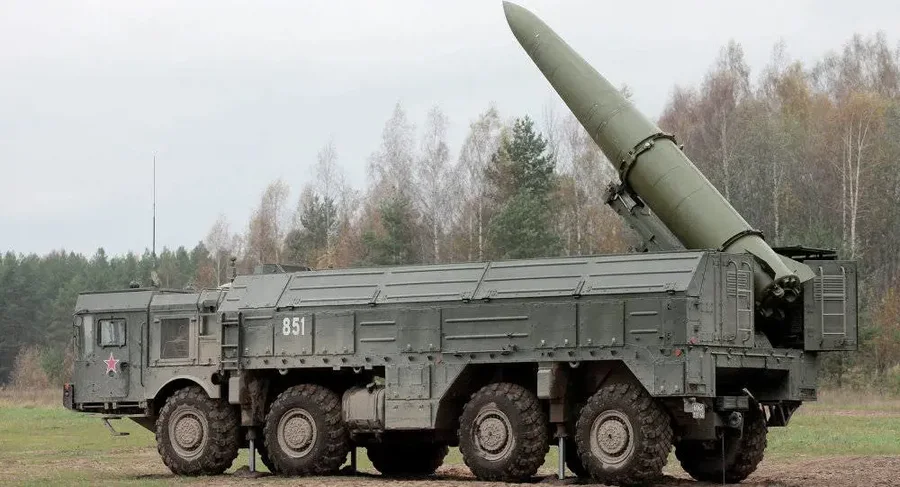
Moscow reportedly field-tested advanced launch vehicles, including new ballistic missiles and hypersonic weapons. The limited use shows operational proof and signals the continent's strategic stability...
On the night of January 20, Russia launched an attack on Ukraine with several new missiles used quite rarely during the conflict.
Several official and unofficial sources reported by The War Zone indicate the possible use of a new version of the Iskander short-range ballistic missile (SRBM), as well as the rarely used Zircon hypersonic cruise missile.
The debris found in Ukraine also confirms, for the first time, Russia's use of repurposed air defense missile targets in a ground attack role.
According to the analyzed debris, Russia apparently used an improved version of the Iskander, provisionally designated Iskander 1000, to strike at least one target in the Vinnytsia region. Last year, rumors began circulating that Russia was ready to begin mass production of a new version of this SRBM ballistic missile with a longer range and improved accuracy.
According to official data, the original 9M723 Iskander-M ballistic missile system had a range of 500 kilometers, while the new version is believed to have a range of at least 1,000 kilometers.
This stated range would place the new missile in the category of medium-range ballistic missiles (MRBMs), which have a maximum range of between 1,000 and 3,000 kilometers.
This increased range was made possible by the conclusion of the INF Treaty on “Intermediate-Range Cruise and Ballistic Missiles” between Russia and the United States.
The treaty prohibited not only the deployment of these particular missiles in Europe, but also their construction.
According to available data, the new Iskander uses a more powerful and efficient engine to increase its range, most likely by mounting a smaller warhead to achieve this goal, offering more space for fuel. Accuracy would be improved thanks to a new navigation and guidance system.
Russia has also launched at least one Zircon hypersonic missile from Crimea. This launcher is primarily designed for anti-ship attacks, but we know it can also strike land targets and be launched from both sea-based platforms (including submarines) and land-based platforms.
The Zircon has already been used at least once in the ongoing conflict and, according to available data, is capable of reaching speeds of up to Mach 8 while flying "sea skimming" in its terminal phase.
Interestingly, according to a report from the Ukrainian Air Force Command, a total of 34 missiles of various types were used in the attack, along with 339 drones, approximately 250 of which were of the Shahed/Geran series, with a destruction rate of approximately 80-90%. These figures on Russian launches confirm a trend that has stabilized over time. Russia uses its missiles for approximately 10% of the total assets launched in its attacks against Ukraine.
The rationale for this choice is twofold: drones are less expensive and therefore more deployable, but they have the disadvantage of a smaller payload than missiles, meaning more of them are needed to achieve the same results.
By using more drones than missiles, Russia will not exhaust its strategic reserves of delivery vehicles, which are important to maintain as a form of deterrence against NATO.
Incidentally, this is the same reason why Ukraine is not being given all the weapons currently in NATO stockpiles. Russia's rare use of the Zircon missile is more likely to respond to a need for operational testing than to send a political message.
The use of the Iskander 1000 missile, however, is an important signal for strategic stability in Europe: it is in fact another medium-range vector of action that joins the Oreshnik missile in the Russian arsenal. /Adapted from Il Giornale /








Lini një Përgjigje