


 Shkruar nga Pamfleti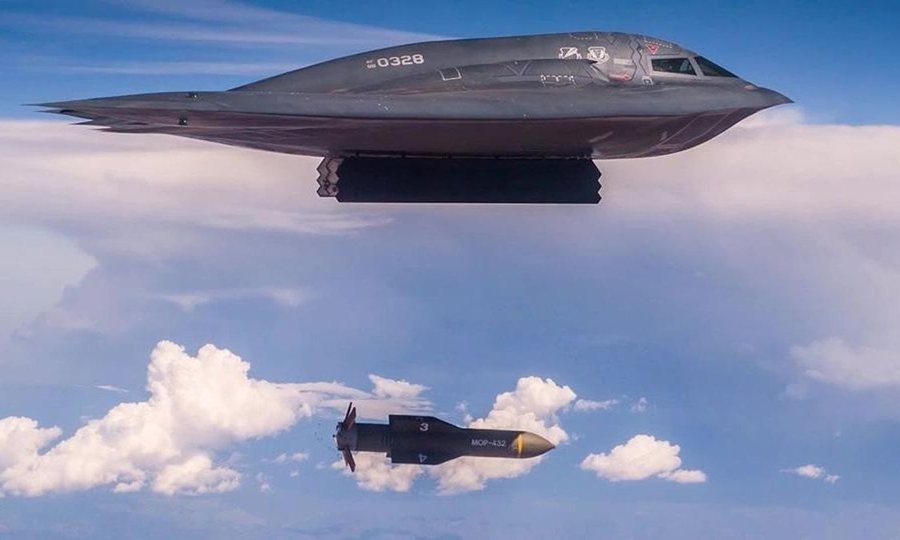
The picture that has emerged in recent hours shows that the Middle East region is in a tense state, with the US preparing to strike Iran.
Movements on the military, political and domestic fronts converge on a clear conclusion: the window for military action is opening immediately, certainly without ruling out a change.
According to open source monitoring service (Osint) Intelsky, there are five signs indicating an imminent US attack on Iran.
1. Evacuation of Al-Udeid base, CENTCOM's "bell"
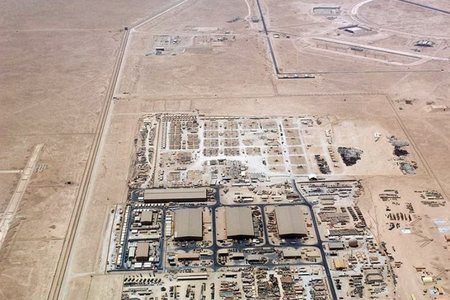
Al-Udeid Air Base in Qatar is not just a support base. It is the headquarters of US Central Command.
The decision to evacuate personnel, even with a clear deadline (Wednesday night), is made only when an immediate preemptive attack is expected or when a large-scale attack is being prepared and critical human and administrative personnel must be protected from certain retaliation. In practice, this specific deadline for evacuation functions as an informal "Zero Hour" for the start of operations.
2. The move to Guam and the long-range attack doctrine
The deployment of aerial refueling aircraft to Guam confirms that the US is choosing to operate from strategic depth. Guam serves as a safe launch base for B-52 and B-2 bombers, out of range of Iranian missile systems.
The scenario is clear: avoid deploying critical assets in the Persian Gulf, take off from afar, refuel from the air, carry out surgical strikes with bunker-busting bombs, and return to bases that are not immediately threatened.
3. Dimona on alert and the message on Israel's home front
The announcement by the Israeli municipality of Dimona to open public shelters is not a typical precautionary measure. The area is located near critical Israeli nuclear facilities, which makes the decision particularly significant.
The message is that Israeli authorities assess that an exchange of fire is possible and that the attack could affect the country's strategic interior. When the home front enters a state of immediate alert, time usually counts down. At the same time, the "evacuation" of foreign nationals from the country, as in the case of Lufthansa, shows that the concern is broader.
4. Iran's "calmness" in airspace
The lifting of NOTAMs by Iran and the opening of the Strait of Hormuz do not constitute a reduction in tensions. On the contrary, they are read as a clearing of the theater of operations.
Tehran seems to understand that a strike is approaching and is taking care to withdraw exposed assets, reduce civilian air traffic, and ensure a clean operational environment.
There are now neither exercises nor military activities in Iran's skies, meaning that air defense systems and ballistic forces can be activated immediately, without the risk of engaging political or friendly targets.
While no one can be sure about the method the Americans will choose to strike Iran. That is, whether they will operate with bombers or missiles. All options in the operational field are still open.






Lini një Përgjigje