


 Shkruar nga Sandro Modeo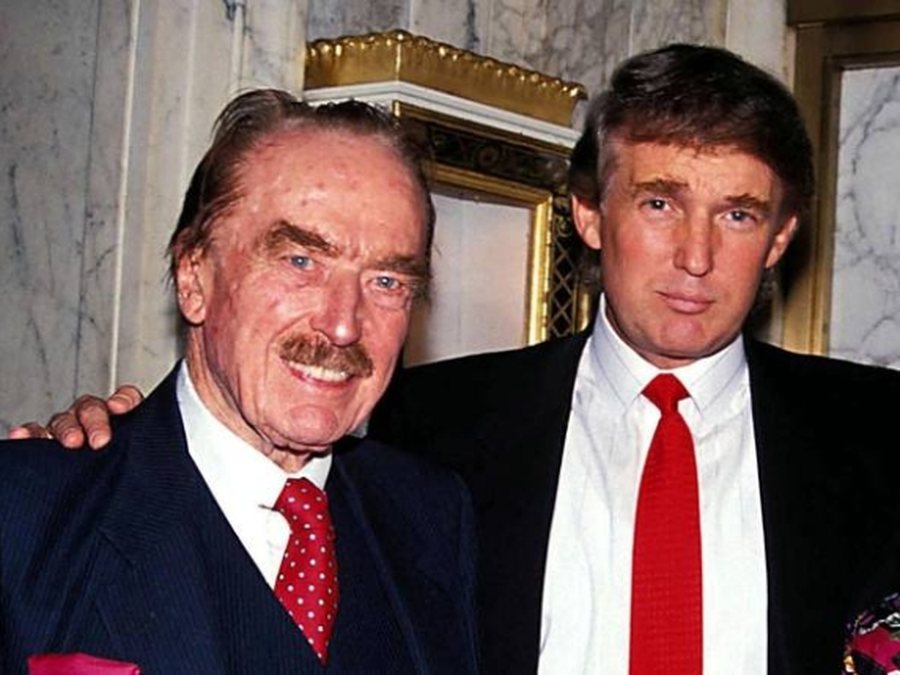
Racial discrimination is an almost ancestral trademark for the Trump family: just remember how 21-year-old Fred Sr. was arrested in Queens as one of the most agitated among thousands of Ku Klux Klan demonstrators.
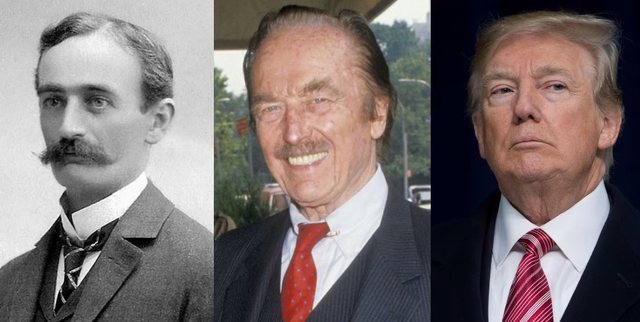
When we talk about "family" in Trump's case, we mainly mean the direct male line, a "genetic inheritance" that, in his case, clearly includes the dimension of learning (contacts, goals, "values"). Here we are talking about grandfather and father.
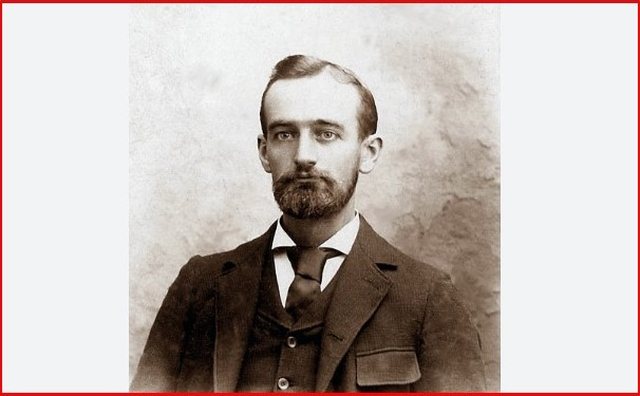
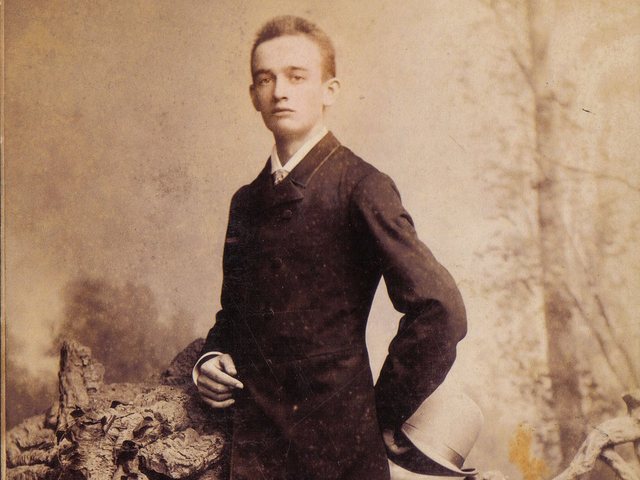
Of Friedrich T. (later Americanized as Frederick, 1869–1918), there is a clear photo from his mature years, where he appears bearded, determined and confident on the verge of arrogance; but more interesting is an image taken by The New Yorker, which shows the 18-year-old just landing in Sandy Hook, New Jersey, after a long journey, through Bremen, from the vineyards of the small village of Kallstadt in Rhineland-Palatinate. There he appears thin, proud, with features that are now found in his billionaire nephew.
In fact, the boy had left primarily to escape military conscription, an early sign of an amoral instinct that would later be confirmed. After working as a barber for six years on New York’s Lower East Side, he moved to Seattle’s red-light district, where he bought a restaurant, which he rebranded as the “Dairy Restaurant,” and attached a cheap brothel. Then, in a mining area to the north, he built a “one-night-only” hotel on land that didn’t belong to him, a practice that, according to Pulitzer Prize-winning author David Cay Johnston, foreshadows how his grandson Donald would acquire Mar-a-Lago: “With a loan that Chase Bank never officially recorded.”
After another similar venture in the Yukon, Canada, near the Klondike gold rush area, Frederick attempted to return to Germany. But as a deserter, he was rejected and forced to return to the US, where he died at the age of 49 from the Spanish flu.
Fred Sr., or Frederick Christ Trump (1905–1999), of whom dozens of images exist, is presented with a cold, ruthless look: high forehead, thick eyebrows, hard irises, and a scornful smile. He could be a figure from a 1970s mobster movie or thriller series.
Both son and father show obvious continuities: connections to Italian mafia clans (Fred with Gambino, Genovese and Lucchese; Donald with these plus Franzese and Colombo) and real estate fraud, especially on the basis of racial discrimination. In 1952, legendary singer Woody Guthrie publicly criticized the racism in Fred Trump's rental policies at the Beach Haven project, which he called a "bitch haven." A federal investigation in 1972 found that African-Americans and Puerto Ricans were being offered lower-quality apartments than whites.
This led to a bitter confrontation between the Justice Department (represented by the persistent 26-year-old Elyse Goldweber) and the Trump family (with Donald at the helm), defended by the unscrupulous lawyer Roy Cohn. Donald Trump, in his book "The Art of the Deal," distorted the story by claiming: "In the end, the government failed to prove the charges... there was a plea bargain...", indicating that he had at that time adopted one of Cohn's key strategies.
Racial discrimination is almost a genetic inheritance for the Trumps: at age 21, Fred Sr. was arrested during a Ku Klux Klan protest in Queens, New York, where about 1,000 protesters in white hoodies clashed with local police.
Even more significant is the painful case of William Trump, the son of Fred III, the grandson of Fred Jr., Donald's older brother. William was born with a rare neurological disease (epileptic encephalopathy due to a mutation in the KCNQ2 gene), which required constant care. Everything was under control until Fred Jr.'s death in 1981 (from a cardiac arrest as a result of alcoholism), when Fred Sr. divided the estate among his four other children, completely excluding his sick nephew, despite legal warnings.
This led to a lawsuit by Fred III, his sister Mary and their mother Lisa, a legal battle that ended with partial compensation. While the impact of this “abandonment” on William’s deteriorating health cannot be fully proven, Donald Trump’s stance in the trial remains shocking: he expressed disgust that Fred Jr.’s children, including William, whom he never visited, had benefited “like kings and queens” from the family fortune.
This attitude continues today with his politics: from disregard for people with disabilities (firing disability managers and banning inclusive programs in January), to the contemptuous treatment of relatives and countries he sees as parasites, including Ukraine and European countries. /Corriere Della Sera





Lini një Përgjigje