


 Shkruar nga Pamfleti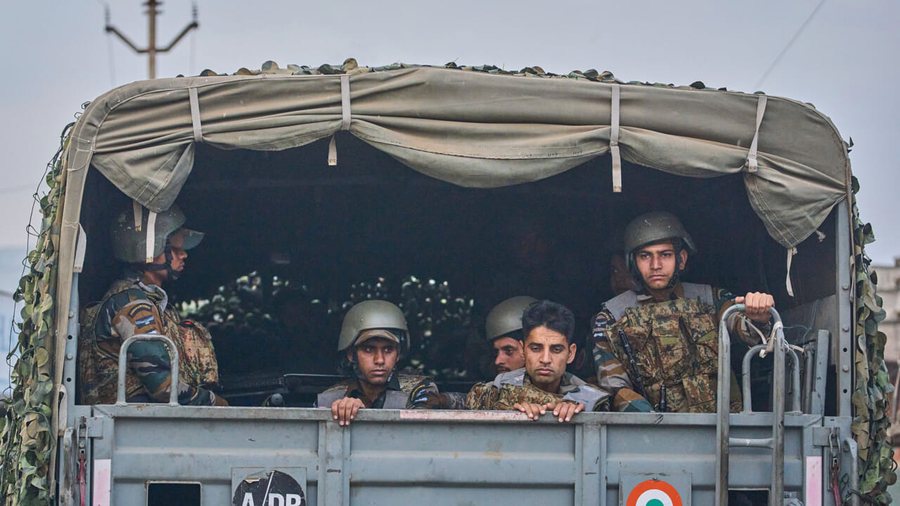
The Kashmir region, in the foothills of the Himalayas, has been disputed between India and Pakistan since its creation in 1947. Both countries claim it in its entirety, but each controls a portion of the territory, divided by one of the world's most militarized borders: the Line of Control (LoC), based on a border established after the 1947-48 war. China controls another portion to the east.
The crisis between India and Pakistan, sparked by an attack two weeks ago in Kashmir, has escalated into open conflict. New Delhi has launched a military operation codenamed "Sindoor" and Islamabad has said it is ready to respond to the actions of its historic enemy. The episode now risks rekindling one of South Asia's longest-running and most volatile disputes between the two nuclear-armed countries.
What happened in the last few hours?
On the night between Monday and Tuesday, India carried out airstrikes on at least 9 targets in 6 locations across Pakistan and Pakistani Kashmir, hitting suspected bases of extremist groups such as Jaish-e-Mohammed and Lashkar-e-Taiba, which are blamed for the April 22 attack.
The military operation was called "Sindoor", in reference to the red powder worn by Hindu women as a symbol of marriage. The reference is not coincidental, as the attack on tourists in Indian Kashmir on April 22 saw Hindus as the main victims. An attack for which responsibility was immediately attributed to Pakistan, accused by India of supporting terrorist organizations.
However, Islamabad denies that last night's bombings hit "terrorist" infrastructure and instead reports 26 civilians killed and 46 injured in the attacks, which also hit religious sites, including places of worship. Pakistani Prime Minister Mian Muhammad Shehbaz Sharif called the Indian attack an "act of war", authorising the military to respond to Indian fire in accordance with Article 51 of the United Nations Charter, which enshrines the right of states to defend themselves in the event of an armed attack. The two sides continued to exchange artillery fire along the Line of Control (LoC), the de facto border between the two disputed territories. Indian authorities have ordered the evacuation of areas considered at risk in Kashmir, while Pakistan has closed its airspace for 48 hours.
Kashmir, a disputed territory for decades
The Kashmir region, in the foothills of the Himalayas, has been disputed between India and Pakistan since its creation in 1947. Both countries claim it in its entirety, but each controls a portion of the territory, divided by one of the world's most militarized borders: the Line of Control (LoC), based on a border established after the 1947-48 war. China controls another portion to the east.
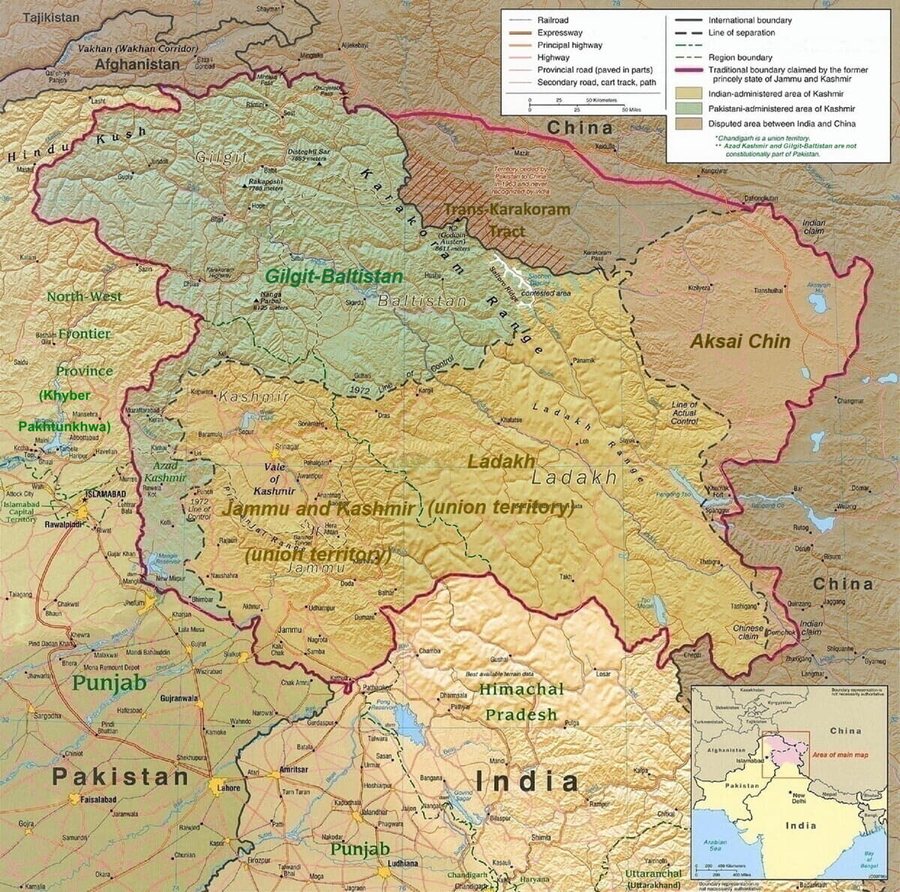
Disputed region
The dispute has its roots in the partition of postcolonial India in 1947 - after it gained independence from Britain - when small semi-autonomous principalities on the subcontinent had to decide whether to join India or the newly formed Pakistan. The ruler of Kashmir, despite its Muslim-majority population, chose to join India. On 22 October 1947, the first war between the two countries broke out over control of Kashmir, which was annexed by India shortly afterwards. The following year, the United Nations passed a resolution calling for a referendum on self-determination for the region, but the proposal was rejected by New Delhi. The conflict ended on 1 January 1949 with a ceasefire and the establishment of a 770-kilometre Line of Control (LoC), which divided Kashmir into two parts: 37 percent under Pakistani administration (Azad Kashmir) and 63 percent under Indian control (Jammu and Kashmir). Despite the agreement, India and Pakistan continue to claim the entire region to this day.
Kashmir has always been an anomaly in the Indian landscape: with a Muslim majority in a predominantly Hindu country, it has enjoyed a "special status" enshrined in the Indian Constitution since 1949, which guaranteed it a wide degree of autonomy. That status was revoked in 2019 by Prime Minister Modi's nationalist government, which divided the region into two separate territories: Jammu and Kashmir and Ladakh.
The revocation of autonomy was accompanied by hostile rhetoric towards the Muslim minority and a strong centralization of power in New Delhi. For example, for the first time, foreigners were allowed to buy land in Kashmir, prompting accusations that the nationalist government led by Modi’s Bharatiya Janata Party (BJP) was seeking to expropriate local land and change the region’s predominantly Muslim demographics. In the past, Kashmir’s special status prevented non-residents from buying land or obtaining jobs and scholarships. With the new residency law, India has broadened residency criteria, fueling tensions in the region. At the same time, the Modi government has placed great emphasis on promoting tourism in Kashmir, presenting it as a sign of newfound stability.
Water supply used as a military weapon
There is another issue fueling the conflict between the two countries. After the April 22 attack, India suspended a water-sharing treaty and revoked visas for Pakistani citizens, while also reducing the number of Pakistani diplomatic staff in New Delhi. In response, Pakistan called India's actions "irresponsible," revoking visas for Indians, cutting off trade, and closing its airspace to Indian aircraft.
The decision to suspend the Indus Waters Treaty, which governs water use between the two countries, is particularly critical. The agreement, signed in 1964, governs the sharing of the waters of the Indus River, which is crucial for Pakistan: about 80 percent of its water needs depend on that basin. According to Indian sources, the government initially closed the dams, before reopening them, causing major flooding in Pakistani Kashmir.
The surreal water war between two nuclear powers
Pakistan's heavy dependence on the waters of the Indus River system for irrigation makes the treaty crucial to the country. Islamabad has warned that any attempt to block or divert the flow of the rivers would be considered an "act of war." Suspending the treaty could worsen Pakistan's water crisis, which is already plagued by drought and low rainfall.
Nuclear Nightmare
Then there is the specter of nuclear weapons. The last major conflict between the two countries dates back to 1999, with the Kargil War, a limited clash compared to previous wars. Although both countries possess nuclear weapons, the prevailing view is that this has helped to contain, rather than fuel, the risk of large-scale conflict in recent decades.
The alarm is still high. According to the latest data from the Stockholm International Peace Research Institute (SIPRI), India has about 172 nuclear warheads, slightly ahead of Pakistan, which has 170. Both countries are engaged in a program to modernize their nuclear forces. The risk of escalation - according to analysts quoted by the Associated Press - is "real and could grow rapidly". / Adapt Pamphlet /





Lini një Përgjigje