


 Shkruar nga Pamfleti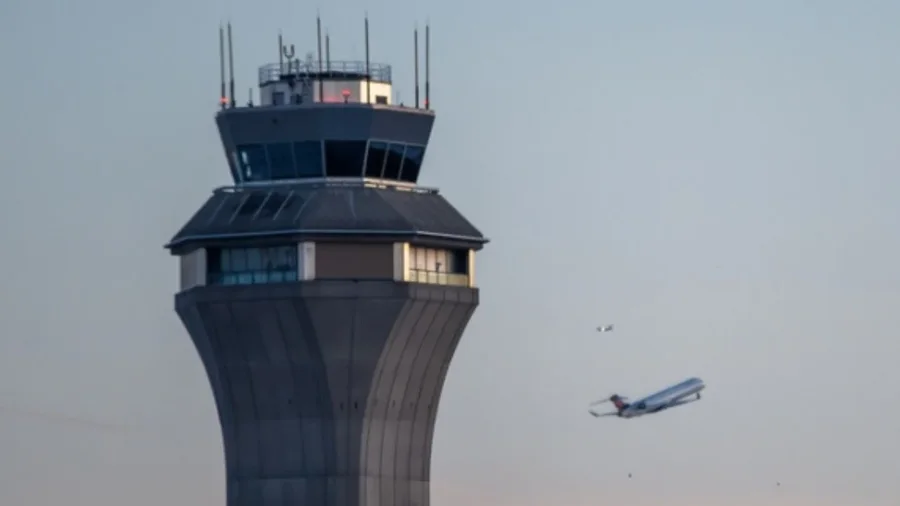
For one minute and twenty-seven seconds, air traffic controllers in Philadelphia lost audio and radar contact with about ten aircraft, with over two thousand passengers on board, that were under their supervision at that moment.
Not to mention the other planes that were approaching and the private jets. An endless time, also because there was nothing else to do but wait for the systems signal to return. When everything was back in operation in the control center room, they finally began to breathe a sigh of relief: The planes were still in flight.
Blackout
These are some of the most incredible details of the computer problem that occurred on April 28 at Tracon, the Philadelphia terminal control center, the center that manages a significant portion of air traffic, which led to the suspension of movements for several hours at one of New York's main airports.
Cancellations
The consequences are still being felt today. United Airlines, the main operator, is canceling an average of 35 flights a day, one in ten of those scheduled, until the situation returns to normal. And it may still take time, as the Federal Aviation Administration (FAA) has explained that there is a staff shortage at the radar center: some of the controllers involved have taken leave to recover from the stress caused by several recent blackouts.
Inside "Tracon"
It all starts just after 1:30 p.m. on April 28. At that moment, the controllers in the Philadelphia Tracon sector who were managing flights to Newark saw their monitors suddenly turn off. They tried to contact the pilots by radio, but found that the communication system was not working either.
Screaming and cursing
At that moment, according to the story in conversations with colleagues, screams and curses are heard from those in the room, a race begins to notify other sectors of the radar center to slow down traffic, divert incoming planes and avoid any catastrophe in the sky. The controllers could do nothing but wait for the systems signal to return. The outage lasted 87 seconds.
"We don't know where you are"
At around 1:45 p.m., there was still a problem. “The radar is down, we don’t know where you are,” a controller told the pilots of a United flight from Charleston to Newark, asking them to look around. Fearing another malfunction and to avoid further incidents, at 1:53 p.m. the FAA imposed a “ground ban” on Newark: All aircraft bound for the airport were grounded at the departure airports. This ban lasted until 5 p.m. In the meantime, it was necessary to replace five controllers who had stopped working due to the “trauma” of the incident.
Lack of dubbing systems
“The only positive side of this event, if you can call it that, was the fact that it happened at a time when the volume of traffic was not at its peak and the distance between planes is usually greater,” said a source. The IT structure of some radar centers in the US is so old that there is no “backup system”: If a blackout occurs, there is no parallel system to take over the function, so you have to wait until everything is restored.
Confirmation
"Colleagues at the center in Philadelphia temporarily lost radar and communications with the aircraft they were controlling, unable to see, hear or speak to them," the National Air Traffic Controllers Association confirmed in a statement. And it suggests that this was not the first outage. Some experts point out that these are very specific and dangerous problems.
Impact on Newark
Since then, more than 400 flights have been canceled and more than 1,500 have been delayed at Newark alone, according to the FlightAware platform. While United CEO Scott Kirby wrote in a message to customers that “for many years we have been clear and reiterated the need to improve the air traffic control system at Newark.” The system, according to him, has had problems on more than one occasion in recent days.
FAA approach
The FAA explained that it is “working to ensure that current telecommunications equipment is more reliable in the New York area.” And it recalled that when problems with personnel or equipment occur, the federal aviation agency will ensure safety by slowing down the pace of arrivals at the airport.
Lack of controllers
The FAA did not mention the shortage of air traffic controllers. The country is about 3,000 short of the optimal level, and it takes years to train new ones. Not only that, in recent decades, the federal aviation agency has faced difficulties related to aging air traffic control systems, according to a report last December by the Government Accountability Office.






Lini një Përgjigje