


 Shkruar nga Pamfleti
On an 11-day tour of four countries, the Pope combines religious messages with direct criticism of corruption, war and political elites.
On his last full day during his first visit to Africa, Pope Leo XIV reiterated the tone that had accompanied the entire trip: essential Christian messages combined with political signals, which the leaders present were to understand as being directed at them.
On Wednesday, in the small country of Equatorial Guinea, the Pope called for "serving the common good and not private interests" and for "narrowing the gap between the privileged and the disadvantaged."
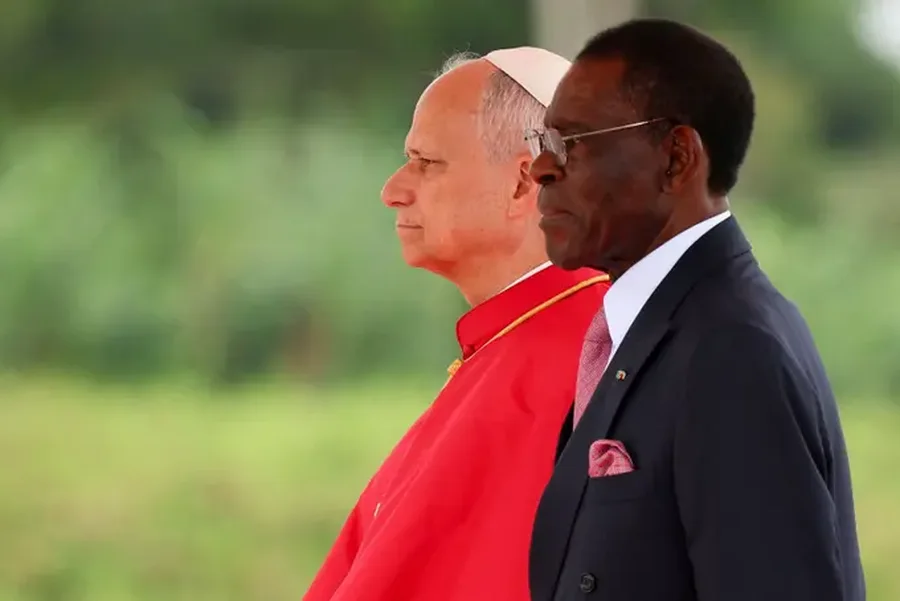
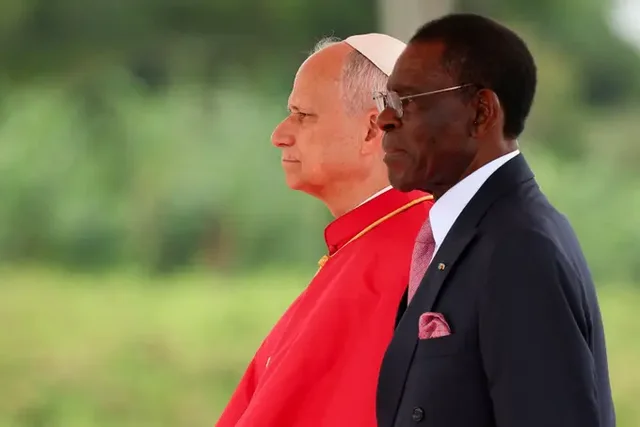
In the basilica of the city of Mongomo, facing him were representatives of the elite: President Teodoro Obiang, who has ruled the country since 1979 and is considered one of the world's longest-serving leaders, and his son and potential successor, Teodorín. The latter has been convicted in France of embezzling tens of millions of euros belonging to the country's population.
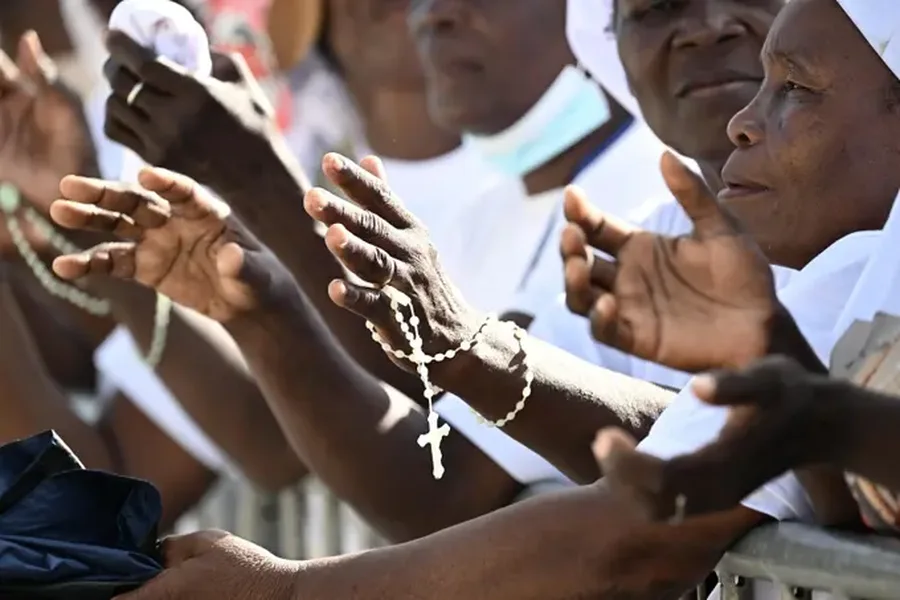
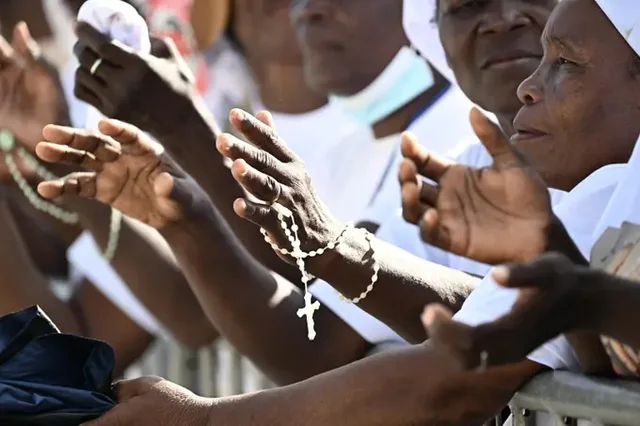
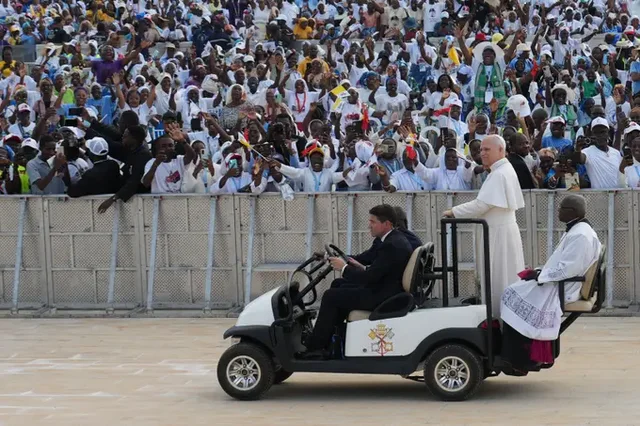
Meanwhile, ordinary citizens stood outside the church. About 100,000 faithful gathered to see the Pope, at least through screens set up outside.
Pope Leo XIV traveled for 11 days to four African countries: Algeria, Cameroon, Angola and Equatorial Guinea. It was his second trip abroad since the beginning of his pontificate in May 2025 and a clear signal of the growing importance of Africa for the Catholic Church.
The visit also affected the perception of the Pope, who was previously considered reserved. During this tour he spoke out against corruption, the exploitation of natural resources and armed conflicts. In Cameroon, in the presence of 93-year-old President Paul Biya, who has ruled for decades, the Pope declared that “the chains of corruption must be broken.”
The tour also took on an international dimension due to tensions with the United States. Before the trip, the Pope criticized Donald Trump's statements on Iran, calling them "truly unacceptable." In response, Trump accused the Pope on social media of being "weak in the fight against crime" and a "disaster for foreign policy."
However, during the trip, the Pope attempted to defuse the situation, stating that he had no intention of entering into a debate with the US government. The media had interpreted some of his statements, such as that “the world is being destroyed by a handful of tyrants”, as also directed at Trump.
The first stop was Algeria, where the tone was less confrontational. The Vatican presented the visit as an effort to strengthen dialogue with the Islamic world, an objective the Pope had also pursued on his first trip to Turkey and Lebanon in late 2025.
In Algeria, the pope also visited his theological roots. He celebrated Mass in the coastal city of Annaba, where Saint Augustine served as bishop in the 4th and 5th centuries. Pope Leo XIV is the first pope to come from the Augustinian order and led it from 2001 to 2013.
Some expected him to directly address the restrictions on Algeria's 10,000 or so Catholics and other religious minorities. He did not, but in his meeting with the Algerian president he called for a "vibrant, dynamic and free civil society."
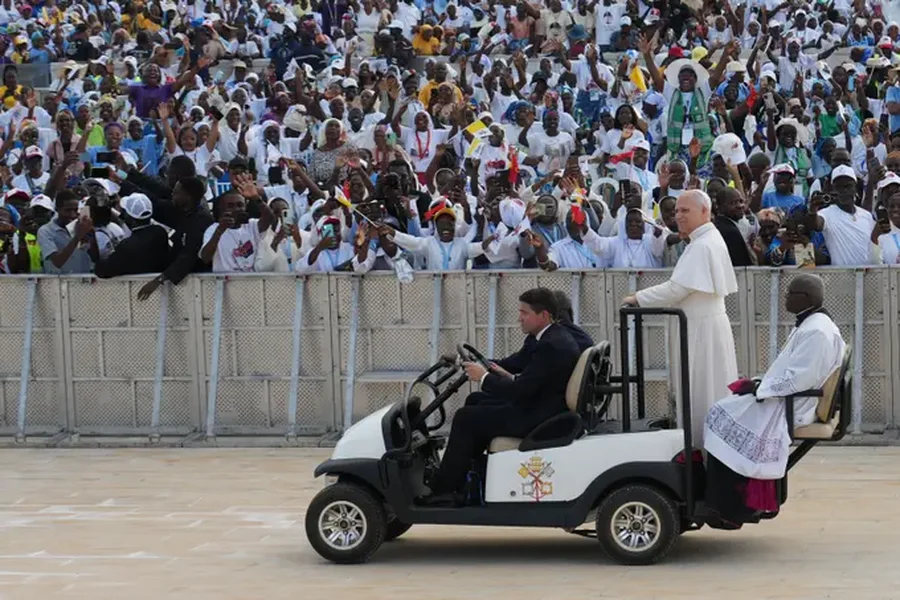
In Cameroon, a country of about 10 million Catholics, the Pope sought to deliver a message of peace. He visited the English-speaking region, where separatists have been in conflict with the central French-speaking government for decades. The conflict has claimed thousands of lives and displaced hundreds of thousands of people. In the city of Bamenda, one of the main centers of the conflict, the Pope declared that “the world is being destroyed by a handful of tyrants.”
At his next stop, Angola, home to some 20 million Catholics, the Pope criticized “despots and tyrants” who exploit natural resources and promise prosperity but in reality bring suffering and death. The statements were interpreted as a message to the political elite of the country, which, despite being rich in oil and diamonds, has a third of its population living in extreme poverty.
In Angola, the Pope also recalled the tragic history of slavery. From the shores of this country, between the 16th and 19th centuries, millions of people were transported as slaves. He visited a sacred site in Muxima, where slaves were once forcibly baptized before being sent abroad.
In Equatorial Guinea, after a mass attended by the presidential family, the Pope made a symbolic gesture by visiting a prison in the city of Bata. In doing so, he continued the tradition of his predecessor, Pope Francis, and drew attention to the conditions of detention in a country often accused by the UN and other organizations of torture and extrajudicial killings.
Before the trip, some observers had expressed concerns that the pope could be used for propaganda by authoritarian regimes. However, his statements during the visit allayed those fears. At times, he recalled the style of Pope Francis, who often openly criticized corruption and exploitation.
Pope Leo XIV is expected to return to Africa again in the future, following the example of his predecessor who visited the continent five times. Africa is the region where Catholicism is growing fastest: about 300 million Catholics currently live there, making up a fifth of the world's faithful. Finally, Africa has more Catholics than Europe, and only Latin America has more believers. By 2050, Africans could make up up to a third of the world's Catholics. /Adapted from NZZ /


Lini një Përgjigje