


 Shkruar nga Pamfleti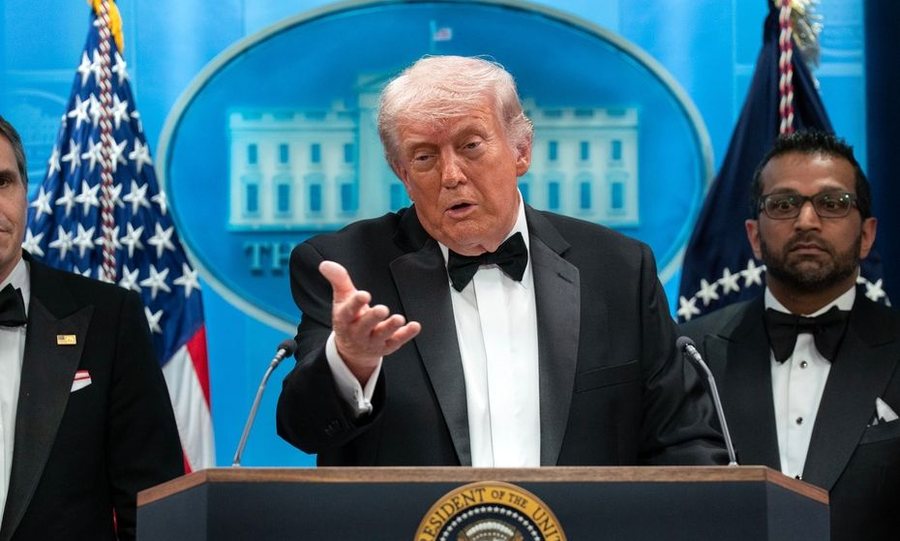
Predictions of a short, low-cost conflict in Iran are not coming true
US President Donald Trump is facing the complex reality of a war in Iran that has proven more costly and less publicly supported than initially anticipated.
Two months into the conflict, the war has proven expensive, deeply unpopular and without a clear end goal. Energy markets are in turmoil, and the Pentagon has given its first public estimate of the cost: about $25 billion so far. Meanwhile, many Republicans in Congress are growing increasingly impatient. At the same time, Trump has attacked foreign allies, such as Germany, who have shown no interest in joining the war.
Speaking to supporters on Friday, Trump insisted he has no regrets. “I did something that was, I don’t know, stupid, brave, but it was smart,” he said at The Villages, a retirement community in a heavily Republican area. “I would do it again,” the president added.
However, his predictions of a short conflict with minimal economic consequences appear to be collapsing. Trump has repeatedly defended the war, which he launched with Israel on February 28, stressing that it is essential that Iran never obtain nuclear weapons. The United States and Israel have struck military targets and killed senior Iranian leaders, including Supreme Leader Ali Khamenei, but the government structure remains functional and capable of responding.
As the conflict continues, Trump has urged Americans to put the situation "in perspective," comparing it to the long wars in Vietnam and Iraq, to argue that involvement in Iran "isn't that big a deal."
Just three weeks ago, Trump declared that Iran had agreed to his demands and hinted at an imminent breakthrough. He envisioned cooperation on removing enriched uranium, lowering energy prices, and easing the global crisis. None of this happened.
The president's messages about the future of the war have been inconsistent. He has said Iran wants a deal, but has also stressed that the leadership in Tehran is unclear and difficult to understand. He added that it is not worth US representatives traveling far for negotiations that may fail.
On Friday, after expressing dissatisfaction with an Iranian proposal to open the Strait of Hormuz, Trump said that "it's probably better not to make a deal at all."
On Saturday, he stated that he is reviewing the proposal, but added that he finds it difficult to consider it acceptable.
Trump has cited the US intervention in Venezuela in January, when Nicolas Maduro was overthrown, as a model. However, the situations are different: in Venezuela, only the leader left, while the rest of the state structure remained and cooperated. In Iran, the leadership has extensive military capabilities and remains stable.
The two sides are currently in a tense standoff. The US has maintained a blockade on Iranian shipping, while Iran refuses to hand over its enriched uranium. Trump called the US Navy “pirates” and welcomed the capture of an Iranian ship. On the other hand, a senior Iranian general warned of a possible new clash.
The president also acknowledged that military strikes could resume. "It's a possibility that could happen," he told reporters in Florida.
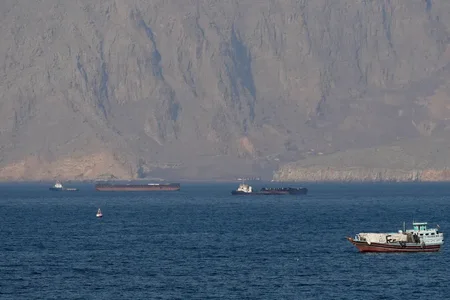
The Strait of Hormuz is expected to remain largely closed for weeks, raising the prospect of higher energy prices. Although Trump has said fuel prices will fall, Energy Secretary Chris Wright has acknowledged that they could remain high throughout the year.
The situation also complicates relations with China, which imports about a third of its energy through this sea route. President Xi Jinping has called for its reopening.
The war has also deepened rifts with allies. After criticism from German Chancellor Friedrich Merz, Trump reacted sharply and his administration announced the withdrawal of thousands of troops from Germany, hinting that similar measures could be taken against Italy and Spain.
Trump has not sought congressional approval to extend the war, even though the legal 60-day deadline has passed. The administration argues that the ceasefire has "stopped the clock," but this has been disputed by some Republicans.
The president has repeatedly defended the war, saying it is worth any increase in energy prices if Iran's nuclear program is stopped. However, most polls show that Americans do not support the conflict.
Republican analyst Matthew Bartlett, a former State Department official, said the administration's ambiguous messaging is not convincing voters. "The messaging has been beyond chaotic," he said, adding that the political, economic and diplomatic situation is steadily deteriorating. /Adapted from NYT /




Lini një Përgjigje