


 Shkruar nga Pamfleti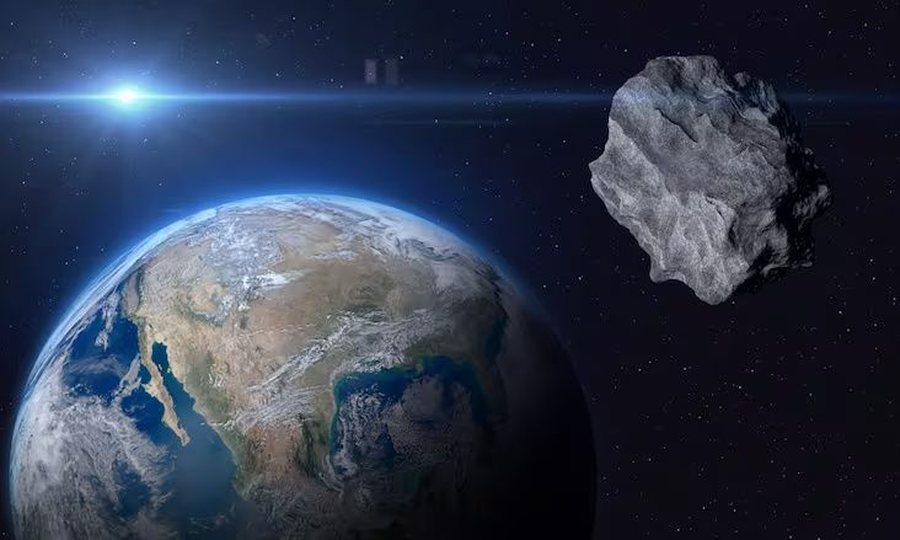
An asteroid up to 150 meters in size will pass near planet Earth on Tuesday, July 15, according to NASA's asteroid detector, specifically at a distance of 6 million kilometers.
According to the Center for Near-Earth Object Studies (CNEOS) at NASA's Jet Propulsion Laboratory (JPL), the asteroid in question has been designated 2025 MA90, meaning it was officially discovered and recorded this year.
But fortunately, this large asteroid won't come too close to Earth, as scientists working in the field of planetary defense have recently discovered that asteroid deflection has more complications than previously thought.
According to NASA's CNEOS estimates, the diameter of asteroid 2025 MA90 ranges between 66 and 150 meters. Using the Eyes on Asteroids tool, we have a more conservative estimate of 88.8 meters.
How much damage could an 88-meter asteroid cause to Earth?
With a diameter of 88.8 meters, asteroid 2025 MA90 has the potential to cause significant damage.
The last major asteroid impact on Earth was in 2013, when an asteroid slammed into Chelyabinsk, Russia. The resulting mid-air explosion, an asteroid that explodes as it enters the atmosphere, resulted in a large and powerful shockwave that was felt over a wide area. More than 7,000 buildings in several cities were damaged and more than 1,000 people were injured, mostly from shattered glass.
Looking at asteroid impacts more broadly, this was fairly harmless, but as an isolated incident, it could be considered to have caused significant damage. And that asteroid was only about 20 meters in diameter. At 88.8 meters, asteroid 2025 MA90 would be much more destructive.
What if NASA's larger estimate, 150 meters, were accurate? At that size, it would cross the threshold for being considered a potentially hazardous asteroid (PHA).
According to a study by the Davidson Institute of Science, the educational arm of Israel's Weizmann Institute of Science, an asteroid with a diameter of 140 meters or more would release an amount of energy at least a thousand times greater than that released by the first atomic bomb, if it were to collide with Earth.
But fortunately, asteroid 2025 MA90 will not come very close to Earth, but will pass more than six million kilometers away.
And that's especially fortunate, considering that humanity is not yet ready to face an asteroid collision.







Lini një Përgjigje