


 Shkruar nga Mario Pianta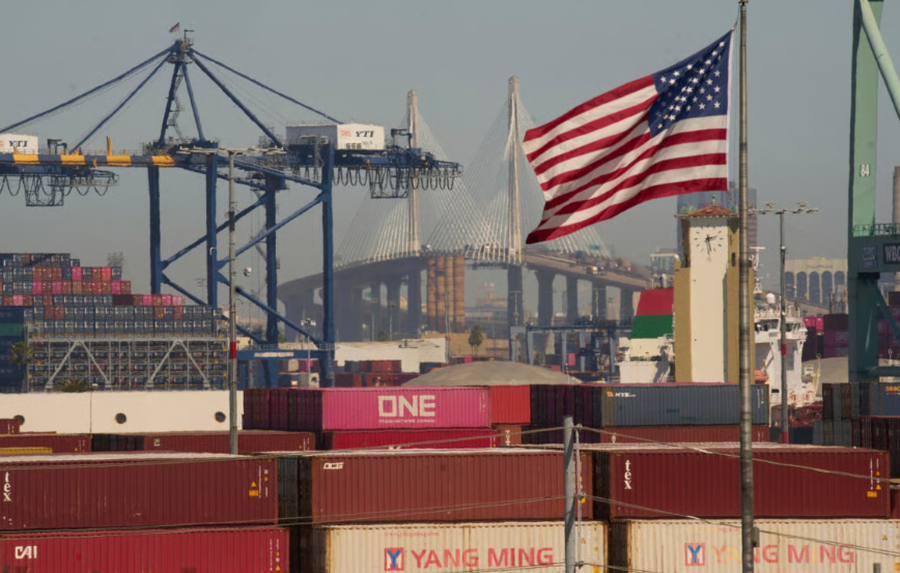
Attack your closest allies instead of your opponents. Target your opponents' weakest points to paralyze them and prevent counterattacks...
A slap instead of good behavior. Arm wrestling instead of rules.
Attack your closest allies instead of your opponents, targeting your interlocutors' weakest points to paralyze them and prevent counterattacks.
The 30% tariff on European Union and Mexican exports to the United States that US President Donald Trump announced yesterday is just the latest move in a strategy he has pursued since taking office.
The few delays and setbacks were simply an opportunity to sharpen their aim. There is no explanation for this policy being found in international relations textbooks, let alone economics.
The justification for the United States' actions lies in creating international disorder, the "systemic chaos" described decades ago by world systems scholars, where the focus is on whoever strikes first and hardest.
It doesn't really matter if the advantage is short-lived, if it destroys NATO, international trade, or the US's ability to attract scientists and researchers. American hegemony is gone, and good manners are not enough to revive it.
It is no coincidence that US strategy prioritizes the return of war.
Domestically, there is nuclear and conventional rearmament outlined in the new federal budget. Europe should spend 5% of its GDP on defense, mainly to buy weapons from the United States, such as nuclear-capable F-35 fighter-bombers. Or to use European funds to pay for Patriot missiles that the United States could supply to Ukraine.
Thus, the US is achieving some concrete benefits: in 2024, arms sales abroad totaled $120 billion, with the war in Ukraine, sales to Europe increased by 233% (SIPRI data for 2020-2024 compared to 2015-2019), and the United States now controls 43% of global arms exports. On the trade front, new tariffs in June brought the federal government $100 billion, 5% of all tax revenues, and the US trade deficit has disappeared. But these measures are not what will get the American economy back on its feet.
How should we respond to Trump's slap in the face, then? The debate between Brussels and Rome is still deadlocked over whether to retaliate or call for new negotiations. Both responses fail to grasp the nature of the conflict with Washington. The White House "rapist" should be hit not with whiskey but with software, not with Levi's jeans but with finance, not with Harley-Davidsons but with green technologies.
Some concrete measures are already on the diplomatic table: taxing US services exports to Europe, requiring US digital platforms to pay taxes in Europe, and setting European rules on digital data protection, artificial intelligence, and the green transition as international standards.
A Europe worthy of its history could seize the opportunity of Trump's chaos to rewrite some international rules in line with its own interests: closing tax havens in Ireland, Luxembourg and the Netherlands to American multinationals, restricting capital movements in the United States and imposing restrictions on the activities of American financial firms that, together with private equity funds, dominate the continent's economies.
Cracks in American finances are already starting to appear, with stock market turmoil and the move away from the dollar: since the beginning of the year, the dollar has weakened by 10% against all major currencies; as the New York Times notes, such a decline has not occurred since 1973, when the dollar abandoned its gold standard and the global monetary system was completely rewritten.
Finance and the dollar, along with weapons, remain at the heart of American power, and this is what Europe and the whole world will now have to deal with. Here, of course, politics are needed: why not convene an EU-China-BRICS summit in Brussels (or Rome) to find new trade opportunities for all and restore some traces of an international order that serves not the bully in the White House, but the whole world? /Adapted from Pamphlet by Il Manifesto/








Lini një Përgjigje