


 Shkruar nga Mary Dejevsky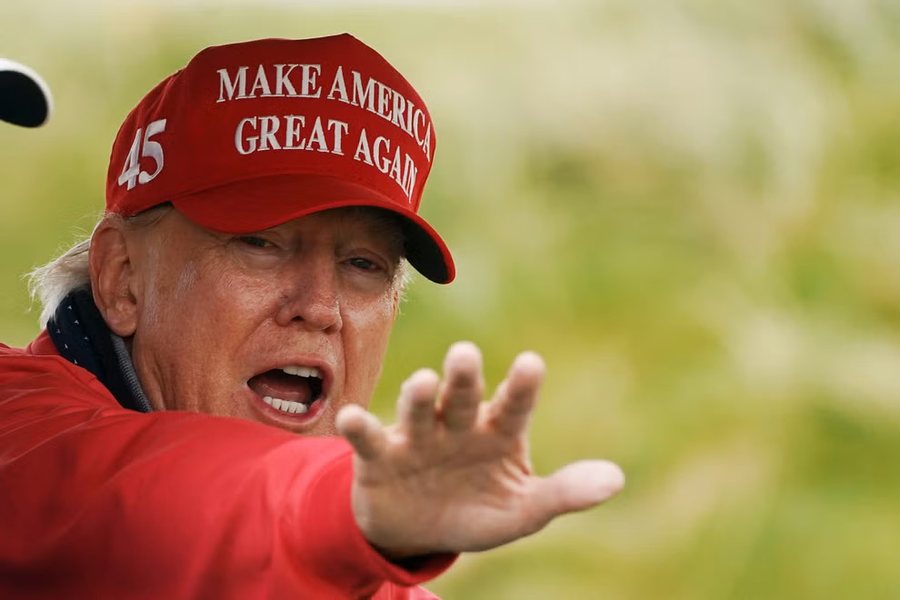
Assuming Trump is the Republican nominee in November and Biden the Democrat, anti-Trump Republicans must choose between abandoning their party or abstaining.
One of the most surprising impressions from the past week has been the degree to which it now seems to be accepted on both sides of the Atlantic: Donald Trump will surely be the Republican nominee for president, and almost as certain to return. in the White House this time next year.
It's true that so far Trump has had the smoothest road to a presidential nomination of any challenger in recent history. Nikki Haley, his only rival after the Iowa caucuses, won just two contests, in Vermont and Washington, before dropping out of the race.
She even lost in her home state of South Carolina, where she had been governor, which did not bode well for a successful nomination. Now she has left Trump on the stage as the only candidate of the Republican Party for president.
Trump's campaign also received an unexpected boost — of timing rather than content — when the Supreme Court upheld his appeal against disqualification from primary races in several states. The decision, which was announced a day before the so-called Super Tuesday, with primaries in 15 states and one territory, was unanimous.
The specific state in this case was Colorado, but Maine had also taken the same action, and other states were expected to follow suit. The court ruled that only Congress could decide the issue of federal elections, and the 3 liberal justices, who might have sought reasons not to uphold Trump, explained their concurrence by rightly arguing that the effect of a no vote could would lead to a series of chaotic consequences from state to state, which would be contrary "to the principles of federalism of our nation." Moves are now being made to secure congressional consideration of the matter. But any measure will seem unlikely to pass, given the balance of votes in Congress and the closeness of the election. Where there are warnings about Trump's chances of winning the nomination or the presidency, they come mostly from political insiders.
Some particular remarks also tend to be repeats of those heard in past campaigns. Before the 2016 and 2020 elections, the warning was about pollster miscalculations because at least some Trump supporters might have been afraid to declare their allegiance in public.
This time, the warnings are about underestimating the number of "silent Republicans" or "secret Trump non-Republicans" who must now choose where to go and whether there really will be a Trump-Biden rematch in November. . They may have voted for Haley in the primary, or they may have stayed home.
It was noted that in some states, including Iowa, Texas and North Carolina, the turnout or vote for Trump was lower than expected, and the gap with Haley not as big. Is this a harbinger of things to come? A setback may develop from hints that there is a quiet Republican backlash against Trump, that it is larger and more widespread than it currently appears, and that it could grow.
Assuming Trump is the Republican nominee in November and Biden the Democrat, anti-Trump Republicans must choose between abandoning their party or abstaining. How many there are, what might persuade them to vote for the opposition, and how many might not vote at all, will be the big questions for pollsters and campaign teams in the coming months.
But that doesn't mean there's nothing to stop Trump's presidential bid before it gets that far. But perhaps the Supreme Court will not be the institution that will do this. The court's ruling against states barring a candidate from the primary ballot has been widely seen as a strong hint that it will again rule in Trump's favor on the issue of presidential immunity.
Sedition is the only offense for which one can be arrested under the US Constitution, which is why Trump's opponents are so keen to have the January 6, 2021 riots declared as such and see Trump prosecuted for it. But Trump insists he was still president at the time, and therefore enjoyed immunity from prosecution.
If the Supreme Court agrees with this interpretation, then his campaign for the presidency will continue. Even time is against the immunity argument barring Trump's path to the White House. The Supreme Court will begin hearings on April 25, making it unlikely that any of the other pending cases against Trump could be resolved well before the party's summer convention or the Nov. 5 election itself.
As he did when he was president, Trump is testing the limits of the US Constitution. Even if some of the court cases Trump faces were settled before the election, there is nothing constitutional that would prevent him from running for office or serving in prison.
At least that's the theory, however great the disbelief at such a prospect on this side of the Atlantic. Moreover, Trump supporters seem unfazed by the prospect of voting for a convicted felon. In fact, they view the charges against him and the possibility of jail time as further evidence of what they already think they know: that the system is stacked against people like them and Trump, a belief that only strengthens their support.
If Trump is not stopped by the courts, is there still anything that could block his path to the election, and ultimately to the presidency? An obstacle may be created by hints, still small, that there is a Republican backlash against him, that it is larger and more widespread than it currently appears, and may grow further.
A recent analysis of "anti-Trump Republicans" by The Wall Street Journal notes that this group tends to be more educated, better off economically, more hostile to the idea of breaking the law, and more more critical of the unrest on Capitol Hill than Trump supporters.
If this grouping is underestimated, or if it is fueled by the numerous lawsuits against Trump, then this could possibly precipitate an open split in the Republican Party, which could present another bloc, or at least complicate Trump's presidential candidacy.
There are still few signs of such a split, but there are still 6 months until the conventions, and a lot can happen until then. A third possible obstacle can be called the "Biden factor", which can take several forms. What if Biden is persuaded or forced to abandon his re-election campaign? How would Trump fare against another Democrat? Or if Biden runs a stronger campaign than seems likely, then Trump will have to step up his game as well.
He has already challenged Biden to a public debate, assuming the fact that he is physically stronger, but that too could change. American voters may get some idea of those odds from Biden's State of the Union address. His recent statements suggest that he
has no intention of going off script. And he beat Trump in 2020. / Adapted "Pamphlet" from "The Independent"




Lini një Përgjigje