


 Shkruar nga Gaby Hinsliff
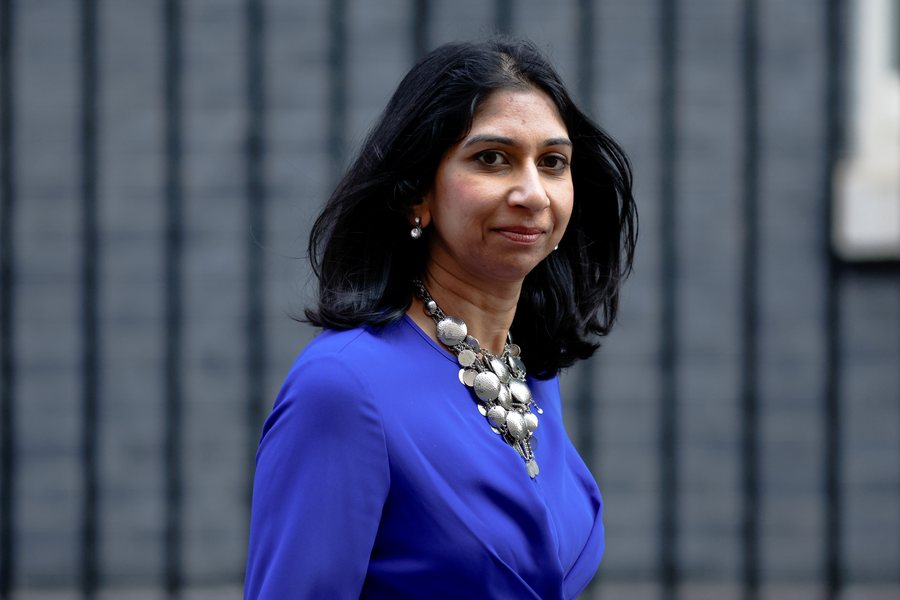
Unhappy with the suggestion that homelessness may be a "lifestyle choice" best controlled by confiscating tents over rough sleepers, Braverman on Thursday became the first Tory home secretary to undermine active public order with an extremely dangerous political attack.
It reads, in hindsight, oddly like a prophecy. Long before Suella Braverman became home secretary, when Mark Rowley was enjoying a brief career break before being appointed chief commissioner of the Metropolitan police, he published an unexpected literary debut.
A strictly fictional thriller co-written by journalist David Derbyshire, The Sleep of Reason takes place in a world where fiercely competing political ideologies make policing infinitely more difficult and real people are at risk of getting hurt as a result.
"Between you and me, I despair of this generation of politicians," says a senior police officer at one point. “We have the rise of far-right terrorism, the constant threat from Islamists, and we're in the middle, supposedly protecting the public. And meanwhile the political class on every side seems more interested in adding fuel to the fire."
Where the authors got their inspiration for a novel about a female officer who tries to prevent terror plots on multiple fronts while battling not only sexism in the ranks, but also a murky populist minister who does nothing but throw gasoline on the fire, who can tell? But as the country heads into an emotionally charged Memorial Day weekend, it looks incredibly forward-looking.
Unhappy with the suggestion that homelessness might be a "lifestyle choice" best controlled by confiscating tents over rough sleepers, Braverman on Thursday became the first Tory home secretary to undermine active public order with an extremely dangerous political attack, in the service of police officers, which risks an already tense situation getting out of control.
For days now, Braverman has been locked in a standoff with Rowley over the pro-Palestinian march planned for this Saturday, which cannot be legally banned without clear intelligence that it poses a risk of disorder. serious, that cannot be controlled in any other way.
In her Times piece, Braverman grudgingly acknowledged Rowley's point that he can't stop marches simply because people don't like the idea. But she then went on to make the inflammatory charge that "there is a perception that senior officers are playing favorites" with protesters, going easy on left-wing and minority causes such as Black Lives Matter while giving them no quarter. right arms.
Labeling the Met may seem to some readers too ridiculous an idea to be taken seriously. But at a time when the founder of the English Defense League, Tommy Robinson, is calling for vigilantes to come and "protect the cenotaph" this weekend, despite the march moving well away from this understandably sensitive area, there is little more more likely to increase the possibility of violent clashes between rival camps than a home secretary implying that the police cannot be trusted to hold the line themselves.
If anyone is hijacking what should be a solemn moment for Britons to come together and honor our war dead, it is the government itself.
Meanwhile, by seeking to interfere with the Met's operational independence in this way, Braverman has, if anything, only made it harder for Rowley to withdraw. As the Mayor of London, Sadiq Khan said, what next?
Do we want to become the kind of country where Home Secretaries dictate who should be arrested? Almost as worrying, however, is the prospect of becoming a country whose Trump-style politicians are reckless enough to start riots.
For several months, Braverman has been clearly drawing inspiration not from conservative traditions but from Tea Party Republicanism. She was the keynote speaker at this spring's conference of her party's new National Conservatism wing, whose emphasis on faith, flag and family has been heavily influenced by US evangelical politics, though at the time she warned that the British context would naturally differ in some ways.
Last month, in a speech denouncing multiculturalism to a think-tank in Washington, she was warning that European culture was being "diluted," in language that carries an uncomfortable echo of the Great Replacement Theory, or the conspiracy theory that white Americans are being "deliberately replaced by black or brown immigrants".
This week, she cited urban California's many homeless encampments — which Republicans blame on liberal progressive policies, rather than poverty and crippling housing costs — to justify her crackdown on tough people.
If Britain did not act, she claimed, we would go the way of San Francisco or Los Angeles, "where poor policies have led to an explosion of crime, drug taking and misery".
Even if this were true, confiscating tents is a policy as callous as it is useless, addressing only the visible symptoms and not the cause of homelessness.
But then, workable policy solutions aren't really Braverman's thing. According to the words of the former conservative cabinet minister, Sayeeda Warsi; “She doesn't fix things; she breaks things.”
This is what culture warriors do: start fires and then blame everyone else when the house burns down to ashes.
What remains of the old Conservative party still has its misgivings about following him down this road, judging by the internal backlash against Braverman's proposed tent ban (which is currently on hold, awaiting cabinet arguments). .
Dover MP Natalie Elphicke – on the right of the party but also a former housing policy specialist – tweeted that in all her years working on homelessness, “at no time has anyone said the answer lies in removing the tents".
Others wonder what possible electoral good can come from such bleak warnings about supposed social crises that make life in Britain sound worse than it really is. Her latest outburst, however, crosses the line from exaggerating tensions to potentially igniting them.
Downing Street now says her words were not reviewed beforehand, a breach of cabinet protocol that makes it a potentially resignation issue. But whether or not he endorsed the article, Rishi Sunak has also piled excessive levels of pressure on the Met recently, suggesting that Rowley would be held personally responsible for any violence this weekend.
What he doesn't seem to have realized, until too late, is that the old convention of politicians leaving operational policing ultimately benefits both parties. It allows the law to be enforced with some degree of public trust, but also occasionally excuses the government from making difficult decisions. Well, not this time.
It is to be deeply hoped that Saturday's protests will still end peacefully, that nothing disturbs the sanctity of Remembrance Sunday, and that even such an evil public served by its leaders can still behave with dignity and respect in times of difficult.
But if worst comes to worst, the country will remember how many different hands lit the touch paper. And we will not forget. / The Guardian




Lini një Përgjigje