


 Shkruar nga Pamfleti
Despite these criticisms, Turkey's strategic importance in NATO, its geographical position, and its role in regional security continue to make Ankara an indispensable partner for the Western alliance.
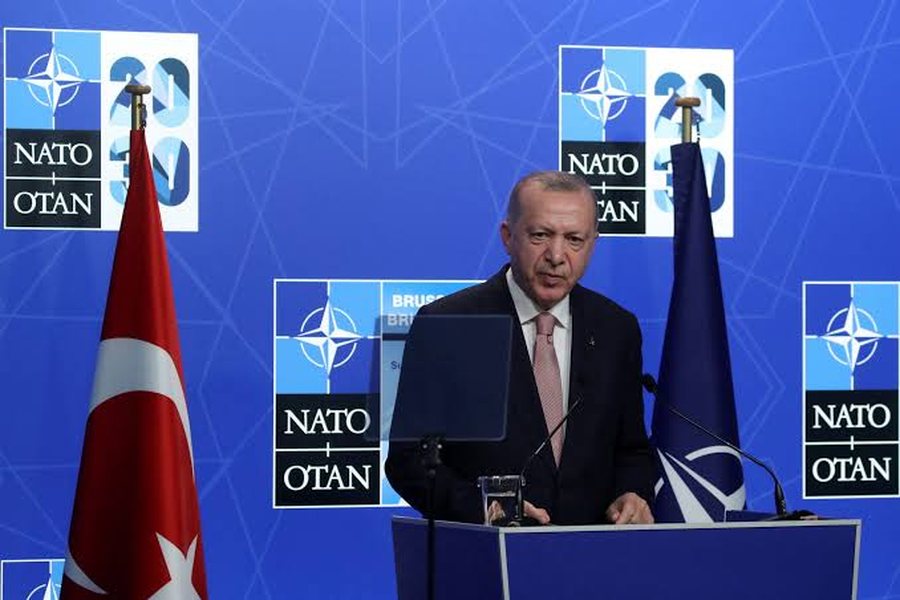
A major security sweep has been carried out in Ankara ahead of next month's NATO summit and more than 200 people suspected of links to extremist groups, including the Islamic State (ISIS) organization, have been arrested.
US President Donald Trump is expected to join other leaders of the 32-member alliance in the Turkish capital for the summit on July 7-8.
Turkey is planning strict security measures for the summit, including banning demonstrations and restricting access to roads leading to airports, as well as sealing off entire areas around the summit site and hotels hosting delegations.
Recep Tayyip Erdogan's government has prioritized security, and authorities regularly carry out security raids. Last month, security forces arrested 324 people suspected of links to ISIS in a nationwide operation.
Early this morning, Turkish prosecutors issued arrest warrants for 241 suspects, and 209 of them were subsequently arrested in police and gendarmerie raids around Ankara, the attorney general's office said in a statement. Raids were still ongoing late Tuesday to arrest the remaining suspects.
Among those arrested were 56 suspected Islamic State fighters and 35 members of the Revolutionary People's Liberation Front Party, a far-left group known for armed attacks and assassinations in Turkey.
The Islamic State group has also carried out numerous deadly attacks in Turkey, including a New Year's Eve 2017 gun attack on a nightclub in Istanbul that killed 39 people.
NATO summit agenda in Ankara
Turkey's President Recep Tayyip Erdogan is preparing to host the NATO summit in Ankara on July 7, 2026, an event of high political and strategic importance for the Western military alliance.
The summit is expected to highlight Turkey's increasingly important role in NATO's security architecture, especially after Russia's invasion of Ukraine. Turkey's geographical position, which lies opposite Russia on the Black Sea, has gained particular weight in the framework of NATO's new ten-year strategy, adopted in 2022 and focused on confronting the Russian threat.
However, the decision to entrust Erdogan with the leadership of the summit has also highlighted several contradictions that Western allies have chosen to overlook.
One of them concerns energy relations between Ankara and Moscow. While Turkey officially opposes Russia's war in Ukraine and remains a key NATO member, it continues to buy large quantities of Russian natural gas.
Russia remains Turkey's largest gas supplier, providing more than half of Turkey's imports through pipelines. According to reports, Ankara not only renewed existing Russian gas supply contracts in December, but has also further expanded energy cooperation with Moscow in recent months. The new agreement with Russian state-owned Gazprom was announced on May 31 during the Baku Energy Forum by Turkish Energy Minister Alparslan Bayraktar.
This development comes at a time when Russia has lost most of the European gas market and continues the war in Ukraine, on Europe's eastern borders.
As a result, NATO leaders will once again face the situation where an important alliance ally maintains close economic relations with the West's main strategic adversary.
Critics argue that allies' tolerance of Erdogan's policies is not limited to relations with Russia.
According to them, for years Western countries have turned a blind eye to the deterioration of democratic standards in Turkey.
Recep Tayyip Erdogan has led Turkey since 2003, first as prime minister and then as president. During more than two decades in power, he has built a political system that critics describe as increasingly centralized and authoritarian, with powers concentrated in the hands of the presidency.
Despite these criticisms, Turkey's strategic importance in NATO, its geographical position, and its role in regional security continue to make Ankara an indispensable partner for the Western alliance.


Lini një Përgjigje