


 Shkruar nga Nikita Aronov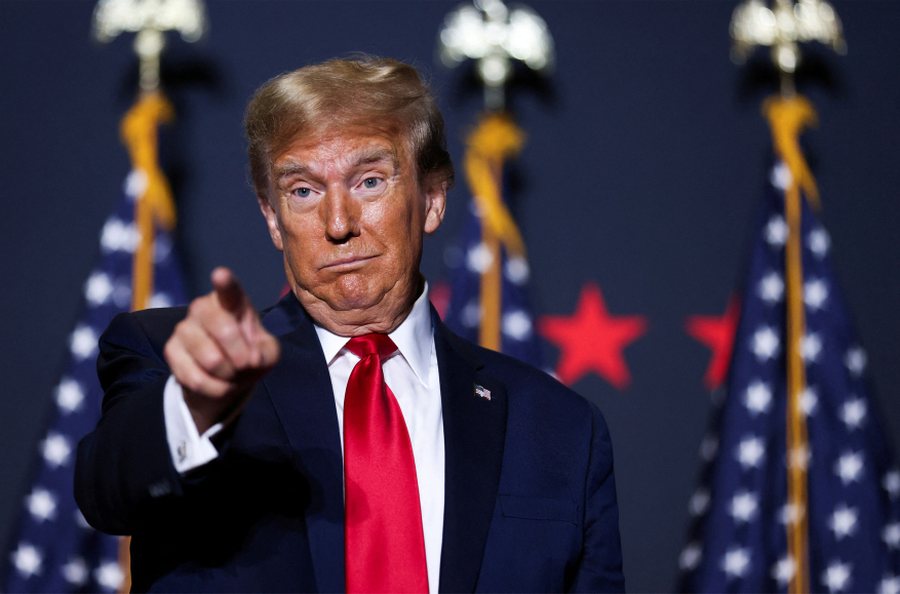
Psychiatrists are alarmed by the deterioration of Donald Trump's mental state. The problems were noticed in his first term, but now the situation is more serious. He often jokes at inappropriate times and uses dirty words. His already limited vocabulary continues to shrink, while both his speech and actions are becoming more impulsive.
On Friday, April 11, Donald Trump underwent a five-hour medical examination. “President Trump is in excellent physical and cognitive health, and is fully capable of performing the duties of Commander-in-Chief and Head of State,” his personal physician, Sean Barbabella, said after the examination.
Trump also took the Montreal Cognitive Assessment (MoCA) test, where he scored 30 out of a possible 30. That evening, he boasted to reporters aboard Air Force One: “I got all the answers right!”
And media outlets reported one after another that the president had “successfully passed a cognitive abilities test.” The problem is that the MoCA is not a test in the clinical sense, but just a basic set of questions to assess a person’s abilities.
It is a single-page questionnaire that takes about 10 minutes to complete, on average. Statistically, it is a useful tool for identifying dementia in the general population. But its sensitivity is so low that even a perfect score may fail to identify serious cognitive impairment.
“There is no indication that Donald Trump’s recent medical examination included a real cognitive test,” American psychiatrist Bandy Lee told The Insider. She has taught for 17 years at Yale University School of Medicine, authored a textbook on violence prevention, worked on prison reform in the US and served as a consultant to the UN on combating violence against children.
Since 2017, she has focused on Trump's mental health, publishing 3 books and numerous articles on the subject. Lee says she first noticed signs of Trump's neurocognitive problems in 2017, and since then the president's condition has steadily deteriorated.
Last year, the World Mental Health Coalition, which Dr. Lee leads, issued a statement signed by 50 leading forensic psychiatrists, neuropsychologists and dementia experts.
The document, published on November 3, 2024, lists symptoms indicating Donald Trump's deteriorating mental health: a simpler vocabulary, incomplete and incoherent sentences, grammatical errors and paraphasia (a speech disorder in which people substitute, rearrange or distort words), inappropriate or unclear statements that have no connection to reality and "obsession", the compulsive repetition of the same thoughts or ideas regardless of context.
Experts also cited Trump's increasingly frequent use of foul and hateful words, as well as increasingly pronounced signs of "mandibular" narcissism. As for the paraphrases, some of Trump's coined words went viral during his first term, such as the mysterious term 'covfefe', the product of a late-night Twitter post.
Meanwhile, during last year's presidential race, new examples of paraphasia emerged. Harry Segal, a professor of psychology at Cornell University, has observed signs of early dementia in the American president.
"It is very alarming the increase in the number of strange speeches and political decisions of Trump. He gave such a vague answer about childcare in his speech to the Economic Club of New York that it seriously worried even his supporters... Trump has shown signs of dementia over the past year, as shown by his strange gait, phonemic paraphasia... and the decline in the complexity of his words and concepts. This limited capacity explains his poor performance in the debates," the expert emphasizes.
Segal believes this is why Donald Trump refused to debate Kamala Harris a second time, and why his speeches have become more impulsive. Meanwhile, psychologist John Gartner said in a recent interview that he has collected dozens of examples of verbal errors made by the president since taking office.
"He tries to say a word, he says the first part, but then he improvises because he can't remember the rest. So Trump says the term 'mishiz' for missiles, or 'Chrishus' for Christmas, because he can't finish the word," he points out.
Gartner believes that the media is deliberately editing the president's quotes, removing the most absurd parts. A month before the 2024 presidential election, The New York Times began analyzing Trump's public speeches to see how they have changed over the years.
The analysis found that his speeches at rallies in 2024 had become almost twice as long - an average of 82 minutes, compared to 45 minutes in 2016. Meanwhile, he used profanity 69 percent more often. Several former aides interviewed by the newspaper also confirmed that Trump's speaking style has changed significantly.
Ish-zëvendëssekretarja e medias në Shtëpinë e Bardhë, Sarah Matthews, tha: ”Unë nuk mendoj se dikush e ka konsideruar ndonjëherë Trumpin një orator të shkëlqyer. Por fjalimet e tij të fundit, duken vërtet më pak koherente. Ai është bërë edhe më i çrregullt, dhe ka disa momente që është dukshëm konfuz. Kur garoi kundër Joe Biden në vitin 2020, kjo të mos ishte dhe aq e qartë”.
Agjencia e lajmeve mjekësore STAT kreu studimet e veta. Në vitin 2017, ajo krahasoi modelet e të folurit të Trump me paraqitjet e tij publike nga vitet 1980. Në një analizë pasuese, ekspertët zbuluan se që nga viti 2017, stili i të folurit të Trump ishte përkeqësuar më tej.
Sipas tyre, disa nga ndryshimet në stilin e të folurit të ish-presidentit ishin shenja të mundshme të rënies së aftësive njohëse. Bandy Lee beson se problemet e të folurit të Donald Trumpit lidhen me humbjen e kujtesës, fjalorin shpesh të pahijshëm dhe gjuhën e urrejtjes.
Për librin e saj më të fundit, të shkruar në bashkëpunim me 36 profesionistë të tjerë të shëndetit mendor, Lee përdori një mjet të njohur si Lista e Kontrollit të Psikopatisë Hare.
Ajo vlerëson fakte biografike dhe të vëzhgueshme - nga mungesa e ndjeshmërisë dhe problemet e hershme të sjelljes, deri tek shthurja morale dhe mungesa e qëllimeve realiste afatgjata.
Lista e kontrollit plotësohet nga një klinicist, bazuar në informacionin e njohur publikisht rreth subjektit. Çdo kriter vlerësohet deri në 2 pikë, për një total maksimal prej 40 pikësh. Një rezultat prej 30 ose më i lartë, përdoret zakonisht për të diagnostikuar psikopatinë. Kriminelët e dënuar, vlerësohen përgjithësisht midis 22 dhe 24 pikëve, ndërsa mesatarja për popullsinë e përgjithshme është 5-6 pikë. Trump mori 36 pikë në këtë test, norme që Lee e përshkruan si “jashtëzakonisht të lartë”.
Situata, paralajmëron ajo po përkeqësohet me kalimin e kohës, pasi të gjitha simptomat psikiatrike janë biopsikosociale, gjë që do të thotë se ato ndikohen nga mjedisi shoqëror i personit. Dhe ndikimin kryesor e kanë njerëzit përreth tij.
“Sot, ai është i rrethuar nga lajkatarë dhe servilë, funksioni kryesor i të cilëve është të përforcojnë iluzionet e tij, në mënyrë që ai të mund të mohojë paaftësinë dhe papërshtatshmërinë e tij për postin që mban”- thekson Lee.
Por analiza psikologjike më interesante, vjen nga një person që ka kaluar shumë kohë me Donaldin: mbesa e tij, psikologia klinike Mary Trump. Libri i saj i vitit 2020, “Tepër dhe asnjëherë mjaftueshëm”, një biografi psikologjike e xhaxhait të saj, u bë një nga librat më të shitur.
Mary beson se personaliteti i presidentit të ardhshëm u formua nga babai i tij - gjyshi i saj Fred Trump, të cilin ajo e përshkruan si një sociopat me funksione të larta. Nëna e Donaldit, e quajtur gjithashtu Mary, portretizohet si e sëmurë fizikisht dhe mendërisht, dhe plotësisht e nënshtruar ndaj vullnetit të burrit të saj.
The author shows how Donald Trump's character was formed under the influence of his authoritarian and manipulative father, Fred Trump, who treated his eldest son - Mary's father, Fred Jr. - very badly, and how this upbringing made the future president a cruel and insensitive man.
In 2018, the US Congress was discussing the possibility of removing Trump from office on medical grounds. Formally, this could be done using the 25th Amendment to the US Constitution, which was adopted after the assassination of President John F. Kennedy, in order to establish the procedure for transferring power in the event that a president becomes seriously ill or is deemed incapable of performing his duties.
Sure, the fact that Trump has won two of the last three US presidential elections might seem like a point in favor of the argument that the president is doing very well cognitively, at least in the eyes of his supporters. But for Bandy Lee, it's a sign that Trump's disorder is spreading.
She writes in her book 2024: "Now, we are threatened not only by an unstable individual, who has sole command over thousands of arsenals of thermonuclear bombs that could destroy the planet many times over, but by a spread of symptoms across the nation and the world, such that the majority of the population has lost the ability to see that there is something wrong." / Adapted from "The Insider" by "Pamphlet"





Lini një Përgjigje