


 Shkruar nga Faisal Saeed Al Mutar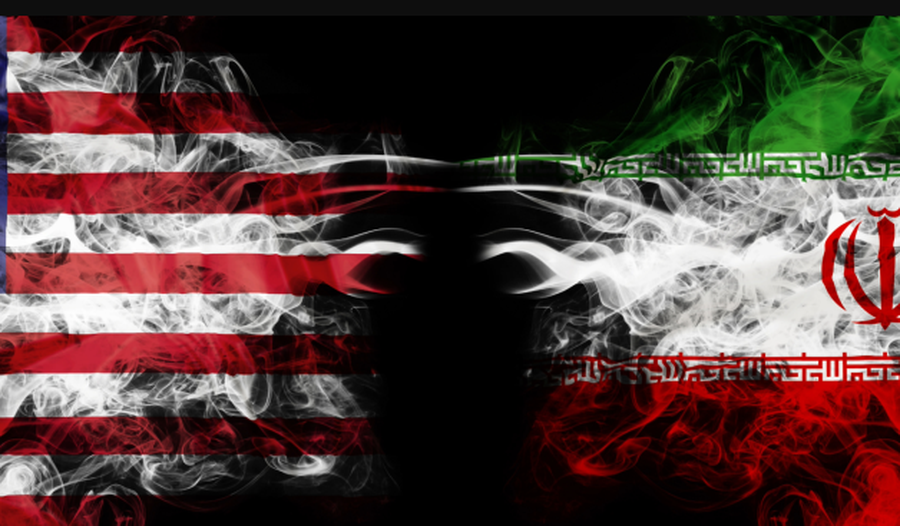
For the first time in more than a decade, the US is holding negotiations with Iran with its Arab allies. It marks a strategic shift from the Barack Obama-era nuclear deal, which was widely seen in the region as a fait accompli by Washington and met with great skepticism in Arab capitals.
This time, the talks were held in Oman, a trusted regional mediator. But more important than geography is coordination. The Trump administration is keeping Saudi Arabia, a long-time counterweight to Iranian influence in the Middle East, informed at every step.
This approach reflects a growing awareness in Washington that the last deal failed in part because it excluded the people most likely to live with its consequences.
The change began in President Trump's first term.
Although his foreign policy has often been derided as chaotic in Washington, it was interpreted very differently in Riyadh, Abu Dhabi and Manama. Arab leaders understood Trump's approach: transactional, blunt and clear. You give something and you get something. There are no speeches about democracy and no mixed messages.
Donald Trump's decision to withdraw from the Joint Comprehensive Plan of Action (JCPOA) in 2018 signaled a sharp break with previous administrations. He was willing to confront Tehran directly, and reach agreements with regional players, based on shared interests rather than high moral ideals.
But that precedent has stuck. His new team has maintained the president's strategic clarity, especially when it comes to regional pacts. Now reports suggest that Washington is very close to finalizing a nuclear cooperation agreement with Saudi Arabia.
If signed, it would allow the Saudi kingdom to have a civilian nuclear program under strong U.S. oversight. The move goes beyond symbolism. It would link the United States directly to Saudi Arabia’s energy and security infrastructure, offering a new model for building alliances in the Middle East.
Moreover, the United States is preparing to provide Riyadh with advanced American weapons, creating not just a military partnership but a credible deterrent against Iran. Tehran's power has long depended on the perception that its neighbors are divided, weak, or both.
But if Arab states like Saudi Arabia start coordinating more closely with the US, that equation changes dramatically. All of this suggests that we will see a realignment.
largest regional. There is speculation that Saudi Arabia may join a version of the Abraham Accords to normalize relations with Israel.
Riyadh has so far treaded this path cautiously, albeit behind the scenes. Defense cooperation, intelligence sharing, and economic integration are already developing at a rapid pace. The result?
A closer coalition, built not on ideology but on threats and shared interests. This is not peace in the traditional sense, based on treaties, but peace through the balance of power. But not everyone in the region is moving at the same pace.
Within the Israeli intelligence community, there is a division over how much pressure to apply to Tehran. Some analysts argue that the regime is already too fragile, and that further provocations could precipitate its downfall.
They warn that a post-theocratic Iran could descend into chaos: a nation of over 80 million people, fragmented by ethnicity and ideology, and without a clear path forward.
The possibility of civil war is not ruled out. For Israel, this is the worst-case scenario. For the US, it is a potential invitation to another open conflict, for which Washington has no appetite after the long wars in Iraq and Afghanistan.
What makes this moment different is not just a tougher stance on Iran.
But a more comprehensive approach. The US is not trying to change Iran through idealism or force. It is building a strategic vise around it, reinforced by diplomacy, regional partnerships, and credible deterrence.
The lesson from the last decade is clear: when you make deals over the heads of regional players, the result is mistrust, instability, and broken agreements. This time, the Arab states are not the only ones in the room, but they are dictating the agenda.
And this may be the only way to build a Middle East that doesn't require constant US intervention to stand on its own. / Pamphlet from "The Hill"



Lini një Përgjigje