


 Shkruar nga Pamfleti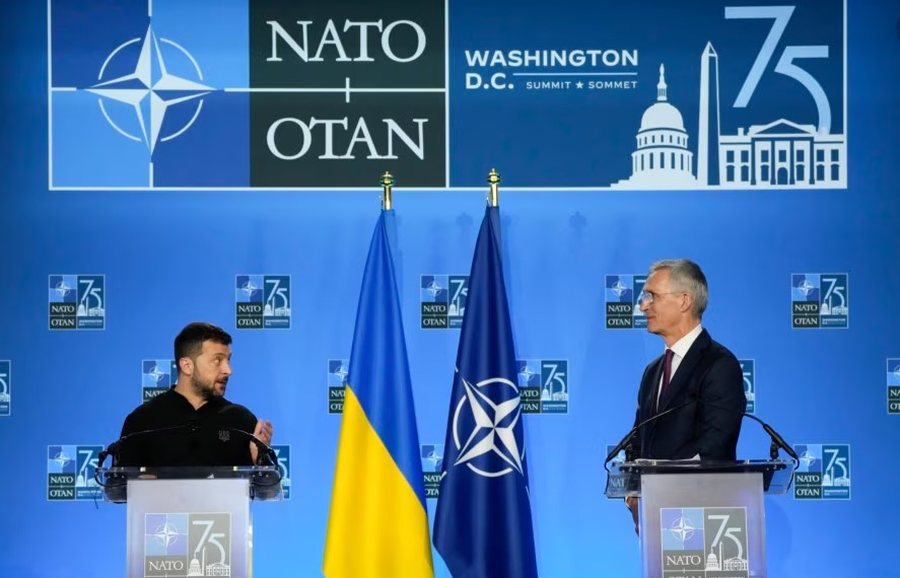
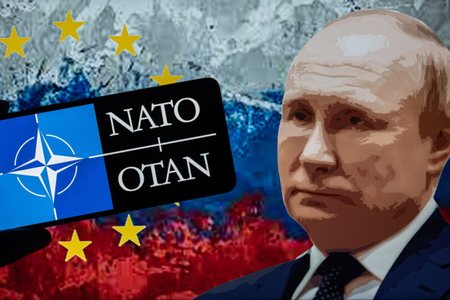
While much of the NATO meeting in Washington has focused on support for Ukraine, some Western officials are equally determined to confront another challenge fueled by Russian aggression in Ukraine, an arms race with global ramifications. .
Officials argue that it is no longer enough to ensure Ukraine has the weapons and systems it needs to continue to resist Russia's relentless attacks. They say that NATO must simultaneously prepare to spend more on defense than the Russian army and its allies.
"We have no time to lose," a NATO official, speaking on condition of anonymity, with knowledge of the discussions about the growing military cooperation between Russia, China, North Korea and Iran told VOA.
"This should be a key priority for all of our allies because it's not just about increasing spending, but also about outpacing their military capabilities," the official said.
Officials have repeatedly accused China of playing a critical role in supporting Russia's military, sending Moscow raw materials and so-called dual-use components needed to make advanced weapons and weapons systems.
In April and May, the United States and Britain imposed new sanctions against Iranian companies and officials involved in the production of drones for the Russian military.
Secret documents released by the United States have pointed to North Korea's use of ballistic missiles by Russia, while South Korean officials said earlier this year that Pyongyang has so far sent Russia at least 6,700 containers that can carry more than 3 million artillery shells.
The NATO official who spoke to VOA said that support from China, Iran and North Korea has significantly changed Russia's posture on the battlefield, rendering obsolete estimates by Western intelligence agencies that the Russian military "will it will take years to rebuild".
"When you look at the estimates of the pace of rebuilding of the Russian armed forces and the Russian defense industrial and technological base, the intelligence agencies' estimates were made without taking into account the level of interference from China," the official said.
There are concerns that this is just the beginning. The prospect of increased military cooperation between Russia, China, North Korea and Iran "fundamentally underscores the urgency of this challenge," the official said.
Some US officials have called the growing alliance a "new axis of evil".
"We have to act accordingly," former commander of US forces in the Indo-Pacific Admiral John Aquilino told lawmakers in March.
Some analysts are also alarmed, seeing signs that military relations between Russia and the countries are going beyond the level of bilateral efforts to support Moscow's war in Ukraine.
"What we're seeing now is an intensification, a deepening of these strategic partnerships," said Richard Goldberg, a senior adviser at the Washington-based Foundation for Defense of Democracies.
"While they may not be 100% aligned all the time, every day, it's important to note that they are aligned on the strategic capabilities they're building with this partnership," he told VOA. Goldberg, National Security Council official in former President Donald Trump's administration. "In our response, we need to look at them as an axis, not as individual parts."
But it is not certain how quickly this axis could transform into a true rival of NATO.
"There are still significant points of tension between the four countries that prevent the formation of a more united alliance," says Michelle Grisé, a policy researcher at the RAND Corporation.
"Within the Russia-Iran relationship, for example, points of friction include competition for energy markets and influence in the Caucasus, as well as — at least historically — different approaches to Israel," researcher Grisé told VOA.
"The Russia-China-North Korea-Iran axis poses a serious threat to the interests of the United States and NATO, but I do not think that this axis of authoritarian countries is an insurmountable rival," she said. "To create a more united alliance, they will need to better coordinate their common opposition to the Western-led international order, creating a coherent and shared vision for the future. I think they will try to do that."
However, NATO allies are not ready to stand idly by in the face of such efforts by the emerging Russia-China-North Korea-Iran axis.
In a speech on July 9 at the Defense Industry Forum during the NATO meeting in Washington, US Deputy Secretary of Defense Kathleen Hicks noted the "rapid industrial expansion of defense by our strategic competitors" as she urged NATO allies to expand cooperation in arms procurement and production.
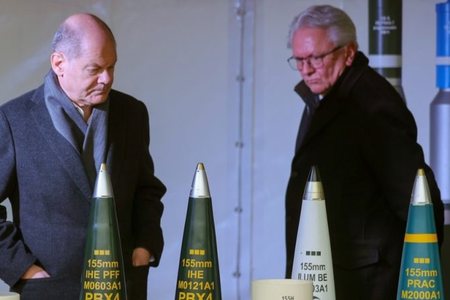
As an example, Ms Hicks cited an effort by the United States, Germany, Spain and other countries to produce interceptors for Patriot air defense systems in Europe, while praising a US-Turkish effort to produce 155mm artillery shells in Texas. .
"None of us should think this is enough," she said. "The expansion of the transatlantic defense industrial capacity is not just a good work plan, but a need and necessity for the NATO alliance."
Even if NATO's efforts to increase weapons production are not enough, some officials see them as a reason to believe the West can maintain its edge.
"I think the steps and the progress we're making are really paying off," the NATO official told VOA, adding that they "won't be overly pessimistic."
"On issues like ammunition production, we're starting to see that the increase is actually paying off," the official said. "And I think next year, we will have much better numbers."/ VOA


Lini një Përgjigje