


 Shkruar nga Pamfleti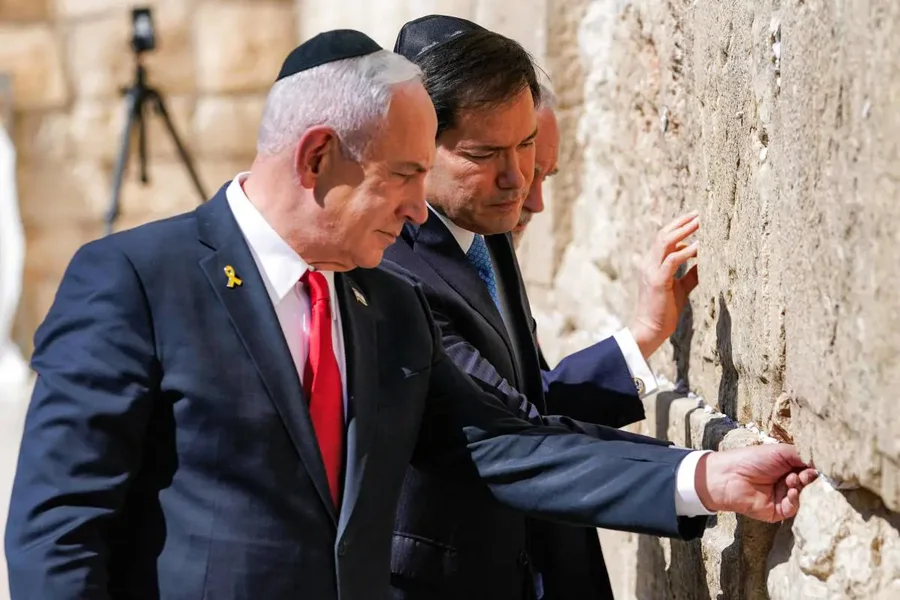
In an isolated Jerusalem, which is still reeling from the recent attack that killed 6 Israelis, US Secretary of State Marco Rubio met with Benjamin Netanyahu on the first leg of his Middle East trip.
Rubio himself announced the mission's goal in a post on his social media channels: "Ensuring the return of hostages, finding ways to ensure humanitarian aid reaches civilians, and addressing the threat posed by Hamas. Hamas cannot continue to exist if the goal is peace in the region."
Before leaving for Washington, Rubio explained to American reporters that the United States is "not pleased" with the Israeli attack against Hamas leaders in Qatar, but that the attack does not change Washington's status as an ally of Israel.
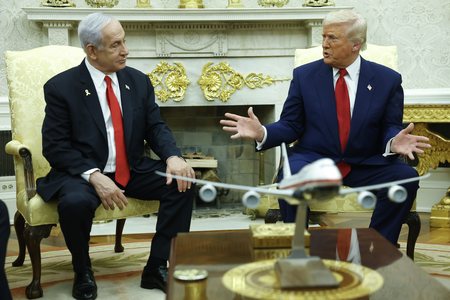
In reality, three issues were at the center of the talks: the possible annexation of the West Bank by Israel, the agreement to end the war in Gaza, and the proposed reconstruction plan promoted by Donald Trump.
According to Axios, Rubio and Netanyahu discussed the possibility of Israeli annexation of parts of the occupied West Bank in response to the recognition of the State of Palestine announced by several Western countries at the UN General Assembly later this month. The Israeli prime minister wanted to know whether the United States would be willing to support annexation despite the risk of undermining the Abraham Accords.
The United Arab Emirates has already warned the Trump administration and the Israeli government that annexing part of the West Bank would significantly undermine the peace treaty between Abu Dhabi and Israel and, more generally, the Abraham Accords. Moreover, the American concern is that this possibility could ruin the prospect of a peace agreement promoted by Donald Trump.
As Rubio and Netanyahu discuss this, we meet Elie Pieprz, director of international affairs at the influential Israel Defense and Security Forum, in downtown Jerusalem. Pieprz explains that "Secretary Rubio's trip is being seen in Israel as a strong message of support, as Israel faces increasing diplomatic attacks internationally."
He added that "Rubio's awareness of the grave security vulnerability of France's initiative to create a Palestinian state vis-à-vis Israel stands in stark contrast to the way many other countries have left Israel exposed, while Israel continues to fight at great cost against militant terrorists and extremists driven by extremist ideologies that plague not only Israel but much of the free world."
It is no coincidence that yesterday Rubio and Netanyahu also visited the Western Wall in Jerusalem and, after praying together, the Israeli prime minister declared: "I think Rubio's visit here is a testament to the solidity and strength of the Israeli-American alliance, which is as strong and enduring as the stones of the Western Wall."
"We just touched on it. An alliance that has never been as strong as under the Trump presidency," Netanyahu added. Meanwhile, Rubio continues his visit to Israel today, where he will meet with Israeli President Herzog. / Adapted from Il Giornale /



Lini një Përgjigje