


 Shkruar nga Pamfleti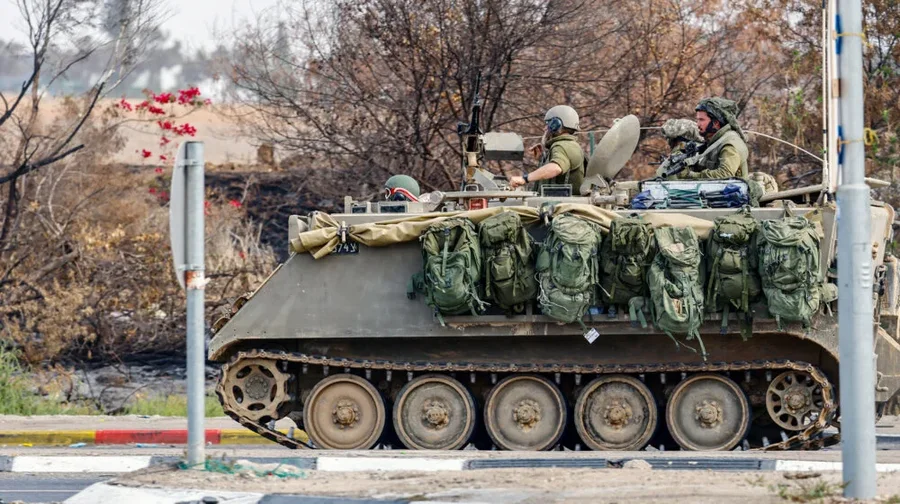
Israel has mobilized about 350,000 reservists for the offensive, part of the army is stationed on the border with Lebanon and part on the border with the Gaza Strip. The goal of the offensive in Gaza is to destroy the Islamic militants Hamas, which Germany, the EU, the US and several other countries classify as a terrorist organization.
There is no alternative to this step, says Michael Milstein, a colonel in the reserves, a former member of the Israeli military intelligence service and now a researcher at the Moshe Dayan Center at Tel Aviv University.
Hamas has always formulated its goals very clearly, which are jihad and the elimination of Israel. He never saw economic progress as a strategic objective and always announced a major offensive against Israel," says an Israeli expert in an interview with DW.
But a question is already being asked: how to politically manage the Gaza Strip after the destruction of Hamas and its terrorist structures? The Israelis have not yet given an official answer to this. And, at this point, it is not possible to assess whether Israel will be able to completely eliminate Hamas this time.
To prevent a new power vacuum
But one thing is clear, says Milstein, there cannot and should not be a power vacuum.
"A rapid withdrawal after the destruction of the Hamas regime would create a vacuum that would be filled by anarchy and radical Islamic groups."
That a political power vacuum can attract more radical forces was demonstrated in Afghanistan, where the Islamic State (IS) exploited the notorious weakness of government institutions for its own purposes even after the Taliban took power. IS managed to do the same in the Sahel region.
Even Iran can benefit from the power vacuum: despite the possible loss of its "partners" such as Hamas and Islamic Jihad, it can use new methods or even new allies and continue to be a constant threat to Israel, which you want to delete. the world map..
Under these circumstances, what might the new order in the Gaza Strip look like?
Milstein sees several options – but all, he says, are problematic. Stefan Štetter, a political scientist from the Bundeswehr University in Munich, thinks the same.
Scenario 1: Israeli occupation since 2005.
Israel can once again directly control the Gaza Strip militarily, as it did until 2005 - thus returning Israel as the occupier inside Gaza.
Një veprim i tillë mund të provokojë rezistencë të re nga forcat militante. Do të kishte gjithashtu një ndikim fatal në ekuilibrin në rajon, thotë Stetter: "Ka nga ata në Izrael që mbrojnë rivendosjen e Rripit të Gazës". Dhe kjo më pas do të funksiononte në avantazhin e të gjithë atyre që duan të inkurajojnë dhe mbajnë konfliktin izraelito-palestinez”.
Krahas kësaj: fuqia okupuese – sipas ligjit ndërkombëtar – ka edhe detyrime ndaj popullatës së pushtuar. "Kjo detyrë do të duhej të merrej para së gjithash nga vetë Izraeli." Financiarisht do të tejkalonte të gjitha mundësitë e vendit”, thotë Stetter. Izraeli ndoshta nuk do të ishte në gjendje të kryente një okupim të ri kundër rezistencës politike të aleatëve të tij perëndimorë - kryesisht SHBA.
Përveç kësaj, ky hap do të rëndonte ndjeshëm marrëdhëniet e Izraelit me shtetet arabe me të cilat ai ose ka përfunduar tashmë marrëveshje paqeje ose planifikon ta bëjë këtë. "Kjo është arsyeja pse unë mendoj se një hap i tillë nuk ka gjasa," tha Stetter.
Ky skenar paraqiste një problem tjetër për Izraelin pasi do t'i duhej të izolohej edhe më shumë nga Rripi i Gazës. “Izraeli do të bëhej një administratë burgu dhe do të sundonte përgjithmonë mbi një kamp të madh burgu (me të cilin Gaza është krahasuar prej kohësh),” shkruante kohët e fundit revista e njohur politike Foreign Affairs.
Skenari 2: Autoriteti Palestinez
Autoriteti Palestinez (PA) mund të kthehet në pushtet në Rripin e Gazës. Ky plan ka një dobësi mbi të gjitha, sipas ekspertit izraelit Milstein: PA, e udhëhequr nga Mahmoud Abbas, qeveris zona gjysmë autonome në Bregun Perëndimor, megjithatë, de facto kontrollon vetëm një pjesë të vogël. Pjesa më e madhe e territorit kontrollohet nga Izraeli.
"Ne duhet të kujtojmë se sa i dobët dhe jopopullor është Abu Mazen (një pseudonim për Abbasin).
Autoriteti Palestinez dhe Fatah, i cili e dominon atë, janë jashtëzakonisht të papëlqyeshëm në Bregun Perëndimor të pushtuar. Qytetarët shpesh protestojnë për korrupsionin dhe mungesën e demokracisë. Zgjedhjet e fundit presidenciale u mbajtën në vitin 2005 dhe që atëherë Abbas ka qeverisur. Dhe askush nuk e pëlqen atë. Perëndimi e kritikon atë kryesisht për deklaratat e tij antisemite dhe mungesën e distancës ndaj terrorit të Hamasit, dhe një numër i vogël palestinezësh në Bregun Perëndimor të pushtuar e akuzojnë atë se nuk është mjaft i vendosur dhe vendimtar ndaj fuqisë pushtuese të Izraelit.
Stefan Stetter citon një faktor tjetër: "Nëse PA do të lëvizte në Rripin e Gazës pas fitores së Izraelit ndaj Hamasit, disa mund ta konsiderojnë atë një përfitues lufte që mori pushtetin në kurrizin e viktimave të luftës."
Skenari 3: Administrata Civile e Përzier Palestineze
A better but difficult option would be a mixed Palestinian civilian administration, according to Israeli expert Milstein. It will consist of various representatives of the Palestinian public – including mayors – and will likely have close ties to the PA.
Such a model could be supported by Egypt, the US, Saudi Arabia and the United Arab Emirates, says Milstein: "Perhaps, such an order was not sustainable for a long time." But it would be much better than many other bad alternatives."
Scenario 4: UN administration, as in Kosovo
In theory, the UN could also take over administration after the defeat of one side, says Stefan Šteten, citing Kosovo and East Timor as examples.
"But this is not realistic in the Gaza Strip," he noted. "It would be much more difficult in this case, if not impossible, because this conflict is so much in the focus of global public opinion." The fact that Western countries would potentially play a strong role here would probably be viewed very critically."
Besides, he says, it would be difficult to get a proper UN mandate.
Scenario 5: Governance of Arab states
The pernicious advantage provides another scenario: Arab states in cooperation with the Palestinian Authority can manage the Gaza Strip.
"This may actually be in the interest of some Arab states, especially those that have strong reservations about the Muslim Brotherhood [political group]," he argued. Hamas is considered the Palestinian branch of the Muslim Brotherhood, which is opposed by Egypt, Saudi Arabia and the United Arab Emirates.
At the moment, the rhetoric of these countries is focused on solidarity with the Palestinians, on the Palestinian suffering and the possible war crimes committed by Israel in Gaza. Civilians in those Arab countries expressed the same sentiments. Despite this, Stetter emphasizes that "the defeat of Hamas will not be viewed unfavorably in Riyadh and Cairo."
First of all, in such a scenario, the Palestinians can probably be convinced that their fundamental interests - national self-determination and the two-state solution - are not threatened. But this requires combined forces, also in cooperation with the West and the UN". In addition to political support, financial support would also be important. This model would not only provide perspective for the Palestinians, but also bring more security to Israel, according to Stetten.
Unfortunately, the current escalation makes it unclear whether Arab states, even those with diplomatic ties to Israel, would be willing to invest political capital in such a plan. According to Šteten, such a model can be in play, only in the medium term.




Lini një Përgjigje