


 Shkruar nga Pamfleti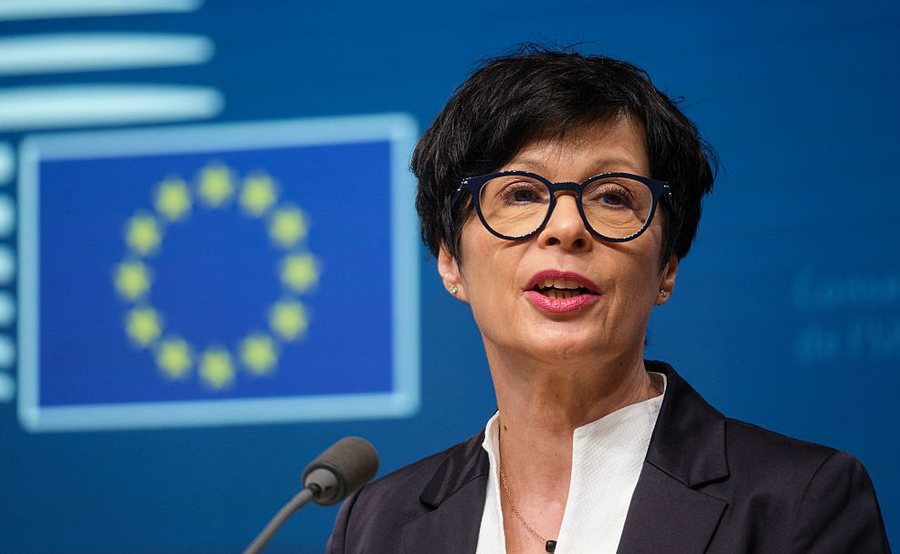
Five European Union countries have asked the European Commission to review the way Western Balkan countries are included in the bloc's single market, seeing it as a means of keeping the accession candidates away from Russian influence.
"To maintain the momentum of enlargement and advance European integration, strong and attractive incentives are needed," Austria, the Czech Republic, Italy, Slovakia and Slovenia wrote in a confidential document distributed among the 27 EU member states in Brussels last Friday, according to Euroactiv reporting .
"A merit-based approach - if necessary, step by step - to the European single market represents such an incentive ," the document by countries that are part of an informal group supporting the Western Balkans' aspirations for EU membership further states.
According to the proposal, the model called "systematic sectoral integration" envisages expanding the participation of countries such as Montenegro, Albania, North Macedonia and Serbia in various EU programs, in parallel with the gradual harmonization of their legislation with Brussels rules.
"Gradual integration ... should be pursued actively and systematically once a candidate demonstrates a high level of compliance with EU rules in the relevant sector," the document states.
The document also provides for protective mechanisms in cases where a country that has benefited from special access to the EU market regresses in meeting standards.
Sectors that could be included in this approach include transport, energy and power, the digital single market, competition policies and strategies for critical raw materials. The document also mentions the youth mobility agreement between the UK and the EU as a model that could be applied to the Western Balkan countries.
However, the document does not reach the level of ambition of the ideas presented by Albania's Foreign Minister, Ferit Hoxha, in an interview with Euractiv last week, where he suggested that candidate countries gain observer status in EU institutions during the process of closing negotiation chapters.
Milan Nič, senior research fellow at the German Council on Foreign Relations, expressed skepticism about the document, arguing that it does not bring fundamental changes from previous ideas.
"It sounds like a slightly more sophisticated version of the previous push for gradual integration," he said.
The authors of the document have called on the Commissioner for Enlargement, Marta Kos, to present new initiatives in this direction.
"This approach would expand and strengthen the single market, contributing to the EU's geo-economic importance and strategic autonomy, while bringing candidates closer and helping to counter the influence of third countries ," the document states.


Lini një Përgjigje