


 Shkruar nga Pamfleti
Article 4 is often considered a “warning bell” that precedes potential developments. Although Article 4 is rarely used, its existence functions as a preventive and deterrent mechanism, indicating that a member’s concern can be transformed into a collective issue.
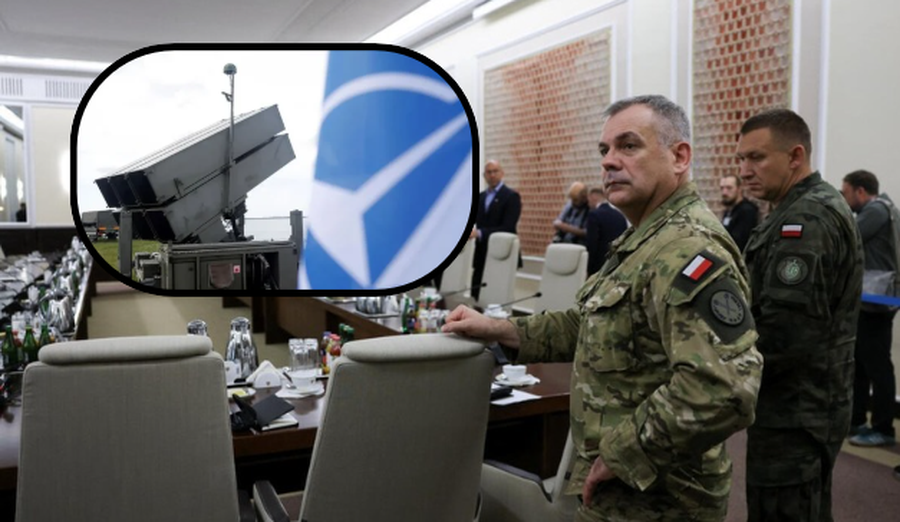
Polish Prime Minister Donald Tusk's announcement that his country will seek to activate NATO's Article 4, following 19 airspace violations by Russia, highlights one of the North Atlantic Alliance's lesser-known but particularly critical mechanisms.
What does Article 4 provide?
Under the Washington Treaty (1949), Article 4 gives any member state the right to request consultations with the Allies if it considers that its territorial integrity, political independence or security is threatened. This does not imply automatic military involvement, but rather places the matter before the North Atlantic Council, which can decide on diplomatic, military or preventive action.
Article 4 is often considered a “warning bell” that precedes possible developments. Unlike Article 5, which provides for collective defense in the event of an attack on a member state, Article 4 remains at the level of political consultation - but it has particular weight as it opens up debate throughout the Alliance.
The previous seven activations
Since NATO's founding, Article 4 has only been used seven times, which demonstrates the exceptional nature of the procedure:
2003 – Turkey: After the Iraq War, Ankara was concerned about the consequences for the security of its borders. The Allies then decided on measures to strengthen Turkey's air defenses.
2012 – Turkey: The downing of a Turkish warplane by Syrian forces led to consultations.
2014 – Poland, Estonia, Latvia, Lithuania: Following Russia's annexation of Crimea, four Eastern European countries simultaneously invoked Article 4.
2015 – Turkey: It again requested consultations, citing instability in Syria, terrorist activity, and threats to its security.
2020 – Turkey: In response to the escalation in Idlib, Syria, Ankara activated Article 4, hours after dozens of Turkish soldiers were killed in an airstrike.
2022 – Poland: Following Russia's invasion of Ukraine, Warsaw requested consultations, noting that the security of all eastern members was at risk.
2022 – Slovakia, Hungary, Bulgaria, Romania: A few days later, other Eastern European countries invoked Article 4 due to the rapidly deteriorating situation in Ukraine.
Why Poland now?
Poland, which borders EU and NATO member Belarus and is a short distance from Ukraine, is in a constant state of concern about its security. Recent reports of dozens of violations of its airspace have given Warsaw the opportunity to bring the issue to the attention of allies, seeking political support and possible reinforcement of preventive measures.
The activation of Article 4 does not mean a military response, but paves the way for actions such as reinforced air patrols, deployments of forces to eastern member states or joint exercises. At the same time, it sends a message to Moscow that Poland is not dealing with the situation alone, but under the umbrella of the Alliance.
Importance for the Alliance
The Warsaw Pact highlights how member states exploit the Treaty's provisions, not only for immediate security, but also to strengthen NATO's political cohesion. Although Article 4 is rarely used, its existence functions as a preventive and deterrent mechanism, demonstrating that a member's concern can be transformed into a collective issue.





Lini një Përgjigje