


 Shkruar nga Pamfleti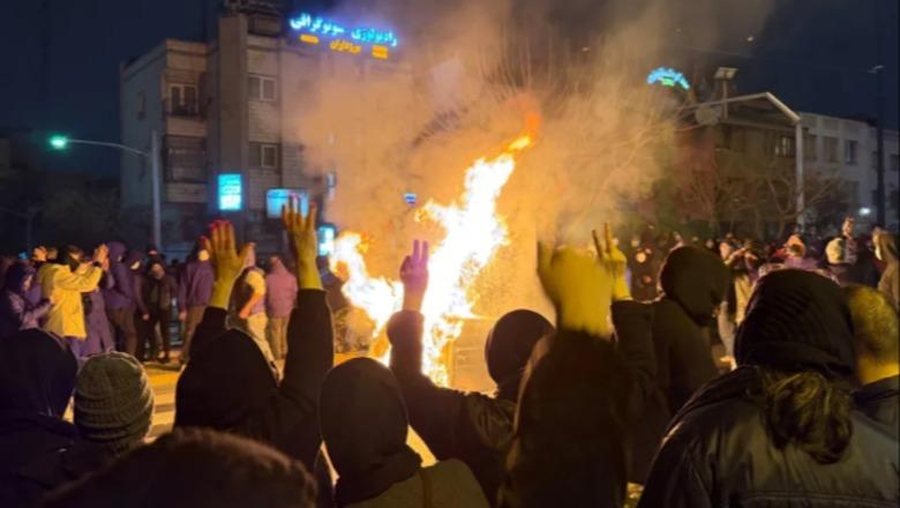
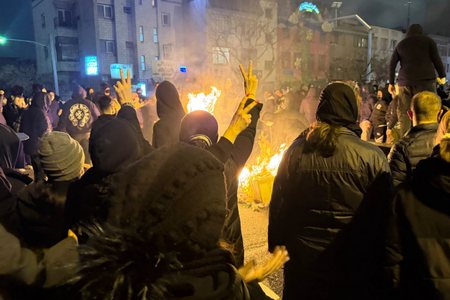
"Twelve thousand," "three thousand," "two thousand," "twenty thousand." Each one gives his own figure, which is high or very high, in the thousands. In the darkness of the internet, it is difficult to confirm the truth, but it is clear that we are facing a massacre of civilians. The Iranian regime is killing its own people who stand up. It shoots them in the forehead, in the heart, in the back, killing parents, children, and the elderly. But those who pay the highest price in the battle for a free life are the sons and daughters of Iran. Students, athletes, artists. A generation that refuses to accept the unjust laws of a religious dictatorship that protects them, monitors them, imprisons them, and hangs them. Those who see from afar what the word freedom means, demand it, with their bodies, with their lives.
If you go outside, you might get shot. So Ali, Ghazale's boyfriend, never goes out. From his kitchen window, he sees soldiers walking around with guns. And every now and then he says he hears gunshots. Ghazale is worried because yesterday morning, during their daily phone call that lasts a maximum of three minutes because it's so expensive, he confessed to her that he was feeling exhausted. "He told me that sometimes he thinks it would have been better to die with the other children than to live with this shit." Until five days ago, Ali was protesting in the streets of Tehran, "today almost no one has the courage to go back to the streets, it's as if martial law was in force. Repression is winning: they've killed thousands of people."
Ghazaleh, Ava, Kamyar and Amir, one after the other, tell us about the despair they feel after the latest news. "We knew it from the beginning; he was just bluffing, while we paid the price in blood. We need help to continue the resistance," writes Amir. He is referring to Donald Trump and what everyone is seeing as a de-escalation. Yesterday, Washington made the first move against the ayatollahs. No cyberattack, no surgical strike at the heart of the regime. The United States has approved a new round of sanctions against Iran: the main target is Ali Larijani, the head of the Supreme National Security Council, considered the architect of the repression. And 18 other people and entities in the so-called "shadow banking system" network. This is not a sufficient answer for many of the Iranian rebels, who feel betrayed and abandoned: "They left us alone," writes Ghazaleh.
But the American president's story is different: "Yesterday I saved a lot of lives," he tells an NBC reporter. For two days, he has made sure that the dictatorship does not hang anyone. Erfan Soltani - the first on the list of people to be hanged from the crane - is still alive, according to reports from Tehran. "Iran has canceled 800 planned executions of protesters," says White House spokeswoman Caroline Leavitt, but she also emphasizes: "All options remain on the table." But it is the American newspapers that are giving the most credible version of this action. The Wall Street Journal, the New York Times and even Axios report this.
The White House is stalling. The president has been told that a large-scale attack is unlikely to topple the government and could instead trigger a wider conflict. He is therefore assessing, with his allies, the modalities of a possible military operation that would hit the regime without provoking uncontrolled retaliation. Israel, in particular, has reservations: Prime Minister Benjamin Netanyahu is said to have asked Trump to wait in order to prepare for a possible response from Tehran. But: “Everyone knows that the American president has his finger on the trigger.” A Pasdaran general, Mohsen Rezaei, is also there to raise fears: “Trump said he has his hand on the trigger. We will cut off his hand and his finger.” Meanwhile, while
An emergency meeting of the United Nations Security Council on the situation in Iran is underway, and the Pentagon announces the movement of an aircraft carrier from the China Sea to the Middle East. While it is true that the ayatollahs have not hanged anyone for two days, "respecting" the red line set by Trump, they continue with the arrests and persecutions. They search the homes of those who dared to stand up, punishing doctors and pharmacists who treat the wounded during the protests. They report that Iraqi and Hezbollah militias are roaming the almost empty streets. And that drones are spying on the cities. "We are afraid to talk to our friends who are still there," writes Ghazaleh, who is afraid to know what really happened./ Corriere della Sera



Lini një Përgjigje