


 Shkruar nga Pamfleti
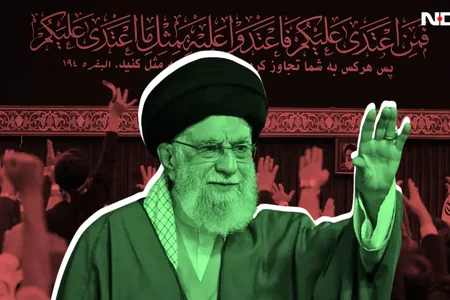
Ayatollah Ali Khamenei, Iran's supreme leader, was killed Saturday in his office in Tehran during a joint Israeli-US strike, in what is considered the largest operation against Iranian targets in decades. State television IRIB announced Sunday morning that "Iran's Supreme Leader has achieved martyrdom."
Khamenei, 86, led the Islamic Republic for 35 years, making him one of the world's longest-serving leaders. During his rule, he consolidated control over key state institutions, including the armed forces, the Revolutionary Guard and the judiciary, and deepened Iran's regional role in the Middle East.
Eight years before becoming supreme leader, Khamenei had survived an assassination attempt that left a permanent mark on his life and public image. On June 27, 1981, while he was president, he went to a mosque after returning from the front lines of the Iran-Iraq War. After the prayer, he gave a speech and answered questions from the faithful.
According to reports at the time, a man described as “a young man of medium height, with curly hair, a beard and a checkered coat” placed a tape recorder on the table in front of Khamenei and pressed a button. After about a minute, the device exploded. Inside was a message calling the attack “a gift from the Furqan Group to the Islamic Republic.” Furqan was a militant group in opposition to the ruling clerical establishment.
The explosion left Khamenei seriously injured and permanently paralyzed in his right arm. He learned to write with his left hand and later rose to the highest levels of the religious and political hierarchy, becoming part of the Islamic Republic's inner circle.
Although he dominated Iran's political and religious life for decades, details of his family life remained largely out of the public eye. He is survived by his wife, Mansoureh Khojasteh Bagherzadeh, and six children. Several extended relatives reportedly live abroad, including in France, but his immediate family has remained in Iran.





Lini një Përgjigje