


 Shkruar nga Pamfleti
Here's the financial empire Khamenei left behind and how it compares to Trump and Netanyahu's wealth...
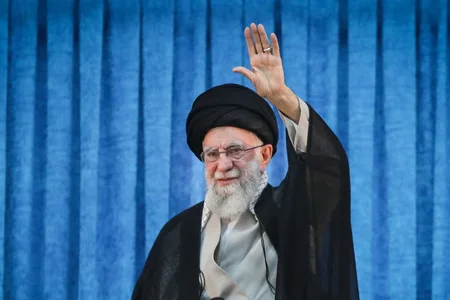
Ayatollah Ali Khamenei, the supreme leader of the Islamic Republic of Iran since 1989, was killed yesterday in an airstrike carried out by the United States. His death marks the end of a 37-year era at the helm of the Iranian political system and opens a new debate not only about his political legacy but also about the wealth and economic network he controlled.
Unlike elected leaders in Western systems, the supreme leader in Iran is not only the highest political and religious authority, but also the figurehead who oversees large economic structures known as “bonyads” and entities created after the 1979 Islamic Revolution. These organizations operate in parallel with the government, enjoy broad tax exemptions, and are not subject to regular public auditing.
At the center of this network was the “Setad Ejraei Farman Imam”, known internationally as the Execution of Imam Khomeini's Order (EIKO). This entity was originally created to administer abandoned properties after the revolution, but over the years it has transformed into a conglomerate with interests in energy, telecommunications, banking, pharmaceuticals, agriculture and real estate. International investigations, including Reuters reports and US Treasury Department documents, have estimated that the assets under the control of this network amount to tens of billions of dollars, with some estimates approaching the figure of 90–95 billion dollars.
In addition to Setad, other large foundations such as the Mostazafan Foundation and Astan Quds Razavi operated directly or indirectly under the supreme leader's influence. The Mostazafan Foundation is considered one of the largest conglomerates in the Middle East, with companies in the construction, mining, food industry, transportation, and tourism sectors. Astan Quds Razavi manages religious complexes, land, and numerous investments in northeastern Iran and beyond. All three of these structures have been subject to sanctions by the US, which has described them as mechanisms for consolidating the economic power of the supreme leader.
It is important to distinguish between personal wealth and controlled wealth. There are no public records showing that Khamenei directly owned billions of dollars in personal accounts or private property in his name. Officially, he presented himself as a leader with a simple lifestyle. However, his authority over multi-billion dollar foundations and conglomerates gave him direct influence over a significant portion of the Iranian economy. In practice, he had the final say on the strategic direction of these entities and the appointment of their leaders.
A comparison with other international leaders highlights the magnitude of this economic impact. According to Forbes, after returning to office in 2025, US President Donald Trump's net worth increased to $7.3 billion, up from $3.9 billion the year before. In December 2025, Trump Media and Technology Group announced a plan to merge with TAE Technologies, a company developing nuclear fusion technology, which raised discussions of a potential conflict of interest given that the US administration oversees the nuclear sector.
Israeli Prime Minister Benjamin Netanyahu, on the other hand, is worth an estimated $13 million, according to Celebrity Net Worth. Netanyahu has served three terms as prime minister — 1996–1999, 2009–2021, and again from 2022 — and has been active in the private sector during his periods out of power. He was indicted in 2019 on charges of bribery, fraud, and breach of trust, issues that continue to weigh on Israeli political life.
Compared to these figures, estimates of the assets under Khamenei’s control place him at a much higher level of economic influence. Even if not considered personal wealth in the classical sense, the structure he oversaw significantly exceeds the declared wealth of Trump and Netanyahu. For this reason, many analysts argue that, in terms of influence over capital and assets, Khamenei was more economically powerful than the two Western leaders.
His death raises many questions about the fate of this economic network. The Iranian constitution provides for the Assembly of Experts to appoint a new supreme leader. However, it remains unclear how the foundations and companies that operated under his authority will be restructured and whether there will be any efforts to increase transparency. Given that these entities represent a significant part of the national economy, any change in their direction will directly affect Iran's financial and political stability.
Khamenei's legacy, beyond the religious and political dimensions, includes an economic architecture built over more than three decades. With his departure from the scene, this architecture enters a new phase, where the balance between power, wealth, and institutional control will determine the future direction of the Islamic Republic. / Prepared by "Pamphlet"



Lini një Përgjigje