


 Shkruar nga Pamfleti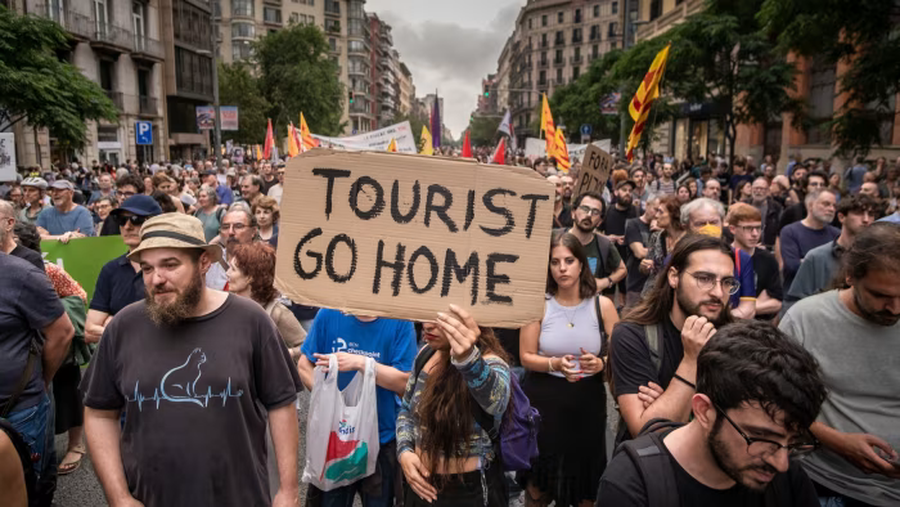
Left-wing mayor Jaume Collboni says apartment rents have risen 68 percent in the past 10 years.
Holidaymakers enjoying Barcelona's cafes last weekend experienced a welcome they didn't expect: several thousand protesters marching, some with water pistols, others with placards reading "Tourists go home".
The backlash against tourism reflected several factors, including overcrowding and the number of cruise ships docked in the city's harbor. But a key element of the protest – and Barcelona's response – related to short-term rentals through platforms such as Airbnb, and their impact on housing costs. The city's mayor repeated a promise to phase out short-term tourist rental licenses by the end of 2028 and return 10,000 apartments to the housing market.
Barcelona is by no means alone in taking such steps; New York City instituted a de facto ban on short-term permits last year. But many travelers see Airbnb, Vrbo and Booking.com as positive disruptors of the hospitality market. Online platforms make affordable rooms and an attractive "local living" experience more accessible to visitors. They also provide an easy way for homeowners to earn extra income by letting out a spare room or a part-time residence - and have opened up a new line of business for local entrepreneurs who can buy and let out timeshares. full.
Hotels have had to adapt. Affordability has improved; According to hotel data analytics firm CoStar, the extra supply of accommodations has made it more difficult for hotels to use "surge" pricing, or increase their rates, in peak travel seasons. Realizing that travelers are looking for "authentic" experiences, some hotels have tried to make their offerings more relevant to their location by offering local food and immersive activities.
However, new markets often create unintended consequences, which lawmakers are now beginning to address. An increasing number of residential properties in popular destinations are being converted to short-term rentals. Families and long-term residents often complain about the noise of partying tourists, or the constant moving of boxes through the hallways.
The housing squeeze has been a particular issue in Barcelona. Leftist Mayor Jaume Collboni says apartment rents have risen 68 percent in the past 10 years. He blamed the city's more than 10,000 short-term rentals for making it untenable for workers to find affordable places to live.
Depending on the locality, several modes of regulation may be reasonable. Reducing the number of apartments available exclusively for short-term rentals could help ease the strain on housing markets. Taxation of hosts at a rate proportional to hotels. It is also reasonable to ensure that tenants comply with existing noise, commercial and zoning regulations.
But while short-term rentals make an easy target in the complex quest to ensure enough affordable housing, outlawing them is unjustified and no substitute for addressing broader structural issues.
Outright bans can also be ineffective. If a homeowner is only a part-time resident of a city, it helps the housing market for them to rent out their property when they are away. Many major cities, such as San Francisco, Tokyo and Vienna, have adopted or proposed 90-180-day limits on the number of days a property can be listed for short-term rentals. Such caps are more logical – allowing residents to earn extra income while preventing full-time hosts from hoarding the housing supply.
Local authorities must determine what is right for their citizens or city. "Overtourism" is becoming a real problem in some countries. However, tourists bring in lucrative income and support jobs and commerce as well. They should not be stopped or devalued by excessive restrictions on short-term permits. / Adapted "Pamphlet" from "Financial Times"






Lini një Përgjigje