


 Shkruar nga Leo Lewis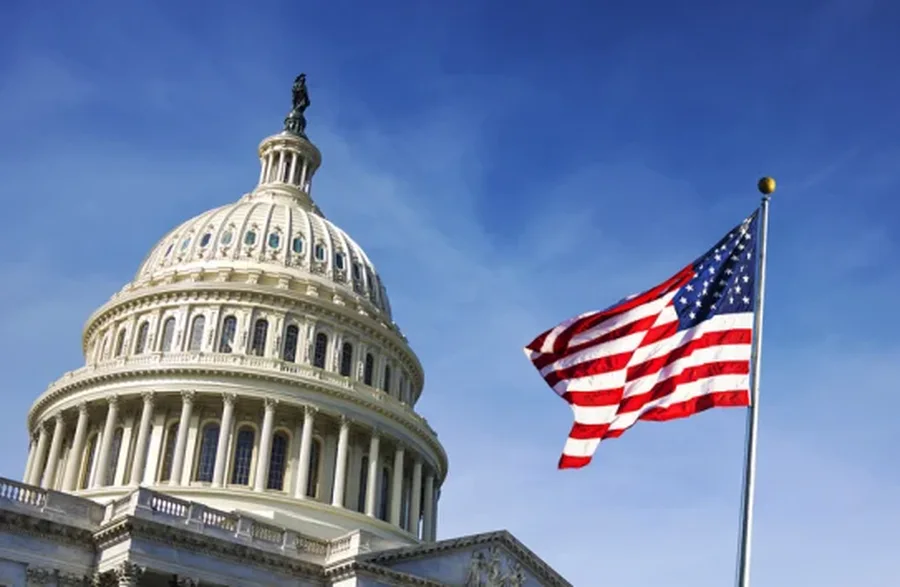
"America has no permanent friends or enemies, only interests"
Some would argue that cronyism – the concept of rerouting supply chains through countries perceived as reliable long-term allies – was too loud for longevity. Others will argue that the word was so cynically coined to mask an us-or-against bloc formation that it was always going to be replaced by something harsher.
For several years, however, the phrase flourished as a rhetorical throwback to deglobalization—bringing warmth to the early stage of Cold War 2.0. It was a term born of crisis and division: first from the pandemic, then from the Russian invasion of Ukraine, and, above all, from the deepening consensus that the US-China antagonism was permanent.
It was also a hallmark of the Biden administration. In 2022, US Treasury Secretary Janet Yellen used the word prominently when outlining America's new approach to trade. The United States, she said, should favor supporting countries that did not provoke geopolitical concerns for Washington, or that strongly adhere to a common set of norms and values. Countries, she didn't even need to say, like Japan.
The weakness of friendship, as a word, lies in America's historical relationship with the word "friend." In both diplomatic and business circles, many are fond of a quote attributed to Henry Kissinger. Cold War Secretary of State 1.0 may not have used the line "America has no permanent friends or enemies, only interests" correctly, but he came pretty close, and it rings true. Its persistence as a way to interpret American politics says a lot about how the country is often perceived.
In many respects, the Biden administration sought to correct this perception, actively strengthening alliances and promoting the idea that, as much as the "no permanent friends" line has proven true in the past, you, country x, are exception.
No country was better positioned—or had a greater incentive—to enter that campaign than Japan. Tokyo knows its weaknesses, and American friendship is a necessity for an aging and shrinking nation in an increasingly vulnerable part of the world. She also knows that she is capable of being a very good friend to the US.
Where the US has allowed its advanced manufacturing prowess to erode in recent decades, Japan has largely maintained its edge. Her companies are the very partners that American industry needs right now. As Andrew McDermott, a Japan-focused investor, says: Sony remains the sole supplier of camera sensors to Apple; Tesla doesn't build anything without Japanese robots; Japanese suppliers provide nearly 40 percent of Boeing's most advanced parts.
And yet Japan's most prominent steelmaker, Nippon Steel, has spent months trying (apparently in vain) to convince the Committee on Foreign Investment in the US (Cfius) and Biden himself that he is a buyer of suitable for US Steel.
The outgoing president has been clear that he is against the agreement; The nine agencies that feed into Cfius were split on the issue and warned that the Japanese company could pose a security threat through hypothetical cuts in domestic US steel production.
Nippon has been accused, by some, of naivety because it fought its $15 billion bid in an election year in an industry with wildly disproportionate political weight. This misdirects the blame and understates the concession that Japan probably thinks it has won.
The Biden administration had spent the better part of three years not only criticizing strategic, industrial and ideological alliances, but doing so in the clear language of friendship. In the first stark proof of this, the US has again allowed the big caveats that come with its friendship to overwhelm the situation – even when its interests almost certainly lie in allowing Nippon to invest in US manufacturing. And all this before Donald Trump recasts American friendship in his own way.
The Nippon deal can, somewhat, be confused; but the damage to America's rhetoric of friendship will remain severe. Friendshoring as a concept can continue; friendship as a word is too comfortable to survive the reality that Japan has discovered./ Adapted "Pamphlet" from "Financial Times"






Lini një Përgjigje