


 Shkruar nga Carlo Rovelli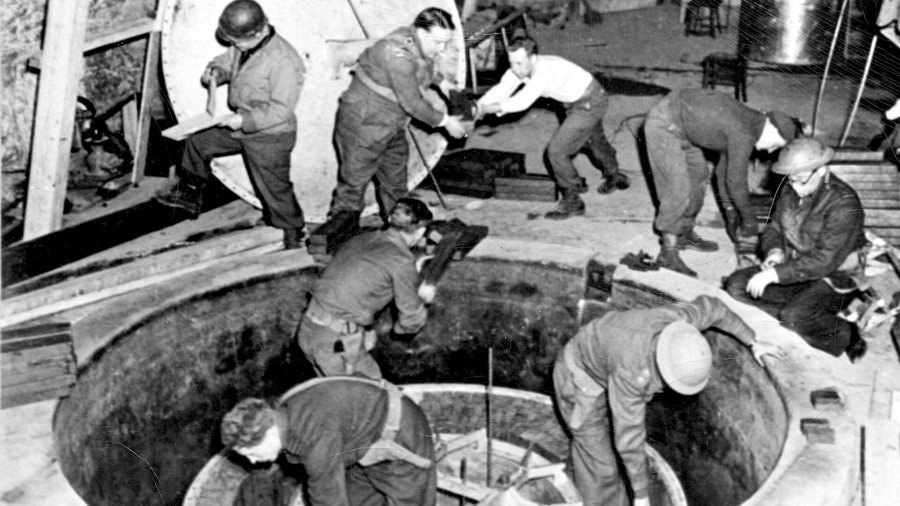
Even the construction of the first nuclear bomb was the result of a serious mistake and misunderstanding. Germany had the best scientists in the world, a great industrial power, uranium, heavy water, everything needed.
Why was the first bomb built in the United States?
The reason is simple. The Germans did not try seriously. German physicists, mainly Werner Heisenberg and his colleague and friend Friedrich von Weizsäcker, when repeatedly questioned by the German government, repeatedly replied that it would not be possible to build a bomb in the short time within which the war was expected to be resolved. History has shown that Heisenberg and his colleagues were right.
The rush to the bomb dictated by an unfounded fear
The bomb, in fact, despite the colossal American effort, was built months after Germany's surrender, when the terrible challenge that would lead to 70 million deaths had been set. But, alas, while German physicists essentially told the German government that building a bomb to win the war was impossible, in the United States, physicists, on the other hand, wrongly told the American government two things: that it would have been possible to build the bomb before the war was won. And, more importantly, that it had to be built, because otherwise the Germans would have done it. They were wrong on both counts. First, because they arrived after the war was over, Germany had surrendered, and Japan had already lost all the major regions it had occupied.
But the second reason why they were wrong is dramatic. They passionately claimed that German physicists were building the bomb. With this argument, they convinced politicians to give them mountains of money. This was not true.
Because of this misjudgment, we entered the atomic age in a confrontational, non-cooperative manner. Scientists like Einstein, Wheeler, Teller, Szilard, and others misjudged what German science was doing. Judging by the intellectual productivity of German theoretical physicists during the war, there is no doubt that they lacked any real passion for building the bomb. Hitler's fear of the bomb was unfounded.
The Chain of Mistakes and Its Effects on the Present
If scientists in the United States had not panicked and waited, if they had not misjudged what was happening in Germany, if the research had been conducted in a time of peace, perhaps we would not be living in the nightmare we are experiencing today. In imminent danger of everyone being burned alive. Atomic power could have been a force for peace if people had been sensible enough to put it under joint international control, as they did with biological or chemical weapons.
We are in a vortex of fear that is leading us to massacre each other.
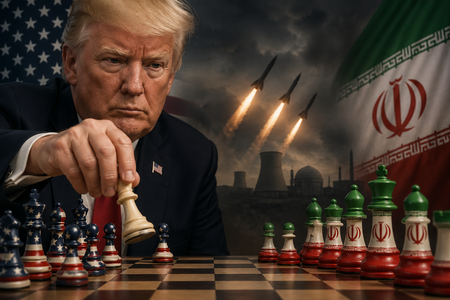
The reason we are in serious danger, today more than ever, of all being burned alive, is the exaggerated and unfounded fear we have of each other. The same is true today. Europe is arming itself because it fears Russia. Russia is invading Ukraine because it fears NATO. Israel is bombing Tehran because it fears Tehran has the atomic bomb. Tehran wants the bomb because it fears being bombed by Israel and the Americans. Japan is rearming because it fears China. China is arming because it fears being militarily crushed by America. And so on ad infinitum. In a vortex of mutual fear, we are constantly driving each other towards the slaughter of each other.
What if we stopped? Wouldn't it be better for everyone? Within states, we have managed to find a way not to constantly kill each other. Are we so stupid that we can't do this between states? / Adapted from "Pamphlet" by "Corriere della Sera"






Lini një Përgjigje