


 Shkruar nga Pamfleti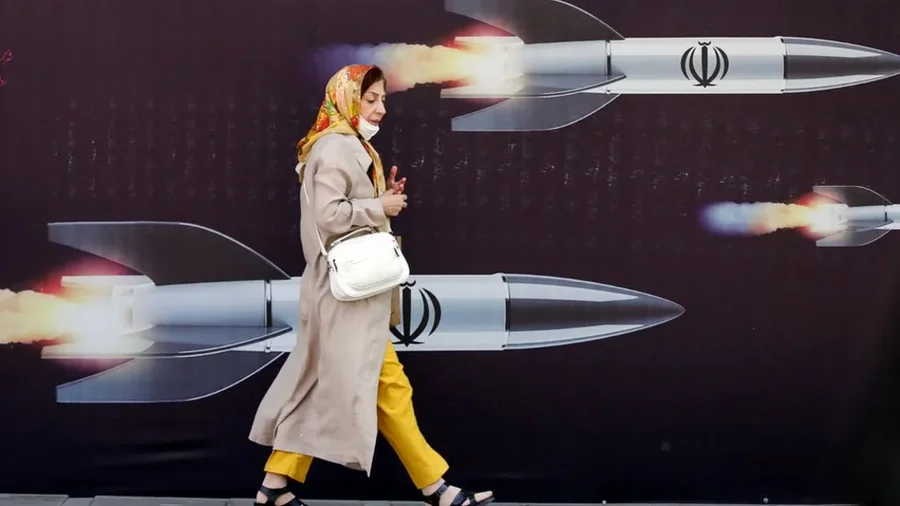
The latest round in the region's most dangerous tension appears to be over, for now.
Israel has yet to officially admit that the attack in Iran in the early hours of Friday morning was carried out by it.
Meanwhile, Iran's military and political leaders have downplayed, dismissed and even mocked the aftermath of the explosions in Isfahan.
Accounts of what kind of weaponry was deployed on Friday and how much damage was caused are still conflicting and incomplete, the BBC reports.
US officials talk about a missile strike, but Iranian officials say the attacks, in the central province of Isfahan and northwest of Tabriz, were carried out by small suicide drones.
"The downed vehicles did not cause damage or casualties," Iranian Foreign Minister Hossein Amir-Abdollahian insisted to the semi-official Tasnim News Agency.
But these simple quadcopters are a minor "teaser" from Israel, which has deployed them time and time again in its years of covert operations inside Iran.
This time their main target was the popular central province of Isfahan, which is known for its stunning Islamic heritage.
Recently, however, the province is most famous for the Natanz nuclear facility, the Nuclear Technology Center in Isfahan and a large air base, which was used during Iran's attack on Israel on April 14.
It is also an industrial hub housing factories that manufacture the drones and ballistic missiles that were launched by the hundreds towards Israel last Sunday.
So a limited operation seems to have delivered a powerful warning – that Israel has the intelligence and the means to strike at the heart of Iran at will.
It is a message so urgent that Israel made sure it was sent before, and not after the beginning of the Jewish Passover, as had been widely predicted by Israel watchers.
US officials have also indicated that Israel targeted sites such as Iran's air defense radar system, which protects Natanz. There is still no confirmed data on its success.
So this attack might as well just be an episode opener. But for now, it was an unwanted 85th birthday present for Iran's Supreme Leader, Ayatollah Ali Khamenei.
Israel's official silence gave Iran's ultimate decision-maker vital political space.
Tehran should not have backed into the new rule in the region that whenever its main enemy strikes, Iran will strike hard, as this carries the risk of igniting a spiral that could lead to a major conflict.





Lini një Përgjigje