


 Shkruar nga Pamfleti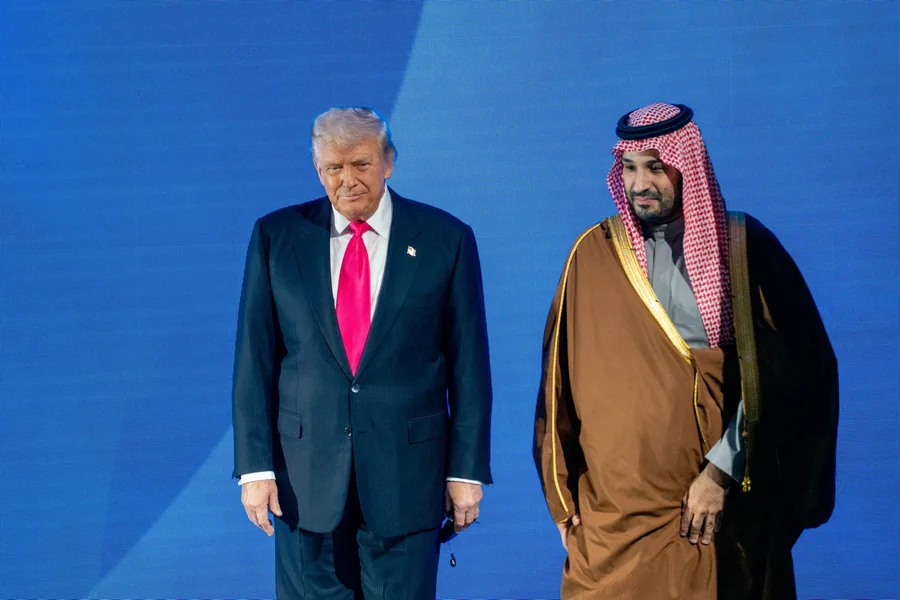
The geopolitical balance in the Middle East is at a critical juncture, as the White House is seriously considering the possibility of escalating military operations against Iran. At the center of the discussions is the role of Saudi Arabia and the influence of Crown Prince Mohammed bin Salman in the decision-making of US President Donald Trump.
The US administration has not given clear public signals. White House spokeswoman Caroline Leavitt declined to comment on the president's private communications, maintaining a reserved stance on developments.
However, sources familiar with the discussions say the Saudi prince enjoys Trump's full trust and has exerted influence over the direction of US policy. He is said to have proposed ground operations on Iranian territory, with the aim of seizing key energy infrastructure and forcing the regime in Tehran to back down.
In this regard, the US president is considering a military operation on Kharg Island, the main hub for Iranian oil exports. Such an intervention, which could involve air forces or amphibious forces, is considered to have a high risk of further escalating the conflict.
Riyadh's stance reflects a complex balance between strategic interests and immediate risks. On the one hand, Saudi Arabia sees Iran's weakening as a favorable objective. On the other, it fears a harsh Iranian response, especially at a time when energy routes in the region are already under pressure.
The Strait of Hormuz, a key artery for oil exports from the Gulf, has been hit hard by recent attacks, partially paralyzing global supply. Alternative pipelines have also been targeted, limiting options for exporting countries.
In this context, analysts assess that Saudi Arabia is facing a strategic dilemma. While under normal conditions it would seek to avoid conflict, there is concern that a possible US withdrawal would leave the region facing a stronger and more aggressive Iran.
The most unfavorable scenario for Riyadh remains a partial intervention, which would not achieve its objectives, but would expose the country to continued Iranian attacks and give Tehran the opportunity to control movement in the Strait of Hormuz.
This cautious approach is also linked to previous experiences. In 2019, an Iran-linked attack severely damaged Saudi oil infrastructure, temporarily knocking out a large part of production. After that episode, Riyadh took steps to reduce tensions, even achieving the restoration of relations with Tehran in 2023.
However, the outbreak of the current conflict and Iran's military response to countries in the region have overturned this process. Saudi Foreign Minister Faisal bin Farhan confirmed that trust between the parties has been completely destroyed.
Under these conditions, Saudi Arabia and its allies face a difficult choice: support a possible military escalation or try to limit a conflict that risks destabilizing the entire region.



Lini një Përgjigje