


 Shkruar nga Pamfleti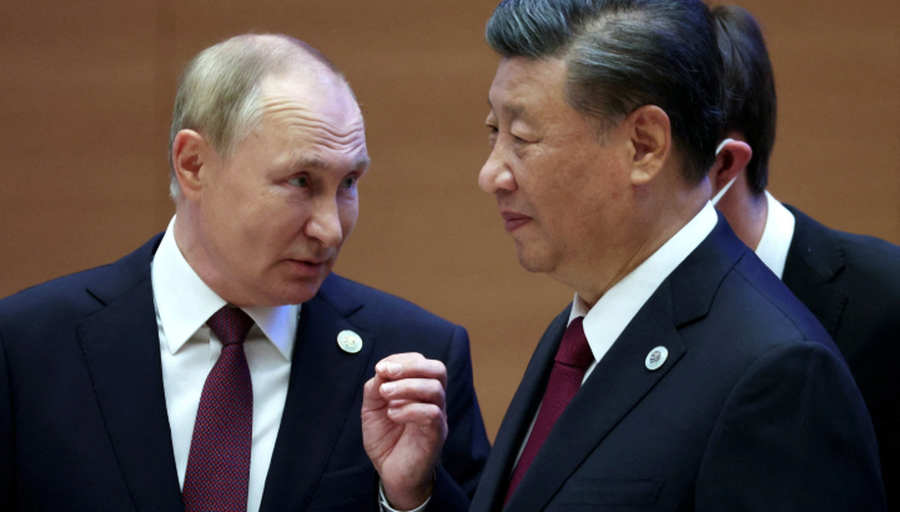
Through these rumors, Russian secret services aim to test China's reaction to destabilizing signals, gauge public sentiment within Russia toward China, and lay the foundation for alternative narratives in case China begins to distance itself from Moscow.
Several Russian-language media outlets and channels on the Telegram platform have circulated rumors that Chinese leader Xi Jinping has suffered a stroke or is battling cancer.
They cite his absence from several important meetings, noticeable physical changes in recent public appearances, but also unverified information from inside sources. These rumors reached their peak during several important moments.
First, after the cancellation of Xi's planned speech at a BRICS summit. Second, amid rising tensions over Taiwan and the US-China strategic rivalry. So far, there has been no statement from Chinese or Russian authorities to substantiate these claims.
Beijing dismissed them as baseless. And in fact, the quality of the source is questionable. Such reports are linked to unverified bloggers or influencers on Telegram like “RuNews24”, known for their unreliability.
So according to many analysts, these appear to be classic Cold War-style rumors, circulating mainly through semi-anonymous sources on social platforms, without any real verification.
So why is this fake news circulating now, and what are the Kremlin's possible intentions?
First, Russia may be assessing China's willingness to support or distance itself amid growing Western pressure.
Second, Moscow aims to induce strategic uncertainty in Beijing. An unwell Xi could mean that China's leadership is vulnerable or distracted.
Third, rumors about Xi’s health could shift domestic focus away from Russia issues or create uncertainty in China-Russia relations. If widely believed, such rumors could fuel anxieties about succession or cause internal strife within the CPC.
However, due to state control of the media in China and the lack of evidence, the effects are likely to be minimal. Meanwhile, these rumors do not signal a serious diplomatic shift. Because they reflect informal psychological tactics rather than official policy.
If they persist, they risk destroying mutual trust between the parties, but for now they are likely to be within the permissible “gray zone” of influence operations. In terms of global perception, Western analysts may read this as a sign of “testing ground” psychological operations, but this does not change geopolitical positions.
China remains Russia's key strategic partner, particularly in the fields of energy, technology and diplomacy. No credible evidence supports recent claims that Xi Jinping suffered a stroke, aneurysm or is suffering from a serious illness.
A Reuters fact-check of images from March 2024 shows Xi taking several breaks during sessions, showing no signs of a stroke. He continues to appear at high-profile economic events and diplomatic meetings, without interruption in his official duties.
His busy schedule and apparent engagement in state affairs suggest a generally good physical condition, although the heavy workload can cause fatigue, typical of any leader. So what is fueling these rumors?
First, the culture of secrecy in China. Chinese authorities do not confirm or deny health speculation, fueling speculation whenever Xi is absent from a low-profile meeting. Second, psychological operations by foreign actors.
Russian-language media and Telegram channels amplified unverified rumors, most likely as part of information manipulation aimed at casting doubt on the stability of global leadership.
In Russia, the spread of rumors about Xi Jinping’s health likely involves a narrow but powerful circle of actors within the ecosystem of intelligence, information warfare, and propaganda. These actors are not acting on whims.
Rather, they have strategic goals related to Russia's global position, particularly in its asymmetric competition with the West and complex relationship with China. These include the GRU (Main Intelligence Directorate), which seems to aim to test China's response to destabilizing signals, the FSB (Federal Security Service), which aims to gauge public sentiment within Russia towards China, but also to lay the groundwork for alternative narratives, in case China begins to distance itself from Moscow.
Then there are state-linked Russian propaganda networks (e.g. Tsargrad, Sputnik, several networks on Telegram) that aim to prepare domestic audiences for a change in the Kremlin's policy towards China, should that be necessary.
So overall, the rumor campaign about Xi Jinping's health does not originate with rogue bloggers. It fits the playbook of the Russian "deep state" strategy: exploit uncertainty, weaken competitors, and control the narrative, even at the expense of supposed allies. / Adapted from "Pamphlet" by the Lansing Institute





Lini një Përgjigje