


 Shkruar nga Stuart A.Reid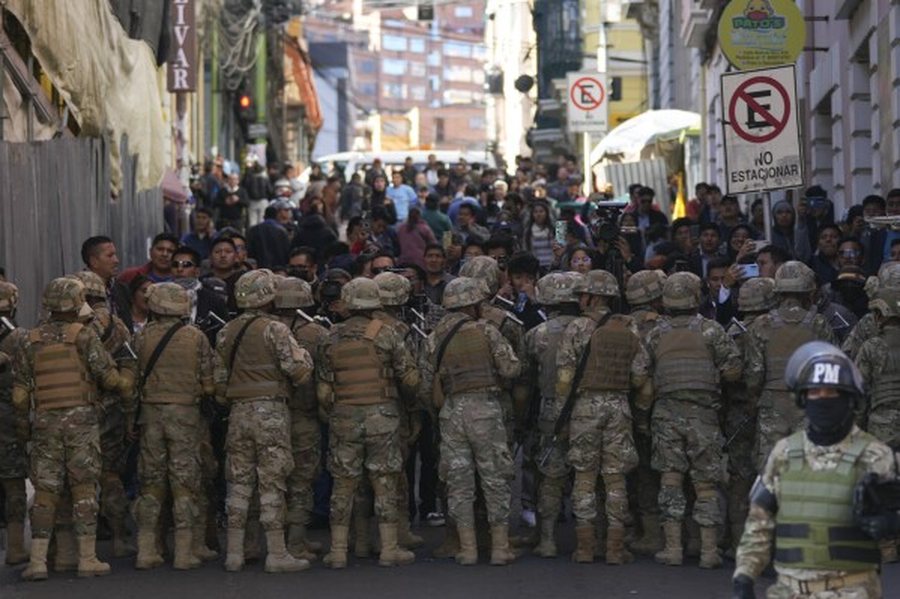
In any case it is impossible to predict the time of collapse.
After 6 years of civil war, Bashar Al-Assad's Syria was settled in 2017 in a new normality. Certainly not the quiet pre-Arab Spring normality the Assad family had enjoyed since the brutal suppression of an Islamist uprising in the 1980s. Still, it was a kind of normalcy compared to recent years.
With the help of Russia, Iran and Hezbollah - and, surprisingly, the United States, which was attacking ISIS - Assad's forces had managed to defeat the rebels. Over the years, his regime managed to control nearly 2/3 of Syria. Secure in power, Assad began traveling abroad, visiting Moscow, Beijing, Abu Dhabi and Tehran.
It seems that everyone was accepting, although not with much conviction, that the Syrian dictator would remain in power for many more years. "Normalization" was the buzzword not only among Middle Eastern diplomats, but also among some in the West. In September, Italy even appointed its first ambassador to Syria after a 13-year freeze on diplomatic relations.
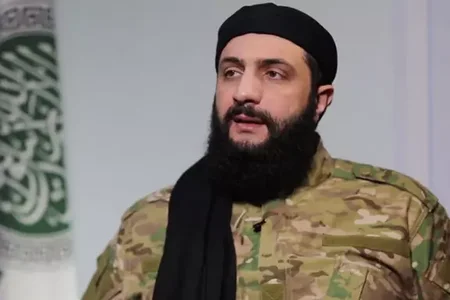
But after a surprise 10-day offensive by the rebel group Hayat Tahrir Al-Sham, that stability disappeared. The Syrian Arab Army disbanded, soldiers abandoned their posts and took off their uniforms. The rebels took Damascus without a fight, and Assad fled to Moscow. Even the opposition was surprised at how easy it was.
The sudden surrender of the Syrian army is in fact part of a long tradition of militaries that are strong on the outside, but fragile at their core, and that capitulate quickly in the face of advances by rebel forces. More recently, the Afghan National Army, trained and equipped by the United States at a cost of $83 billion over 20 years, crumbled within months as the Taliban returned to power in the summer of 2021.
Meanwhile, in 2014, the Iraqi army capitulated when ISIS overran most of the country, including the cities of Fallujah and Mosul. In the same year, Houthi rebels in Yemen captured the capital Sanaa within days, toppling the government of Abdrabbuh Mansur Hadi, who fled to Saudi Arabia.
The same phenomenon was seen in the Central African Republic in 2013, when the Séléka rebel coalition overthrew the government within months, capturing the capital Bangui with little resistance. Authoritarian President François Bozizé fled to Cameroon.
In any case it is impossible to predict the time of collapse. In Jenga, you never know which block that is removed will bring down the entire tower. However, the causes of the collapse can be cataloged. And in fact, it is consistently the same factors that overwhelm armies facing insurgencies.
The first is ethnic exclusion. Governments often fill their armies with their ethnic brethren. This approach has its benefits - greater cohesion and loyalty - and is a time-tested way to "resist a coup".
In civil wars that have an ethnic dimension, it is often inevitable that the government forces come from one group, and the rebels from another group. But this inevitably generates resentment among them. Thus Yemen's Shiites felt their concerns were being ignored by the government of Hadi, a Sunni Muslim.
Before the rise of ISIS, Iraq's military led by Prime Minister Nouri Al-Maliki sidelined the Sunni majority. In the Afghan National Army, Tajiks at one point made up more than 2/3 of the commanders, even though they made up only 1/4 of the population.
In Syria, about 70 percent of all soldiers and 80 percent of all officers were members of Assad's Alevi sect, even though this group made up only 13 percent of the population. Alevi dominance was almost complete in the Republican Guard, headed by one of Bashar's brothers.
The lower-ranking non-Alevi military therefore had little interest in dying for an officer corps and a regime that did not represent them. The second factor is corruption, a powerful agent that erodes armies from within. Often weak governments are unable to provide the necessary salaries to buy the loyalty of their forces.
Under these conditions, they tolerate or encourage corruption. In the Yemeni, Iraqi and Afghan armies, the most qualified were not promoted, but those who had connections or were willing to pay bribes. Borders were filled with thousands of "ghost soldiers," job positions that did not exist in reality, created solely to enable commanders to absorb extra pay.
In Afghanistan, corrupt air force officers were suspected of trafficking opium and weapons. Meanwhile, many of the Afghan army commanders had previously been militia leaders aligned with the Taliban, and they sold their allegiance to the highest bidder.
When the Taliban retook the entire country in 2021, in many areas they did not have to fight at all. All they had to do was bribe the security officials. Then their troops immediately surrendered their weapons. The Syrian army was also very corrupt.
The abuse ranged from taking small bribes from cars passing through checkpoints to a multibillion-dollar enterprise that produced and sold the drug captagon, an illegal amphetamine. There have been many complaints about officers stealing the fuel subsidies of their subordinates.
Also, soldiers who wanted to get permission to go home had to pay bribes again for this privilege. Corruption within the military angers the population, whose support fuels the rebels. It also makes armies less effective by diverting resources from investment in weapons, equipment, and pay for troops, and antagonizes those in lower ranks toward superiors.
An Afghan official stated this to the authors of a US government report on the collapse of the Afghan army: "No one wanted to die for ... the people who were here to rob the country!". The same was proven in Syria. Assad's last-minute promise of a 50 percent pay rise was not enough to revive the morale of Syrian soldiers.
The third most important factor behind the collapse of an army is external rather than internal: the loss of foreign clients. Weak governments usually need help to maintain control of territory. And when the foreigners withdraw, this may well be the end of these regimes.
It was no coincidence that Zaire's military collapsed after the Cold War, when the US no longer needed its leader Mobutu. In the Central African Republic, France, as a former colonial power, had often come to the aid of the government in the fight against the rebels. But in 2013, Paris made it clear that it would no longer do so.
When the Yemeni army was on the verge of disintegration, the United States, which had been helping the government fight al Qaeda in the Arabian Peninsula, refused to extend support to fight the Houthis. In both Iraq and Afghanistan, it was the withdrawal of US forces that precipitated the collapse of the military (just as it did in South Vietnam long ago). The cause of the recent collapse of the Syrian army was the great decline in foreign support.
Russia is very busy in Ukraine. Its air force was unable to repeat the barrage of airstrikes that rescued Assad in 2015. Hezbollah had been shaken by Israel's attacks against it in Lebanon, including bombings, and could no longer provide the number of fighters it had once upon a time.
Iran is also licking its wounds from the Israeli attacks, and quickly withdrew its military forces from Syria. The militaries of non-representative governments are often microcosms of their regimes. Like the Syrian army, the Syrian state was very fragile, crippled by years of corruption and ethnic exclusion, and barely supported by foreign actors. In retrospect, it can be said that the remarkable thing was not the rapid fall of the regime, but the time it managed to stand on its feet./ Adapted "Pamphlet" from "National Interest"





Lini një Përgjigje